
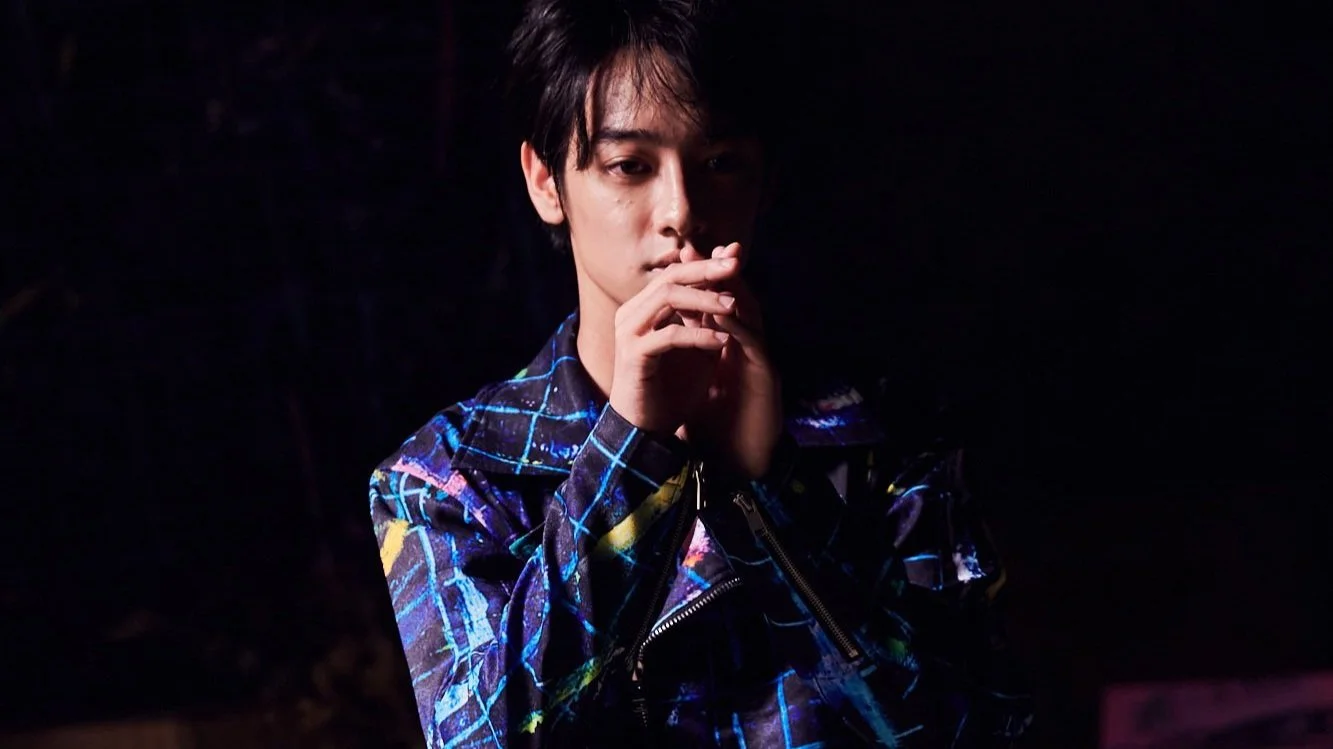
The 'One-Man-Show' of Johan Ku
A renowned knitwear designer, a graphic designer, an artist, and now a director of his latest SS21 collection – Johan Ku is truly a ‘one-man show’. Spanning a successful career in the fashion industries for nearly a decade now, Johan reflects on his “humble” upbringing, which is the secret to his unorthodox and innovative collections.
The Taiwanese avant-garde designer’s SS21 collection, entitled ‘Painters’, is a collaboration between his abstract graphic-designs expertise and his long-time friend’s artistic paintings. The heavy blend of bold colours and dramatic prints are enriched through splashes of fluorescent acrylic paint, brushes, and imprinted paint-tubes as the visual basis for the new contemporary line.
Johan reflects on his structural, yet dynamic, luxury collections over the last ten years, pondering his humble upbringing as inspiration and motivation for the fashion world. Below, we explore his vision of the digital in future of fashion as well as celebrating his 20th collection this London Fashion Week.

Obviously, 2020 has been a difficult time for everyone. How has the pandemic affected you personally and creatively?
Personally, it becomes 'work from home' most of the time, although I still had to go out to find some new materials, nowadays people use the internet to communicate with each other. Even when ordering fabric - I would just call them to send samples. So, it's actually changed quite a lot, but I think it's a good change. People find a way to simplify things, as may be the older ways need a difference too. Even though our business got a little bit affected, but not that much, we have launched a new mask line. You lose something, and you win something, I guess.
How do you feel about Fashion Week being digital this year? Do you think it will be an aspect that will continue past the pandemic?
I think if the pandemic is still going, then the digital fashion week will be the next new normal, I have to say. We all must follow the COVID regulations and social distancing. Still, with the current UK law, it is impossible to hold a fashion show indoors with 30 people - especially in the backstage with models, assistants, hairstylists, not to mention the audience! I think the fashion industry is still trying to manage this. How can we show our collection digitally, but also perfectly?
How was it designing an entirely new collection in lockdown and under these unique circumstances?
In the past, I used to communicate with pattern-makers and factories by emails or phone calls. So in that way, it's not that different. But during the pandemic, I collaborated with painters I know because the artists couldn't have a physical exhibition to show their work. I bought some of the paintings from the artists that I worked with for this season's collection.


Do you think the pandemic will change the way we consume and produce fashion?
Yes, I think so. For me, I use an app to older almost everything from clothing to food - literally everything. When I came back from the UK to Taiwan, and I had to quarantine for a few days, and I got used to buying things online, it’s so easy now. I'm not sure it's good or bad, to be honest. If we can't resist it, we have to embrace it. Otherwise, you will just make your life so miserable.
You have a background in graphic design, which certainly comes through in your designs. What inspired you mostly for your SS21 collection?
When I came to think of the new collection, I thought maybe I should do something different. I usually get inspiration from movies or something like that. Still, it's the first time I got inspiration from a real artist, a real painter. Because he's one of my friends, and I have a graphic design background, I start talking with him that maybe I can use not only your artwork but also the things that you create art with - like your acrylic paints or anything you use to create your art. I take pride in the graphic design and prints, as it's relatively new to the print field (applying watercolour or acrylic to the material) - which was a new challenge for me too.
From your video, I got a hint of 'romanticism' in your collection. Is that what you are going for?
Actually, I told the models and two (famous), Taiwanese actors, that the videos are about a struggling artist. Not only struggling with their life but struggling with the new idea of creating new things. So, I wouldn't say it's too romantic, but more of the artist's internal struggle.
I'll tell you a secret. I'm not only directing the video, but I also edited it myself. I did the casting and invite the actors too, as actually, they're all my friends.


Wow, a one-man show!
We did work with a production team, but in the end, they couldn't really do what I wanted. So, I had to go to the studio and sit down in front of the computer through editing with the editing assistant to finish the films. All the scenes you see were done by me.
Your first collection and your debut were in Tokyo in 2011. Since then, you've been featured in many prestigious magazines, like Vogue and WWD. What was this whole experience up to now? What has been that been like for you?
Wow, it has been ten years already! Oh, my God. It's my 20th collection!
I think I still got a lot to learn, especially after the pandemic, as the fashion industry will change forever now. It will change everything from new rules, new tools like the use of online to sell your collections, to communicate with people, buyers, or journalists. But, I have to say, compared to my debut collection I know a lot more now. I think I accumulated my knowledge not only for design but also for the international fashion industry. I won't say I'm an expert, but I think I know much, much more than Johan Ku did ten years ago. My debut collection, I showed more faith around my knitwear. Still, now I show that I can do other things like prints and the cuttings of clothing, to show people that the clothes are not only trendy but also very wearable.
All your collections seem to have that artistic and sculptural element, even with the previous ones. Why is this concept so significant to you?
That's a good question. I think I must be a little bit proud here. In the last 20 collections I've done, I can tell the people exactly what the inspiration was and how I applied that inspiration onto my collections. I think that's quite an essential part as a designer; to ask myself not only to do some clothing that people want to wear but also to really tell the people how you use and apply your inspiration on to the collection. That's what makes you different because you have a different inspiration every season so that you will do a new collection every time. I just can't believe I just did my 20th collection!
Your collections are amazing, and you should be proud of them! What would you say are the main problems within fashion today?
I think I am luckier because I don't run a physical shop, I just have an online shop from my own website and also a wholesale business. I know many other designers, who have physical shops, have been really affected by the pandemic - everything just stopped as there's no customers coming in. The payment [for rent] is still going, but the sales become zero. I think it's really challenging for the people who are running the physical shops in the fashion industry at the moment. I think it's also a new challenge, as people started to think that fashion can be just online, it doesn't need to be a physical store, which still makes the business happen. I think it's just like the old saying, 'every cloud has a silver lining' - as the Brits say.

And how had certain moments in your life shaped the way you create?
You see, my background is slightly different than many of the other designers. I come from a humble background; my parents are not as rich as the other designers' parents. Sometimes I need to use my creativity to achieve my goal. For example, I got the opportunity to study in the UK through a scholarship, which was offered by the British Council in Taiwan. I am the only designer whoever received the scholarship. They normally pick from more academic fields, like economics or politics. Never was it given to anyone in the art and design field. I think I became more flexible, for example, for the latest collection, I collaborated with a painter - not only because he is my friend, but also because it was a new challenge. I think that shaped my designs, as well as my personality. I always say "you can use the money to buy many things, but you can't use the money to buy your creativity". Be creative in the fashion industry because it is tough. If you can't be creative and you're always relying on money, then I don't think you will go for a long time.
Golden words. Has reflecting on your creative process revealed some unknown truths about yourself?
When I started in my brand, many journalists in Taiwan knew I was from a humble background, and they were amazed by how I can manage to do that. I think, because I saw my mother need to deal with so many things in a short time and she always told me " if you have a difficulty, you conquer it". You try to overcome that and not be overcome by the difficulties. So, that became something that's in my DNA, especially when I saw my mum do it for such a long time. Designing is interesting, but the business is tough - so when you face tough things, you must conquer them. Don't find any excuse, just do it and overcome it. When you can overcome it, you can survive and continue designing. Don't give up!
And lastly, what's your most significant milestone?
I think that winning the Gen Art's Avant-Garde Prize is a significant milestone in my career. That prize made many people know not only me but also my signature design, the 'Emotional Sculpture' collection. And, I think the collection I displayed in Tokyo, which went on the WWD US cover - and it wasn't digital, it was physical [magazine]!
Thank you to Johan Ku for the interview and Black PR for providing images for his new collection.
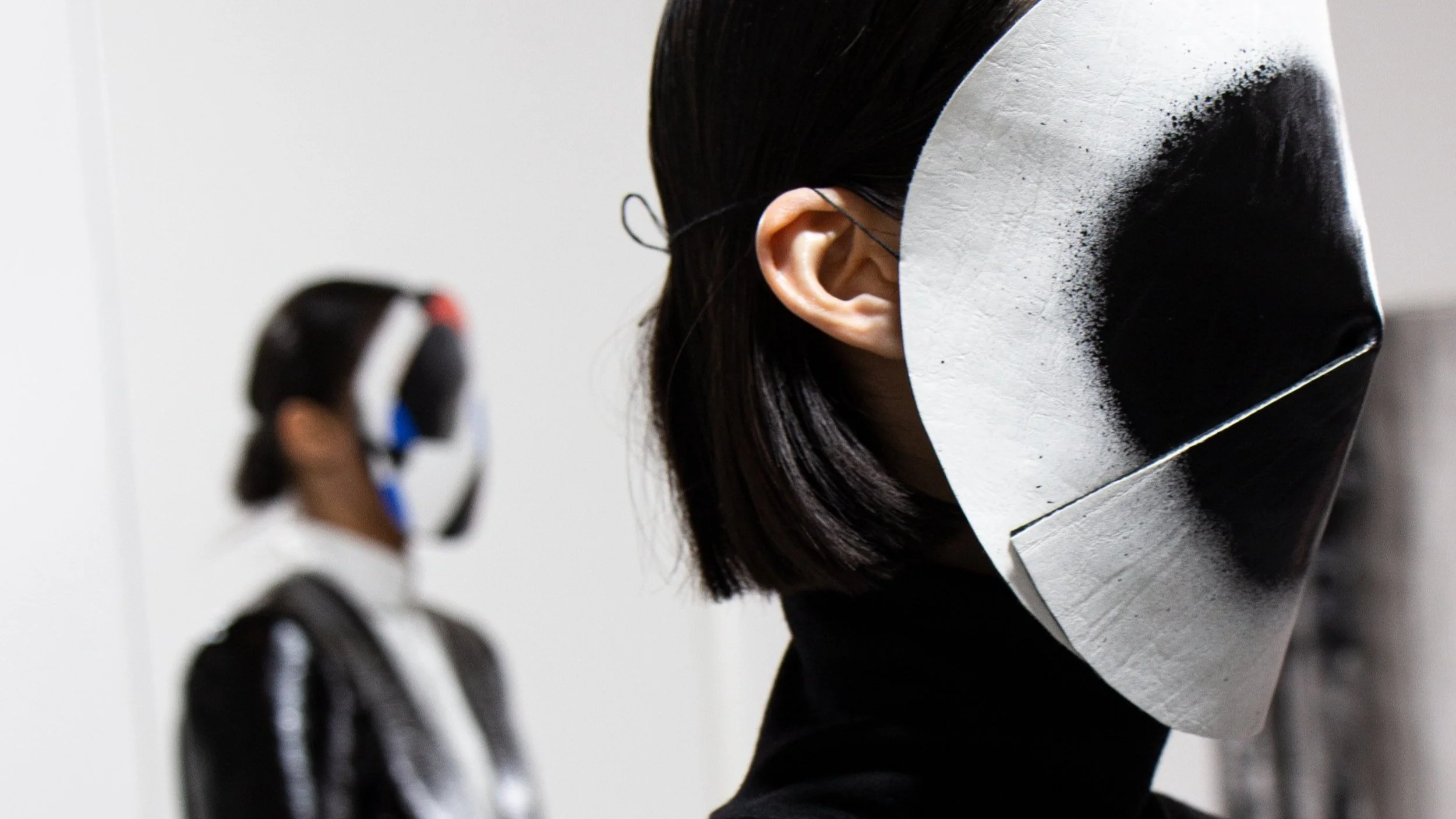
Going Beyond the Visuals with HanaCha Studio
Simplicity, theory, and artistic philosophy – HanaCha Studio has returned to London Fashion Week with her latest AW20 collection highlighting the minimalist label of abstract designs and patterns.
Hana Cha is an internationally recognised womenswear label, who gained attention after receiving the “Collection of the Year 2012” award from the V&A Museum. Currently residing in Seoul, South Korea, her pieces centralise around the concepts of “Art inspired fashion. Fashion becomes art”. The fused approach of art with fashion is her signature, but what sets her apart from other contemporary designers is Hana’s theoretical background “highlighting the quintessential identity” within her designs and sculptures.
The ‘simplification’ and minimalization of intricate patterns and silhouettes, inspired by the works of Picasso and Bauhaus breathes through the entire AW20 collection. The collection may be considered as ‘artistic fashion’ – but they are the piece of art themselves.
With her exceptionally intellectual – yet innovative mind, we discover how the artist expands her academic approach, through simplification and manifestation of fabrics, into an abstract and sustainable fashion collection.

London Fashion Week, went digital this year for all the AW20 and SS21 collections. How do you feel about that? Do you want to continue or do you think it will pass the pandemic?
Oh, yes. I would like it to continue. It's weird, but somehow, I feel quite comfy. I don't need to pack all my luggage, no need to have my flight for 11 hours from Korea. So, it's come in handy in a way, I'm quite satisfied with how it turned out. But I do miss the atmosphere of Fashion Week. I can't get any feedback [of the show] right away. I don't know how it's going to be like, but it would be good to have it both ways; digital and the real Fashion Week - to harmonise them. I'm quite happy but I do miss my second city, London, a lot. I miss the autumn weather!
2020 has been quite tough on everyone. How did you deal with the pandemic, personally and creatively?
Yes, I must say that there were lots of differences before the pandemic. It's quite hard this season at the moment; personally, business-wise, in more creative ways. It's hard to broaden my perspective to it as it's different from previous situations. I wish it [the pandemic] could blow over, but I'm not sure it will be exactly the same as before. I think that we should keep these online platforms and digital things. I think it's kind of like our destiny.


Your brand is based in both cities, London and Seoul. Where are you the most time of the year?
I'm based in Seoul at the moment. But, I prefer to present my collections in London, but Seoul as well, because it's my home city. I'm going to have my digital Seoul Fashion Week next month. It's the very first time I’m presenting my collections in Seoul - which is exciting! I like to balance between London and Seoul, because I used to study in Seoul, and I got many experiences in London as well. So, I do like to have some good connections in both ways. That's what I've done so far.
You define yourself as an "interdisciplinary designer and researcher", which certainly comes out in your collections and your artwork. What inspired you for your latest collection?
The title for AW20 was "Assemblage", which is the three-dimensional collage from Picasso's sculptures. The style is Cubist which has simplified shapes, base and figures. I was inspired by that and wanted to reflect these elements in my collections. At this stage, it was art that inspired fashion. For the next stage, I was influenced by my collections for my artworks. It was simplifying the process which was inspired by Picasso's works and has links to Bauhaus' simplicity as well. So, for my collections, I extracted simplified figurations, like steamed lines, scales, and circles, and I just made them into a three-dimensional collage or a sculpture, so it's kind of both; fashion and art - that was the concept for the previous season [AW20].
I noticed that you have begun doing some handcrafted pieces recently.
I discovered these kinds of fabrications in 2012 when I was at the London College of Fashion. They are similar, in a way, in terms of simplified cuts. I made some paintings, which had two-dimensional brush strokes. I extracted this concept and it became those tiny, fluffy, three-dimensional, fringe brush strokes. This is kind of like my symbol, I'd like to say that. I've been sticking my signature as my identity for these collections.
Amazing. And what usually fuels you creatively?
Obviously, because I've been doing quite similar things, I know what I'd like to do as a clue for my designs, aesthetically speaking. I'm always into art pieces or paintings. It's quite a specific period, from Cubism until Bauhaus, which is right before modernism. Whenever I'm going to galleries or the department store - if I see something elective, I just capture it and try to remember where it was, so that I can use it for my collections or artwork. This is what I've always done. I also like reading books - well, I like the shape of books! I like spending time at the library. Last season, when I was in Paris, and I found some very, very fancy bookstores, like antique books. I was so inspired! I wanted to fill my whole studio with all kinds of books, so that's why I have so many of them behind me!
Do you have a favourite piece from your collection?
I believe the strength of my collection, is the long-fringed coat. The shape is quite strong, but it's also very simple and minimal-line, so it can be masculine, but I do like to add some femininity as well - creating a balance.
You've also mentioned the aspect of "seasonless" in your LFW promo-video. Do you believe that the traditional fashion shows are at an end and that "timeless" collections are the future of fashion?
I think it'll be changing the fashion industry, as fashion is always keen on trends. Fashion goes so fast - we must find a trend that is more sustainable. This is a global issue, regardless of fashion; its science, economy, societies. It’s a very crucial keyword for the future. We haven't got the right answer at the moment but I think we have to chase the answer for the future, and I think fashion can be a clue to this.
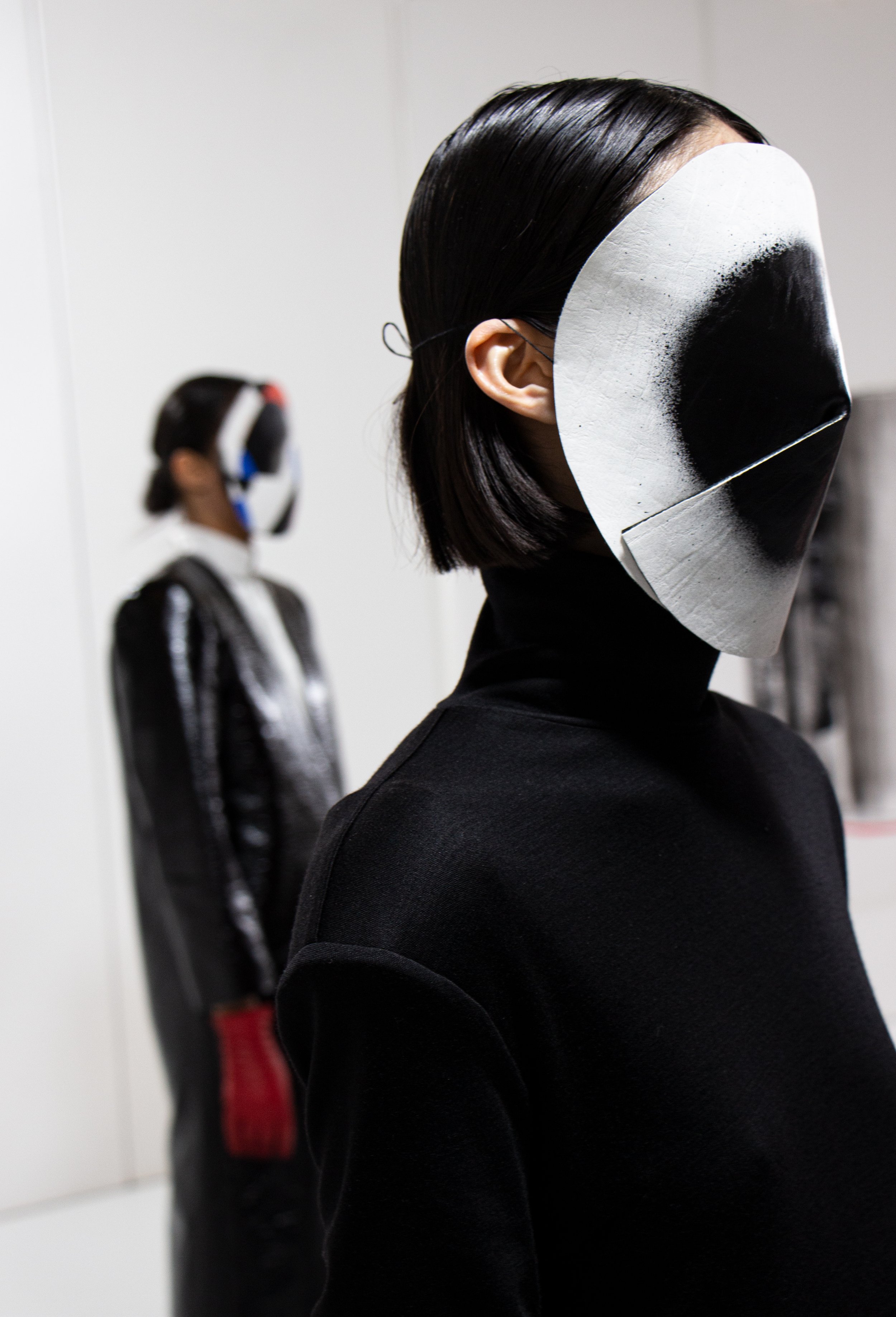
One of your main values is 'slow fashion' and 'sustainability'. What does sustainability mean to you and how important is it to the future of the industry?
Sustainability, and craftsmanship, in particular, is very important to me - it the basis for all my projects and collections.
When sourcing your materials for new collections and artwork, what factors are most important to you?
I mostly look out for shapes and composition of the material - and always black & white.
South Korea is the home of fast-fashion production. Do you believe that this could soon change/do you see any change now?
South Korea is very accustomed to IT and technology - everyone is swiping and scrolling non-stop on their phones or other devices. Everyone is also very fashionable and social media influencers are very popular. But because of this, the turnover of garments is so fast - trends do not stay for a very long time. Possibly, if the change was related to technology in some way, the people would follow the 'new trend' of sustainability.
What do you think is the most effective way to promote fashion sustainability?
Big brands and social media influencers hold the most power with the promotion of any product or ideology. They are the ones who hold the biggest following and influence over what happens in fashion; the trends, the politics, and it’s future. But we also need the education; from universities and businesses, from every corner of the fashion society. Their issues of sustainability are getting crucial, but it is a process. Hopefully, we can have something for the future. I’m going to keep doing it.
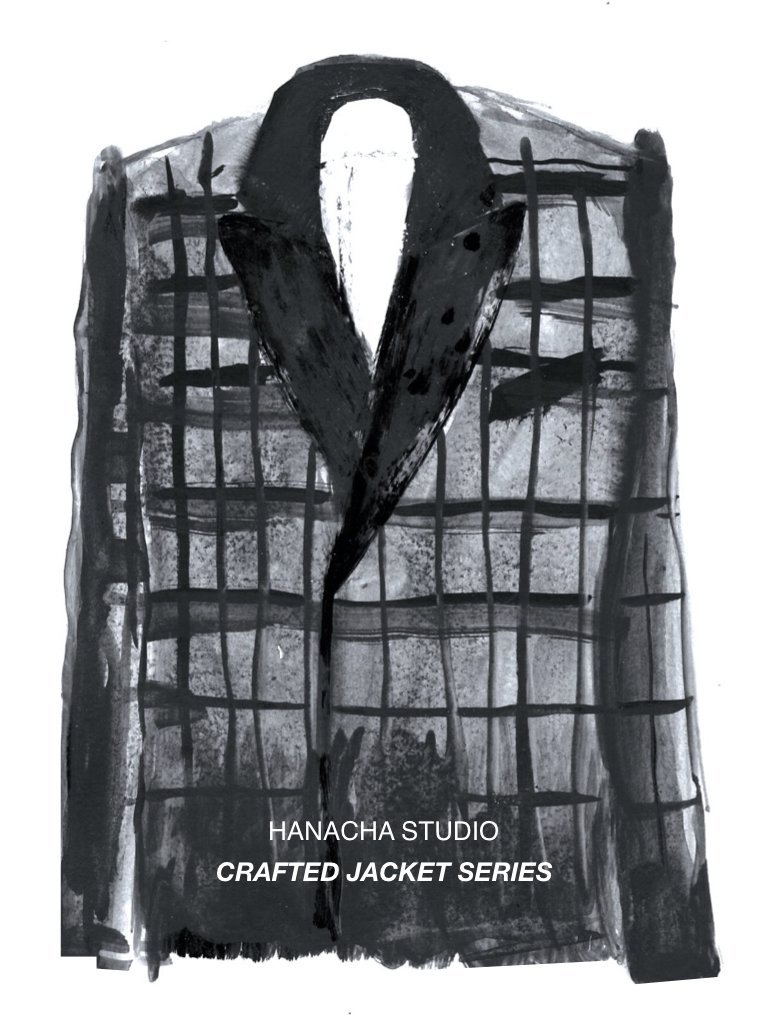
Thank you to HanaCha Studio for speaking with us and for providing the visuals.
Why is Everyone Suddenly Talking ‘Sustainability’ in Fashion?
“The Fashion Industry was ‘working’ because nothing ever disrupted the business before”

Photo by Anna Sullivan on Unsplash.
Our system is broken. It has been for many years. So why, only now, are designers, editors and directors of major fashion brands talking about sustainability and system change?
Over the last few weeks, social media platforms have been boosting with a range of content coming from the most honoured fashion personalities in the industry. Edward Enninful OBE, editor-in-chief of British Vogue, hosted an hour-long conversation on Instagram’s IGTV with Grace Coddington casually debating the state of the fashion and magazine industry of ‘post-corona’ life. Cara Delevingne followed the trend and spoke ‘sustainability’ with Greenpeace, and Imran Ahmed, founder and editor of Business of Fashion (BoF), outlined the implications the pandemic has caused to re-envision our future. Everyone, from models to editors of pioneering magazines, is concerned with the environmental and humanitarian impact the industry has on the planet, but why are they only openly talking about it now?
The unethical conditions of workers in countries like India and Bangladesh, to just name a few, are no secret of the industry. Rana Plaza first came to the attention of media after a garment factory collapsed at the rate of just 90 seconds, killing over 1,100 people inside - most of whom were young women manufacturers. The “mass industrial genocide” forced brands to act immediately. Presumably, Primark and Matalan were amongst the retailers who manufactured garments in the building, yet the full list is unknown to this day.
Seven years after the collapse and re-evaluation of ethical and safety standards of workers in developing countries, the same battles still forge the debates of transparency and human rights issues. Manufacturers in factories still work for the lowest wage in the world (starting at equivalent to £25/month), with children as young as six years old forced to work instead of going to school. Poverty is still a huge concern in what is called the ‘most glamorous’ industry, yet the reality is far from it.
Due to the global shutdown, manufacturing workers have been left on the side of the curb with no income to support themselves or their families. Over 90% of garment workers have no possibility to negotiate their wages or working conditions and in the eyes of their governments, they’re technically unemployed and do not qualify for any government ‘furlough’ schemes. Nearly 60 million garment workers in India have been left without work resulting in the hardest collision of the health system and pandemic crisis.
Imran Ahmed in BoF Live talk with Casey Legler, a French-American writer and model, outlined his vision of the future of fashion through enforcing sustainability, reducing carbon footprint and “giving back to the people,” by offering the workers adequate pay for their labour and establishing worker’s rights. He outlined that the companies should be held responsible for their factory workers during a global crisis, like this one. Casey Legler expressed her hopes that the pandemic “will put a magnifying glass on the fashion industry’s issues and rewire”.
Fashion Revolution estimated that the global lockdown resulted in over $3.8 billion cancelled store orders, with tons of material laying in factory-houses from the Spring/Summer collections that were presented in Fashion Week in February 2020. The Business of Fashion editor, Imran Ahmed, scrutinised the fashion industry for the waste and pollution they cause to the environment on a regular basis. Luxury and high-street brands are suspected to burn their collections and excess textile materials that have not made it into retailers and shops around the world, resulting in 1.2 billion tons of CO2 emissions on a yearly basis. The fashion industry is already known as one of the major environmental pollutants in the world, from crops and water to air and soil, but with the excess garment stock, Imran Ahmed believes there will be three times more waste produced globally.
The disruption levels on the fashion industry have reached an all-time high, from factory closures to retailers and design production, the whole supply chain has been shattered. Grace Coddington, a legendary model and US Vogue’s creative director, in a conversation with Edward Enninful on IGTV stated: “I’m not a religious person, but I feel like God is telling us to slow down”. The endless collections and fashion weeks that have been pioneering the world of fashion glamour for nearly a century will come to an end as we know it. With the current technological advances, major fashion houses such as Marc Jacobs have spoken out about the excessive-ness of so many fashion shows in Vogue Global Conversations webinar, and suggested to only have two fashion shows a year - “The amount of stuff we make and the quantity we make and the amount of time it’s shown – it’s just so excessive”.
Casey emphasises that the current system “was ‘working’ because nothing ever disrupted the business” and with the present disorder and uncertainty, the industry as a whole, is forced to reassess the traditional craftsmanship and embrace technological innovation.
Earlier this month, the British Fashion Council’s chief executive, Caroline Rush released a statement saying that London Fashion Week in June will merge womenswear and menswear shows and will be accessed online-only as the lockdown endures. Caroline told the Guardian “by creating a cultural fashion week platform, we are adapting digital innovation to best fit our needs today and enacting something to build on as a global showcase for the future”.
The disintermediation will provide a chance for a new beginning for the fashion industry with a higher potential for sustainable and ethical working conditions and production. The possibilities are available, now more than ever with technological advances. However, the question we should be asking is whether the fashion industry, which is so stubborn to change out of its traditional ways, will be willing to adapt to the new normal?