
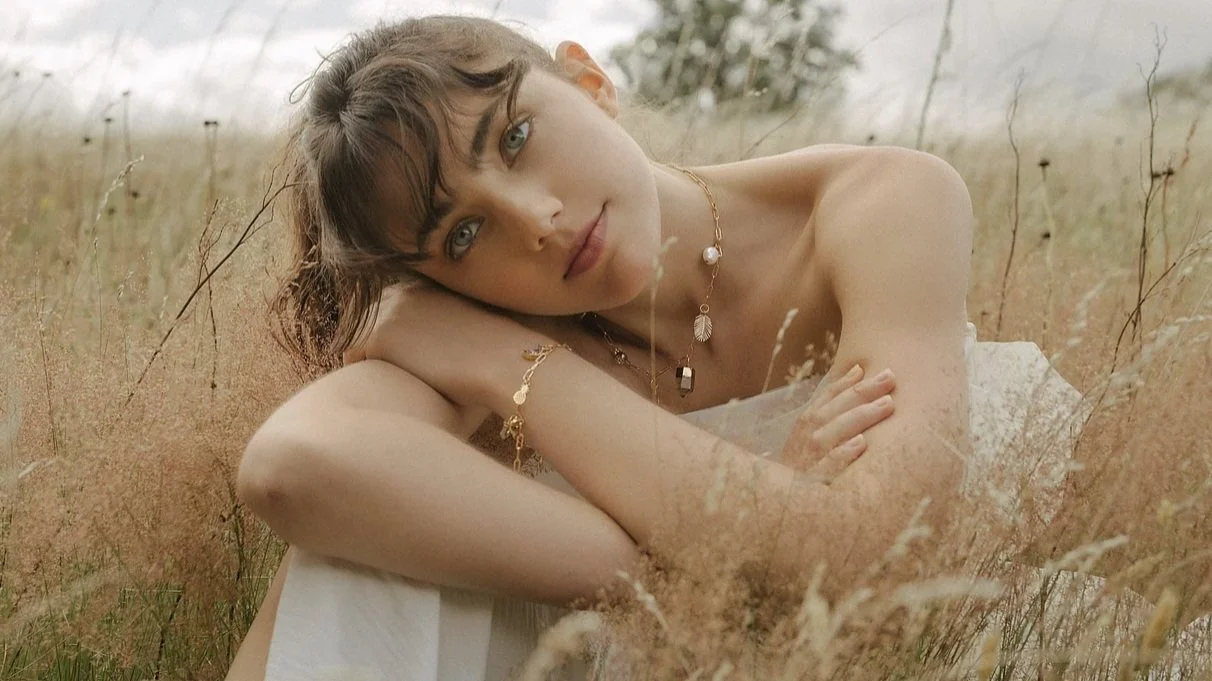
Bring On The Positive Vibes with Tiana Jewels
Passionate about spirituality, healing and bringing positive energy during these bleak times, Tiana Jewel holds the most harmonious and elegant raw healing crystals this SS21 season in forms of mesmerising jewellery accessories.
Miri, the founder of Tiana Jewel, is deeply immersed in gemstone design for better health and wellbeing. The gemstones present a much broader association than just beautiful statement pieces, but ones that come with spiritual guidance, protection, and mindfulness.
The bohemian brand’s latest 2020 collection, entitled Celestial, is a beautiful illustration of celebrating nature and its creations through bringing crystals to the essence of our vibrations.
When did you first realise you wanted to pursue a career in jewellery design?
That's a good question. I did a course a long time ago, about 10 years. It's called beadweaving - very popular in America, which uses these tiny seed beads to make up different patterns. One piece would take you a couple of days or even a week to finish. Alongside that I learned the basics of jewellery making, and it was just very addictive. I would make pieces for my friends, for my family, then eventually my best friend said to me, "why don't you create a collection and start selling it" and it grew from there!
I guess because each piece takes such a long time, it was hard to price it because it takes hours and hours of work. I eventually came across crystals, and I just felt as soon as I saw them, I was really drawn to them. I just felt like it was a good match for my lifestyle, because I'm very into holistic and natural, alternative healing, and I'm a bit obsessed actually! I decided to source crystals, and people really loved them from the start. What I love about crystals is that each piece is unique and one of a kind. So, you're always getting a unique design piece. And I think people that really understand that can appreciate that everything is just random. I always like to be a bit different than the crowd.
So, is that how Tiana Jewel started with you making jewellery pieces for your friends and family?
I was already into the whole 'selling to people' when I started my beadweaving. But I'd always make pieces for my mom or my best friend as gifts. As soon as I started, that's when I started on Instagram and people loved it! And it grew from there.
And you talk about sustainability as one of your main causes. How did you get into the sustainable side of jewellery design and production?
I think for me, when it comes to sustainability, it's about ethical practice. So, I've met my suppliers, who are family-run businesses in Brazil and India. They know me really well. I haven't been there, unfortunately, although I would love to go one day [That's the dream!].
Mining can be a very corrupt industry. There's a lot of slave labour and exploitation of workers. But the main suppliers that I use, I know them really well - actually, I've been working with them quite a few years. They tell me about the whole process and explain to me how it all works, and they're on the same wavelength as me, I guess.

How would you describe your latest collection?
My latest piece is about celebrating nature and also bringing the high vibrations of crystals into our lives. I use some signature pieces as well as bringing in some new designs. I also brought into this collection, which I haven't done before, is pearls which I really love. Each pearl is quite unique and for some reason I kept coming across pearls - I think they're quite iconic, actually as well.
You started saying about what sustainability means to you. Obviously, sustainability can mean so many different things. So, what is it specially mean to you?
I think Fair Trade is very important, and also not harming the environment. But I think crystals do the opposite. I think that they very much, can only bring harmony and healing to people. That's really the whole ethos of the brand - it's all about healing. I'm very into healing into natural ways of healing. I've seen how crystals have helped me in my life. I mean, not directly, but indirectly. And I literally sleep with a whole array of crystals next to my bed side, and I even sleep with one under my pillow as well. I keep buying them, but I keep coming across them just randomly in shops and places that I would never even think that they would be. I feel it's like a calling in a sense, because, like, crystals are very intuitive, and you need different crystals at different times. And I seem to come across what I need at that time. I feel like they actually call me.
You said a little bit about sourcing your materials, and that you have that strong bond with your suppliers. How did that start? How did you find out about them in the first place?
It was mostly just research on the internet. I actually have a Brazilian friend who helped me out a lot, actually, she would find me some suppliers. I always said to her that I want them to be a small business, not these big factories. Because there was a bit of a language barrier, at the beginning she helped me overcome that. It was like a indirect way of finding them.
Oh, amazing. And your collections are so unique, and not mass produced. Do you do everything by hand?
So, the rings are manufactured in Brazil, and I tend to design them with my supplier. I'm quite specific about what I want that I actually choose all the gemstones myself as well, because there is quite a lot of variety within each piece. I think I drive them mad a bit actually! But all the earrings and necklaces are done by hand.
How many of each piece do you have in the collection?
It's grown recently, but around 30 to 40.
Because, it's considered personalised, isn't it? It's such a small number of similar pieces - it's so unique, that it's very hard to come across another person with exactly the same thing.
I had a customer contact me and she randomly said, "I'm a Leo", and I was like, "so am I!". And she said that she is really into statement pieces (That's like a Leo thing). I didn't even know that because I'm also obsessed with statement - I never realised that was a Leo trait. So like you say, because each piece is quite unique, I was sending her pictures and she was telling me what she liked. I think it's really special in that way.
So, you go through that personal process with some customers to give them the best product for them?
Yeah, so that's what I love. That's my favourite thing to do, because I feel it's really important that people choose the pieces. Everyone's drawn to something different, so sometimes that's hard to gauge online. And that's why I love doing pop ups as well. I recently relaunched my website, and I've got a chat on there. People have been really responding to it, they really like it! I feel like it's more of a unique assessment, like you say, a personalised service. I just love interacting with customers, getting to meet them, and know their needs. That's what I love about this job.


And I also saw that you have this guide and blog on your website, where you can go through the different gemstone properties and characters. Which gemstone would you identify most personally with at this moment?
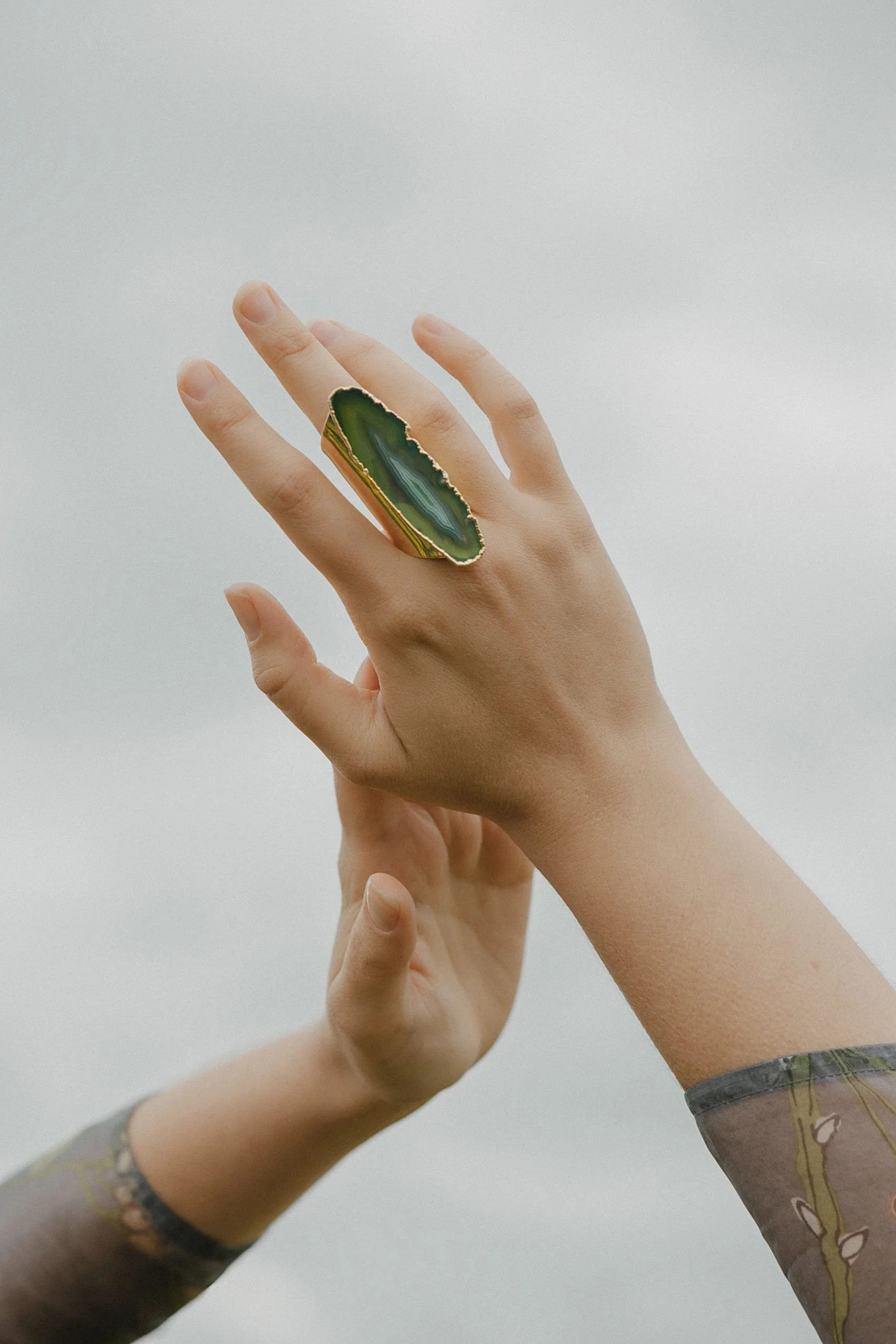
At the moment, it's agate. I'm literally obsessed, and I haven't stopped wearing it since March. I think the reason is, because obviously we're going through a really strange time, there's a lot of uncertainty. And for me, agate represents protection, and it's very grounding for me as well. The backstory of the agate stone is that soldiers used to wear them on their breastplate when they were out in war. Most crystals, they have lots of legends and stories around them.
I mean, it's definitely fitting with the times at the moment.
At the beginning I felt like there was quite a lot of negative energy around, and I needed to stay grounded and focused and that's how I felt when I wore my agate.
What would you say inspires you creatively and brings out your flair for new collections?
I think it's actually the crystals that give me a lot of inspiration and, and checking what the trends are as well. But also, I love statement, anything big and chunky, but with class. The crystals are like a piece in themselves. So, it's like getting the balance between not losing the focus on the crystal whilst designing the jewellery at the same time. I tend to play a lot with components that I have and making mood boards, etc...
Would you say that certain moments in your life shaped the way you create and design?
I think it's probably about having the confidence to design. Sometimes I'm like, "Oh my gosh, will people go for this?", if it's a bit, you know, loud or too statement-y. Mind you, this this collection, I did a couple of delicate pieces, which is kind of unusual for me.
Yes, from what I saw in your previous collections, they're all quite "statement-y" and bold. But then I saw those delicate bracelets and they are so beautiful as well.
I don't know why I had a bit of a change of heart. I knew I wanted to design something with kind of like a the 'charm' scene. I don't know, it just came about somehow. I say, unusual for me, but I still really identify with it. I felt like, maybe because we're all going back to the simpler times, simple but still beautiful. pieces. I think that's why I brought in the pearls as well, because I was blessed to have them.
How do you sustain interest in the most mundane tasks of production when you produce and design?
Sometimes I take a break. I have my best friend, she's always rooting for me and encouraging me, because obviously, there's been times where I've wanted to quit. And she's like, "No, you've got to continue!". So, she's had a huge impact in my life. Just always so positive and tells me to go for every opportunity I can. She been my backbone. Also, I think taking a break helps a lot, because even now I'm thinking that I need to design and plan ahead for next year. But I don't feel so inspired at the moment. I think it's because I haven't really been out much, so I'm hoping now the lockdowns over, I'll be able to get my inspiration back. I love like, people watching, that's a big one for me.

Interesting. And so obviously, during this whole pandemic, we've massively slowed down as a society in general. Do you think this whole experience will change the way we produce and consume fashion and design?
I think that a lot of people have just been buying online. Consumerism has moved to an online portal - which is great for small businesses. But I think people are also reconsidering what they buy, how they buy it and focusing more on what they really need, as opposed to the fast fashion impulse buy. But I feel like it's not the same experience as when you go to store and you see. I'm very much a people's person, and I like to touch and feel things and see, I'm a very visual as well. So online doesn't always do it for me.
I completely understand I'm the same, I need to touch see everything and feel it myself, in order to think whether it's worth the money of if I see myself wearing it.
When you're out and about, and especially when you're in a boutique. In the summer we went to Hampshire, and there's lots of little boutiques there. I just loved going in there and seeing the people, speaking to them, and seeing the unique, unusual things that you wouldn't find in the mainstream stores. I feel like London is not how it used to be. But for me, that was such a treat, being able to go into boutiques and speak to the store owners or the designers.
What would you say are the main problems in fashion and design today?
I think there's a lot of repeats. A lot of people are just doing the same thing and just reproducing. You know, everyone's just copying each other, basically. Which to me is very boring. So, that's why I like boutiques, and I like designers because they always think outside the box. I guess the idea of fast fashion is that consumers are always over buying with things that we don't need.
And do you think jewellery/fashion/design, it can ever be truly sustainable in the future?
I really hope so. I think there's a lot more awareness right now, and I think people are looking for that thing to tip them over the edge to buy something. I think educating people about what sustainability really is because, like you say, whether that's true or not all the time? What does it really mean? Is it the same thing as organic? And especially to designers and fashion, because I hear it nonstop, but I still don't really know what it meant until I looked into it and checked for myself.
So true. What do you think is the most effective way to promote sustainability?
I think through education again. Designers are talking about it all the time, but I think, we need to be getting into the nitty gritty details of it, because I'm all about details. We really need to explain it to people what it means not just throwing the towel around.

Yeah, that's true. Do you have any ideas of where the next collection of Tiana Jewels might go towards?
I really want to do a kid's collection, because kids are so intuitive. They totally get crystals and they're so mesmerised by them. I'm also trying to raise awareness in children, because they don't have any blockages and they totally understand when they see a crystal if they like it or if they don't. I have started to do a kid's collection, I need to do a bit more work on it. I'm hoping that my daughter will model for me as she's really excited about the collection. She wants to help me design it as well, so we're going to do a little collaboration.
That is so wholesome! Do you plan for it to be a kid's collection on the side of your normal collection?
I want to do like a 'mum and me' kind of thing. I'm looking into matching mom and daughter pieces. I see with my own kids, they love crystals and because I have them everywhere all over the house, they're really into it.
I can't wait to see them!
Check out the collection online now! Available to purchase at La Maison Couture.
Special thanks to Black PR for providing Tiana Jewel Celestial campaign photographs.
Why is Everyone Suddenly Talking ‘Sustainability’ in Fashion?
“The Fashion Industry was ‘working’ because nothing ever disrupted the business before”

Photo by Anna Sullivan on Unsplash.
Our system is broken. It has been for many years. So why, only now, are designers, editors and directors of major fashion brands talking about sustainability and system change?
Over the last few weeks, social media platforms have been boosting with a range of content coming from the most honoured fashion personalities in the industry. Edward Enninful OBE, editor-in-chief of British Vogue, hosted an hour-long conversation on Instagram’s IGTV with Grace Coddington casually debating the state of the fashion and magazine industry of ‘post-corona’ life. Cara Delevingne followed the trend and spoke ‘sustainability’ with Greenpeace, and Imran Ahmed, founder and editor of Business of Fashion (BoF), outlined the implications the pandemic has caused to re-envision our future. Everyone, from models to editors of pioneering magazines, is concerned with the environmental and humanitarian impact the industry has on the planet, but why are they only openly talking about it now?
The unethical conditions of workers in countries like India and Bangladesh, to just name a few, are no secret of the industry. Rana Plaza first came to the attention of media after a garment factory collapsed at the rate of just 90 seconds, killing over 1,100 people inside - most of whom were young women manufacturers. The “mass industrial genocide” forced brands to act immediately. Presumably, Primark and Matalan were amongst the retailers who manufactured garments in the building, yet the full list is unknown to this day.
Seven years after the collapse and re-evaluation of ethical and safety standards of workers in developing countries, the same battles still forge the debates of transparency and human rights issues. Manufacturers in factories still work for the lowest wage in the world (starting at equivalent to £25/month), with children as young as six years old forced to work instead of going to school. Poverty is still a huge concern in what is called the ‘most glamorous’ industry, yet the reality is far from it.
Due to the global shutdown, manufacturing workers have been left on the side of the curb with no income to support themselves or their families. Over 90% of garment workers have no possibility to negotiate their wages or working conditions and in the eyes of their governments, they’re technically unemployed and do not qualify for any government ‘furlough’ schemes. Nearly 60 million garment workers in India have been left without work resulting in the hardest collision of the health system and pandemic crisis.
Imran Ahmed in BoF Live talk with Casey Legler, a French-American writer and model, outlined his vision of the future of fashion through enforcing sustainability, reducing carbon footprint and “giving back to the people,” by offering the workers adequate pay for their labour and establishing worker’s rights. He outlined that the companies should be held responsible for their factory workers during a global crisis, like this one. Casey Legler expressed her hopes that the pandemic “will put a magnifying glass on the fashion industry’s issues and rewire”.
Fashion Revolution estimated that the global lockdown resulted in over $3.8 billion cancelled store orders, with tons of material laying in factory-houses from the Spring/Summer collections that were presented in Fashion Week in February 2020. The Business of Fashion editor, Imran Ahmed, scrutinised the fashion industry for the waste and pollution they cause to the environment on a regular basis. Luxury and high-street brands are suspected to burn their collections and excess textile materials that have not made it into retailers and shops around the world, resulting in 1.2 billion tons of CO2 emissions on a yearly basis. The fashion industry is already known as one of the major environmental pollutants in the world, from crops and water to air and soil, but with the excess garment stock, Imran Ahmed believes there will be three times more waste produced globally.
The disruption levels on the fashion industry have reached an all-time high, from factory closures to retailers and design production, the whole supply chain has been shattered. Grace Coddington, a legendary model and US Vogue’s creative director, in a conversation with Edward Enninful on IGTV stated: “I’m not a religious person, but I feel like God is telling us to slow down”. The endless collections and fashion weeks that have been pioneering the world of fashion glamour for nearly a century will come to an end as we know it. With the current technological advances, major fashion houses such as Marc Jacobs have spoken out about the excessive-ness of so many fashion shows in Vogue Global Conversations webinar, and suggested to only have two fashion shows a year - “The amount of stuff we make and the quantity we make and the amount of time it’s shown – it’s just so excessive”.
Casey emphasises that the current system “was ‘working’ because nothing ever disrupted the business” and with the present disorder and uncertainty, the industry as a whole, is forced to reassess the traditional craftsmanship and embrace technological innovation.
Earlier this month, the British Fashion Council’s chief executive, Caroline Rush released a statement saying that London Fashion Week in June will merge womenswear and menswear shows and will be accessed online-only as the lockdown endures. Caroline told the Guardian “by creating a cultural fashion week platform, we are adapting digital innovation to best fit our needs today and enacting something to build on as a global showcase for the future”.
The disintermediation will provide a chance for a new beginning for the fashion industry with a higher potential for sustainable and ethical working conditions and production. The possibilities are available, now more than ever with technological advances. However, the question we should be asking is whether the fashion industry, which is so stubborn to change out of its traditional ways, will be willing to adapt to the new normal?