
Waste, But Make It Fashion
An innovator, an entrepreneur and a force for change in the industry - Olivia Weber rolls up her sleeves and makes it her mission to force fashion to be more inclusive, sustainable, and ethical for all women.

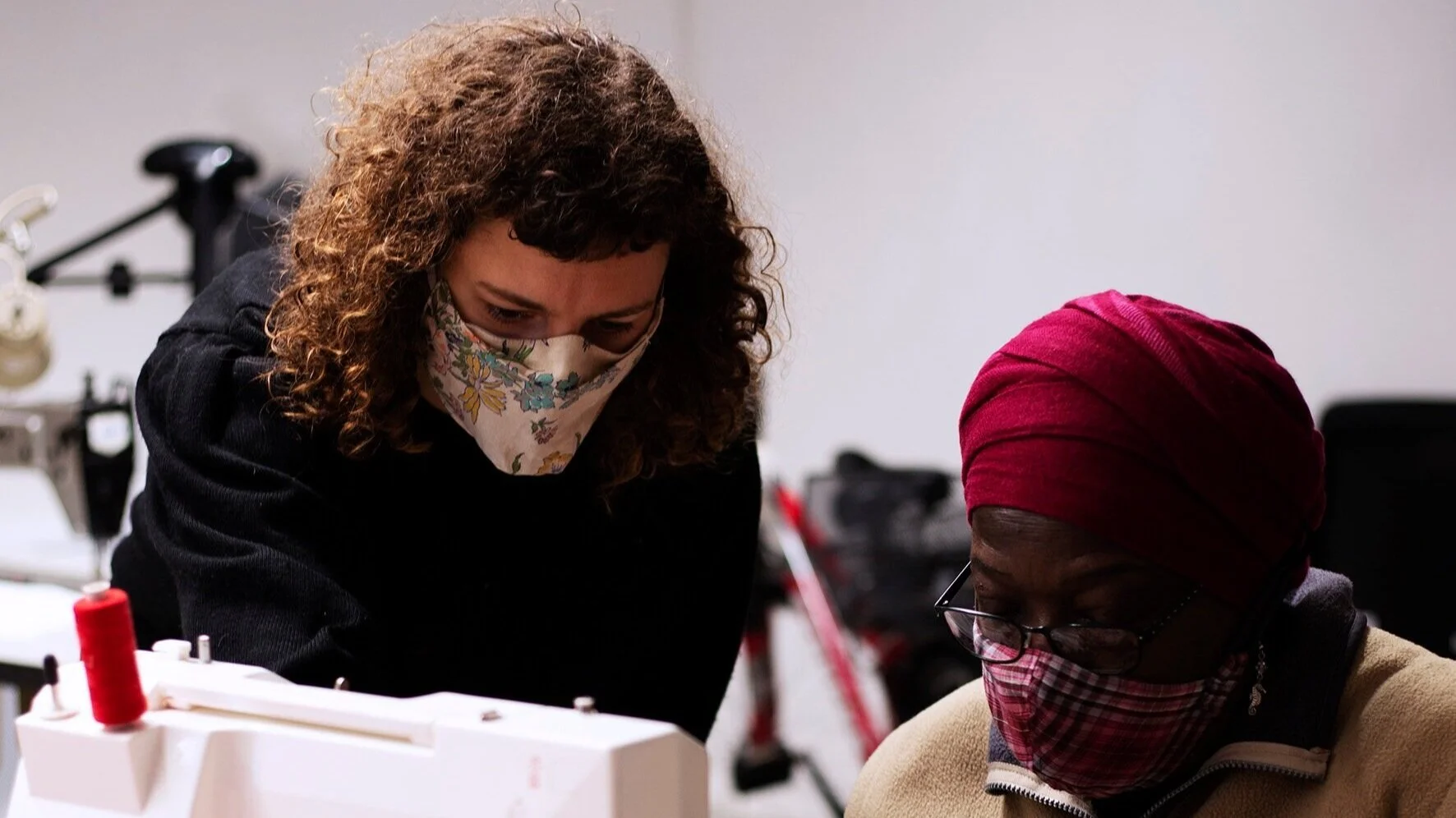
Scissors glide through patterned fabrics and the smell of white chalk hangs in the air. Six women work tirelessly at their allocated spaces, measuring tapes hanging from around their necks, barely noticing my presence. I’m at Trashion Factory, Olivia Weber’s latest sustainable fashion endeavour.
Defining herself as “an inclusive feminist”, Olivia Weber has been a force for change within her borough of Walthamstow. The founder and creative director of Trashion Factory, she provides free upcycling workshops dedicated to supporting women and single-mothers from low-income backgrounds. Weber’s workshops give them the opportunity to find employment with their newly learnt sustainable craftsmanship skills in the highly-competitive fashion industry.
Before her solo endeavour, Weber was part of a trio - JOA (Julia, Olivia, Anna). “We started JOA together,” she explains, “[but] then COVID happened, which made us rethink the way we make, where we live, and how close we are to the people we love.” Olivia’s former partners decided to go back to their home country, to be closer to their family - yet for her, London was home and she wasn’t about to give up on her passion of community engagement.
Her love of upcycling sprung from the loss of her aunt to cancer a few years ago. Unwilling to part with her belongings, she decided to bring them back to life by merging different items to form new designs.
The JOA trio graduated from London College of Fashion in 2019, where the brand won them that year’s Enterprise Challenge Award. Their ethos was (and still is) about using unwanted clothing and repurposing them into personalised bomber jackets. Championing zero waste and the upcycling of materials, all of their workshops are designed specifically for the local community.
Running different workshops throughout the year (lasting 6-10 weeks each), Olivia’s students have a true opportunity to learn different craft skills; pattern cutting and sawing to kimono design, eventually involving them in Trashion Factory’s branded t-shirt production and design, where chosen designs give profits to their creator “I try to involve them in as many opportunities as possible,” Olivia explains, “nurturing this factory of kindness as a support system.”
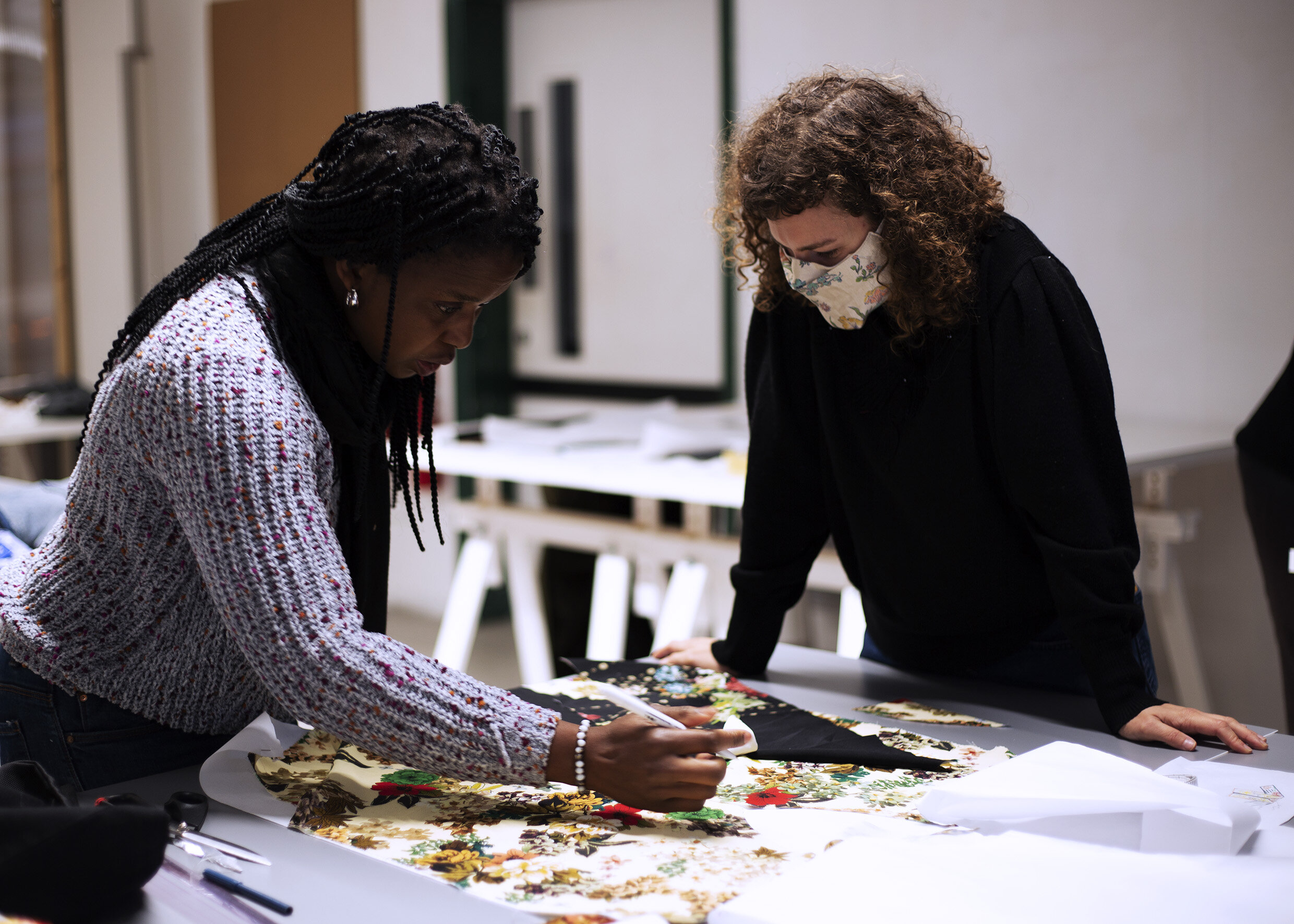
Besides providing her students with life-long skills of craftsmanship, Olivia educates them on the matters of sustainability. “It's interesting how fabric is actually quite an easily available material,” she explains, “once you know what you're doing.” Through gathering excess materials from warehouses and reusing unwanted fabrics from friends and family, Olivia has created a stable and sustainable business model for her brand that is truly beneficial for the environment and the local community.
Tired of the so-called ‘craftsmanship’ many companies market themselves with, Olivia explains that in reality “it’s just constant producing and manufacturing”. Many luxury and fast-fashion corporations define themselves as ‘craftsmen’, yet their garments are mass-produced in factories overseas. “I find craft to be people actually making things” she says, “not seeing them as human machines.”
“I’m hoping that in the future, there’s going to be loads of different sizes, designs, style, and diversity.”
The realities of the fashion industry are no secret to anyone - worker exploitation, hazardous chemicals dumped into drinking water, virtual slave labour. “There’s so much going on in our society that’s illegal,” says Olivia, “and the people know about it, the state knows about it, and they don’t do anything.” Designers like Olivia have had to create their own sustainable fashion future that puts the planet and people first.
As a designer, Olivia doesn’t have experience working for major manufacturers or designers to which she sees a huge benefit. Established designers and fashion houses are sceptical to change, and they don’t realise there may be other options of production that are more sustainable and beneficial. “The design houses and manufacturing are so separate,” she says, “[it] seems to be the common problem where designers are not taking enough responsibility.”
Being a strong advocate for sustainability, Olivia is conscious about her clothing habits. Consumers are so used to buying excess amounts of cheap garments, but for Olivia, making a change primarily comes down to a shift of perspective and appreciation of what you already have.

“I see my clothes almost as people”, she says. “I’ve had some of them for so many years, that I have a wardrobe full of memories.” She puts an emphasis on establishing relationships with the clothing you already have and, if you are adding something new to your current wardrobe, to buy second-hand.
“What I find sad at the moment, is that all brands create very similar things,” she says, “and that’s why so many items are thrown away - because it’s not interesting or doesn’t fit right.” The beauty of buying vintage or upcycled clothing from sites like Depop, is the personalisation and range of style from various fashion eras; those iconic flared jeans from the 70s, that altered bomber jacket from the 90s, or that pair of Dr. Marten’s that you’ve wanted for so long, but couldn’t afford.[2] Instead of being thrown away, the items are repurposed and find a new home, allowing for a circular fashion system.
The constant production of new collections, repetitiveness, and endless seasons contribute to the ‘throw-away culture’ we have succumbed to. “The system is not made for the diversity of human beings we have on our planet”, Olivia explains. We are not all made of identical physiques, each of us is completely different from one aspect to the other, so why are we letting fashion companies treat us like we’re all one person? “I’m hoping that in the future, there’s going to be loads of different sizes, designs, style, and diversity,” says Olivia, “a very colourful future.”
As Retail Sales Plummet, Are Major Brands Read To Embrace Sustainability?
In the wake of COVID-19 and it’s increasing economic disruptions, fast-fashion giants are beginning to fall one by one into administrations and bankruptcies. Could retailers finally embrace sustainability to recover from the pandemic?
We’ve all been told many times over that the fashion industry is the top pollutant of our planet, but what many may not realise is how some companies are establishing sustainable and value-orientated practices to boost their sales, making vast profits right in the middle of a global pandemic.
Seeming to have fuelled a new eco-consciousness, consumers have begun to increasingly look for sustainable alternatives in the market. Luxury fashion leaders, like Gucci’s Alessandro Michele, have spoken out about the rigorous nature of the fashion business - pledging to going ‘season-less’ and taking on more responsibility within the industry.
Since the stay-at-home orders were enforced in mid-March, consumers increasingly re-evaluated their priorities - particularly when it came to fashion. Encompassed by the trend, which highlighted the troubles facing fast-fashion retailers, more and more shoppers begun demanding sustainable practices and transparency from brands - willing to expose and abandon those who do not oblige.

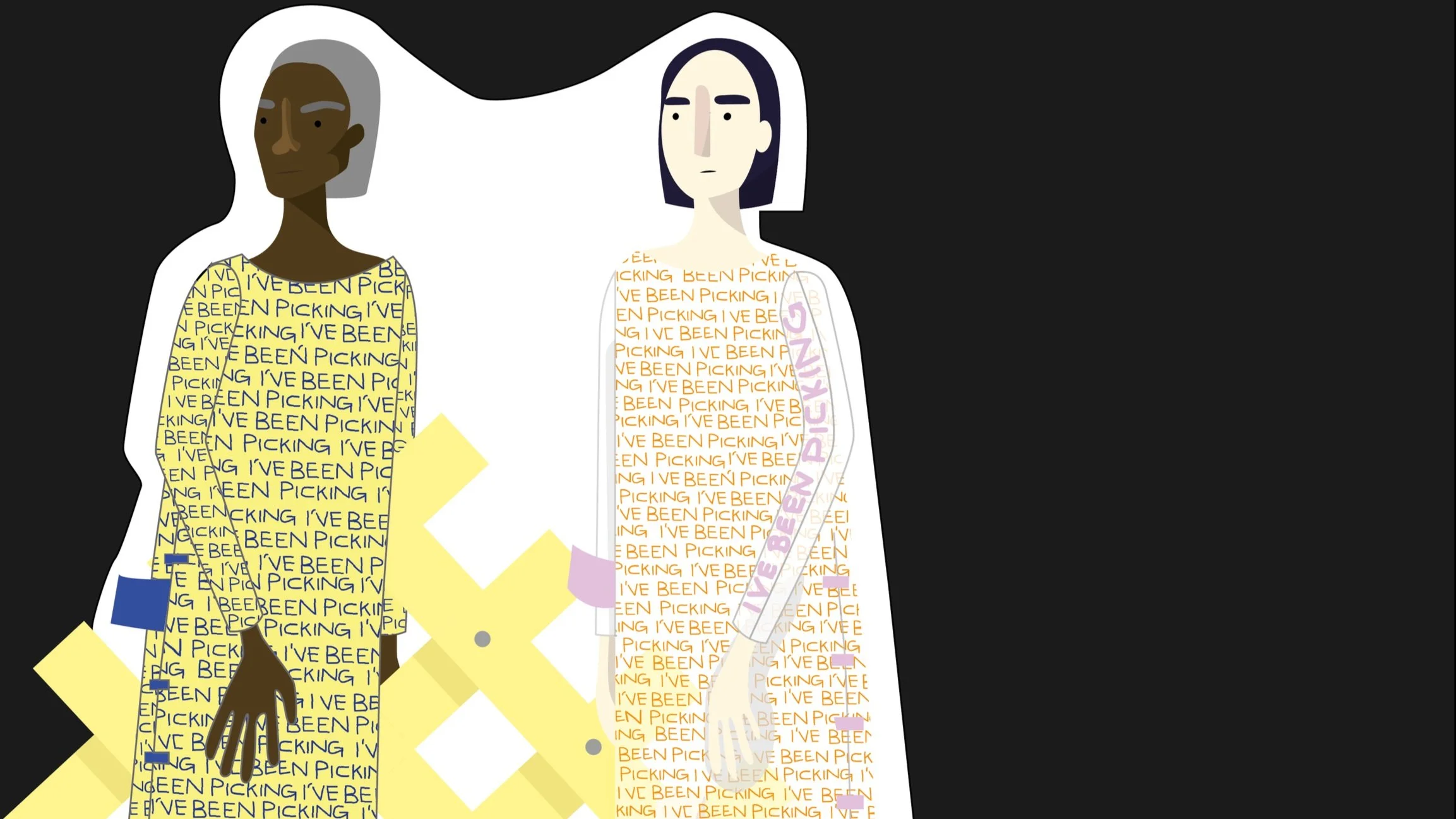
Illustration by Nienke Creemers
Retail giants like the Arcadia Group, Debenhams, and Victoria’s Secret, have all entered administration after the first lockdown wave. The announcements plastered on every news outlet in the country - but are we really that surprised?
Their business models, like many other fast-fashion brands, prioritise profit over people and planet. During the first wave of the pandemic, they cancelled over £100 million orders from overseas manufacturers - causing much criticism for their behaviour and treatment of the vulnerable manufacturing workers, leaving thousands without income.
Temporary store closures and mass unemployment caused a decline in sales across the whole sector, leaving major companies struggling to sustain their affairs in the wake of the pandemic. Businesses took a huge loss over the whole year, with Kering alone having a £2.9 billion decline in the first 2020 quarter.
For some brands, this was a wake-up call to reformulate their business plans and go back to basics. Earlier this year, Alessandro Michele devised a plan for Gucci to cut down to only two collections per year, saying, “I hope that the choices we do make will respect the actual timing of fashion and factories, and the people who work there.” By reducing the collection output, Michele wants to increase the sustainability of the fashion we buy, and as an industry leader (with a revenue close to £9 billion), other brands are expected to follow soon.
Companies who have embraced sustainable business models earlier in the year have been thriving during the pandemic. Recent statistics show that E.l.f. Cosmetics have generated a 60 per cent surge of new customers - offering high-quality, vegan, cruelty-free, and inclusive beauty at an affordable price point.
“Gen Z consumers are looking to vote [with their wallet] for brands that care about the things that they themselves care about,” says CMO of E.l.f. Cosmetics, Kory Marchisotto. “The strength of our purpose has come up loud and clear from them as one of the features driving our success right now.”
A key player in the race for sustainability has long been held by the high-street brand, H&M, with their Conscious collection - made of at least 50 per cent sustainably sourced or recycled materials. Despite facing backlash for their fast production cycles, which are the very antithesis of sustainable practice, Georgina Waltier, H&M’s sustainability manager in the UK, justifies the brand’s approach by saying, “we want to use our large size and scale to really drive systemic change across the entire industry”. Waltier explains, “we are investing in new innovations to bring more sustainable materials to scale, so [they] can be affordable.”
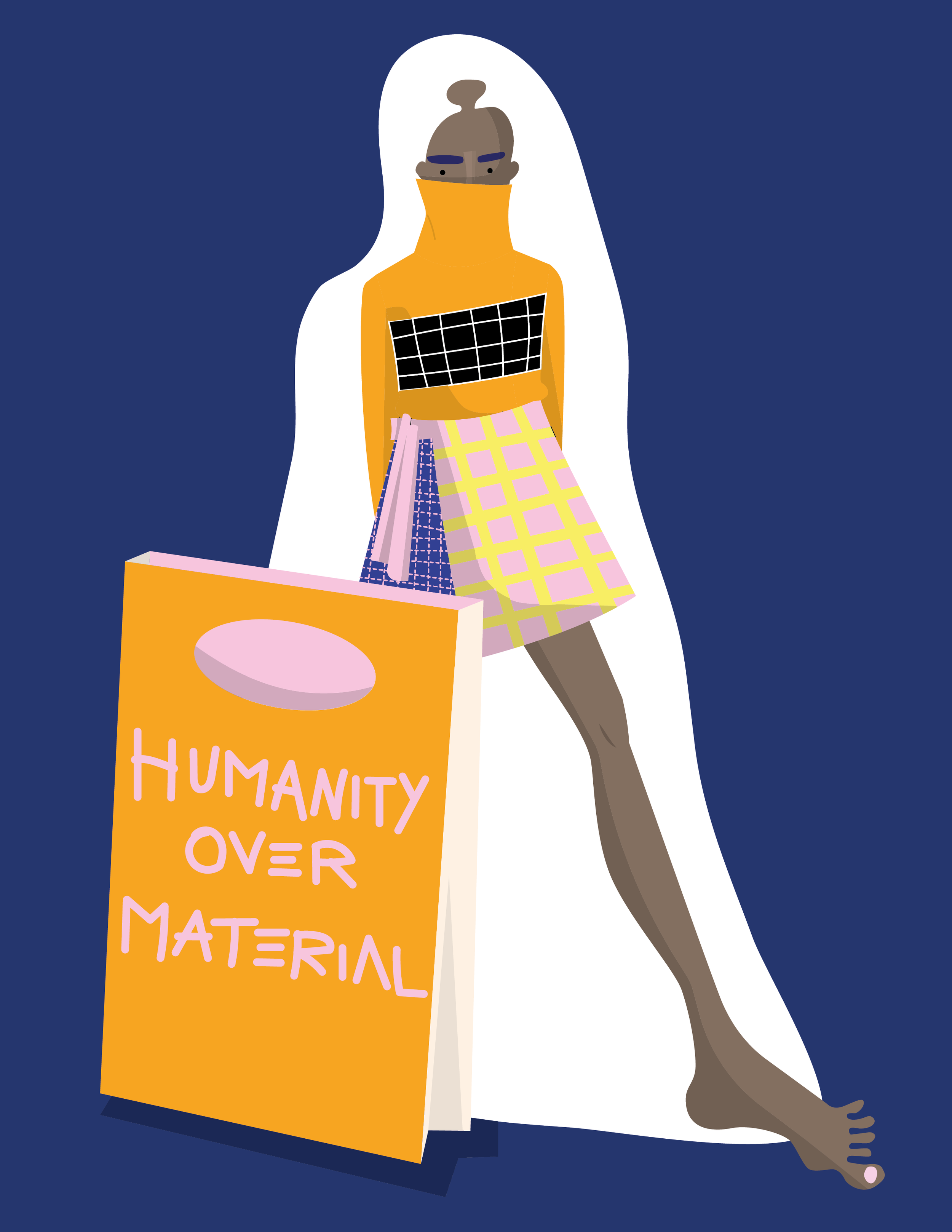
Illustration by Nienke Creemers
The brand’s strategic decision to keep on track with all its initiatives gave them a strong advantage at the start of the year. The Swedish retailer reported only a 10% loss in the fourth quarter (approximately 8% less compared to other high-street brands), positioning them well in the fight to recover in the industry market post-pandemic.
Their ‘Conscious’ collection and the brand’s sustainability-focused values are their greatest advantage. A survey conducted earlier this year found that 67 per cent of consumers consider the use of sustainable materials as a purchasing factor, while 63 per cent also look at the way the brand promotes sustainability.
A recent study done by MSCI Index found that the COVID-19 pandemic vividly highlighted the intertwined nature of the world’s social and economic systems, showing that sustainable brands with higher environmental, social, and corporate governance (“ESG”) factors provide higher success rates in the long-term. With consumers shopping mindfully and cost-consciously, raising demand for sustainable and value-orientated brands, why aren’t more brands adapting the sustainable model?
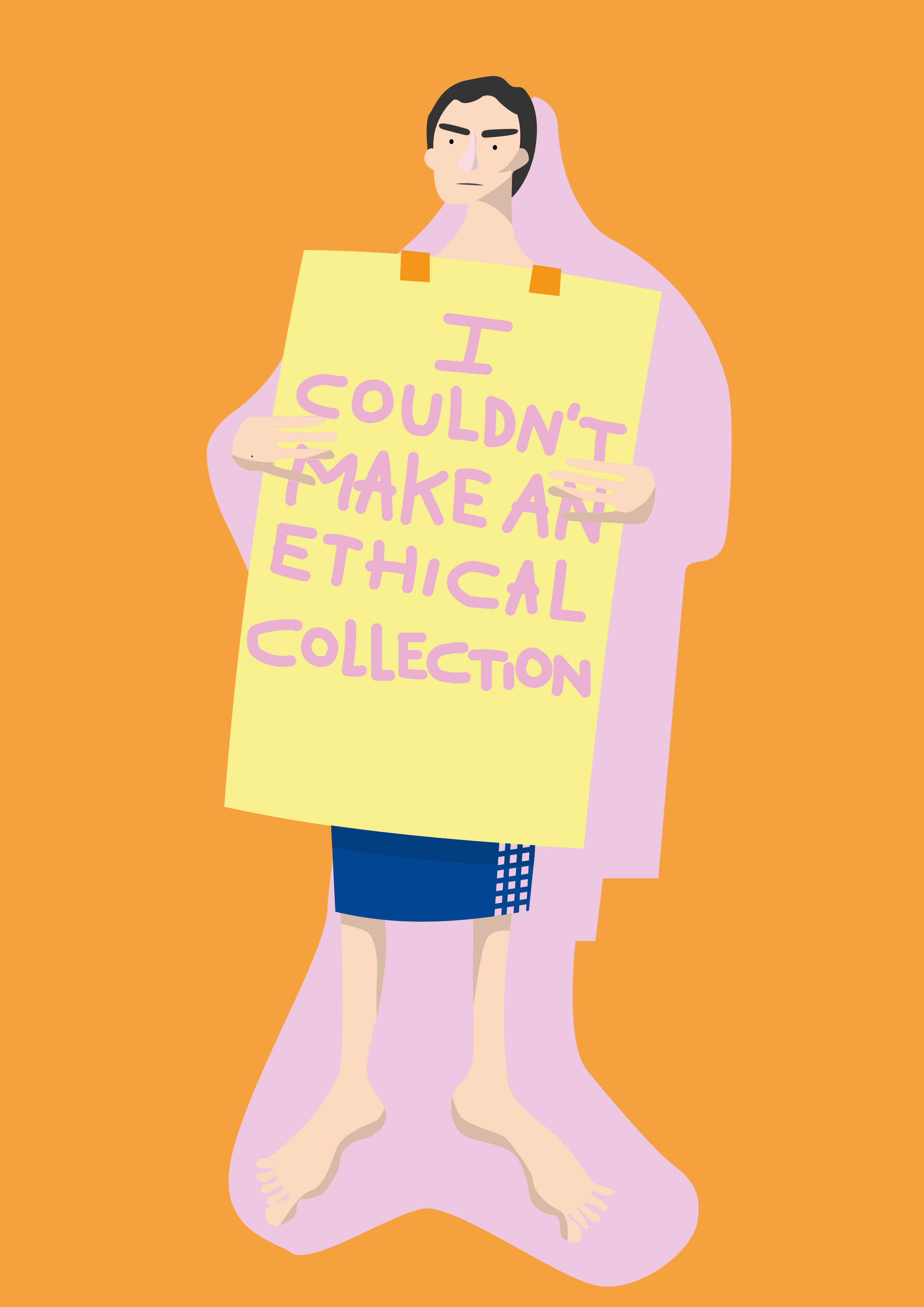
Illustration by Nienke Creemers
Having suited their demands and preferences with the times, it is not enough for fashion and beauty brands to just sell high-quality and stylish products. Consumers look for brands who have values and make an impact on society; whether that’s environmental, social, or inclusive ideals, and they are willing to abandon the brands who do not represent and identify with their values.
Balancing the short and long term, is critical for sustainable investment, and finding that balance in the midst of COVID-19 is a real challenge. Businesses who have shown greater resilience against the pandemic implications have been those who demonstrated a nature of sustainable approach on a macro and micro level.
The future of retail, fashion, and beauty past the pandemic remains unpredictable, but with the considerable increase of ‘eco' popularity and the rise of the sustainable consumer, maybe it is time for the major retailers and fashion groups to take note and re-evaluate their business models to fit with the increasing consumer and society demand - if they want to adapt to the ‘new normal’.
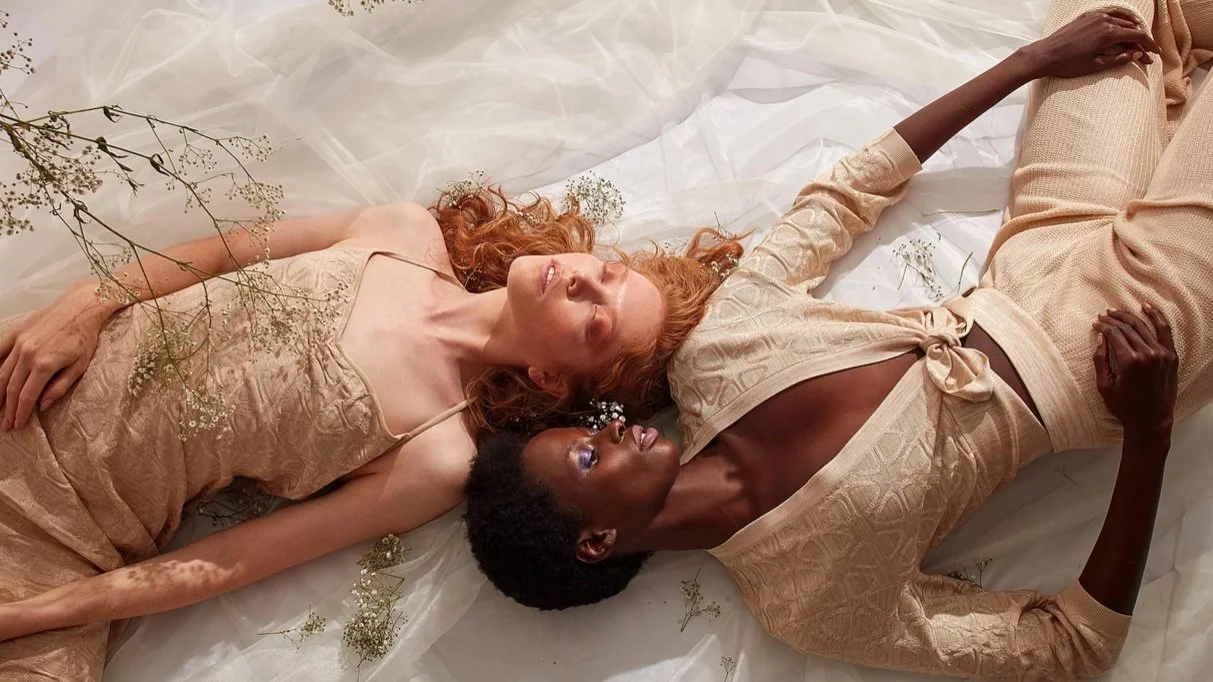
Embracing The Feminine Silhouette with KNITSS
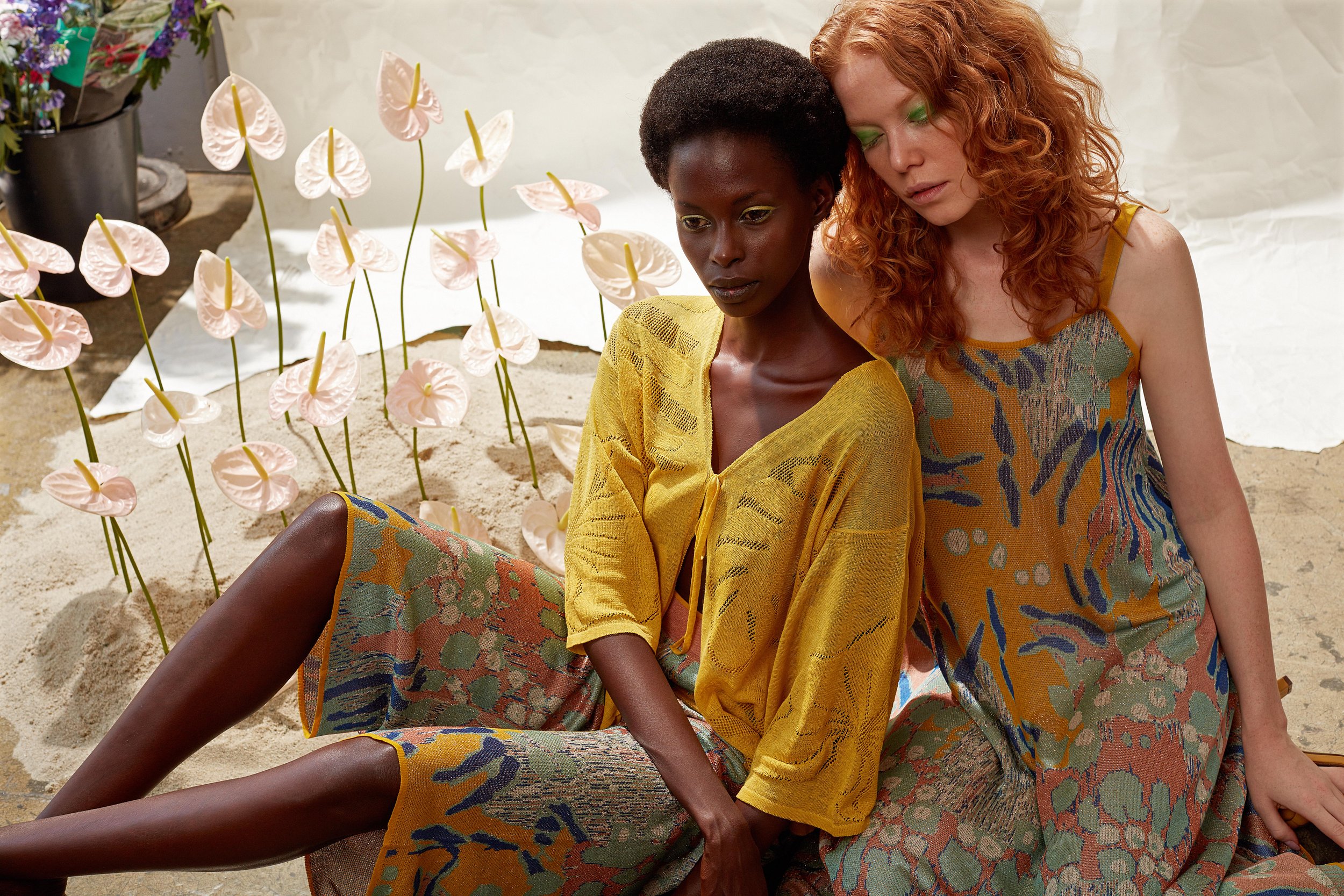
Taking inspiration from powerful women, the contemporary knitwear brand, KNITSS, brings back the traditional feminine silhouettes of comfort, confidence, and style will certainly boost any mood in the new year.
Throwing 2020 behind us, yet embracing some concepts of simplicity, melancholy, and positively moving forward, the “Beautiful Flora” collection grasps the perfect balance of nature’s colour palette with bohemian style that perfectly reflects the brand’s core values of sustainability and modern sophistication.
Speaking with the Founder and Creative Director, Duygu Boz takes advantage of the world lockdown to absorb and explore her creative reflection. Embodying her Turkish heritage and producing every collection in-house, Duygu emphasises her production process, inspirations, and hopes “for a better world”.
How do you feel about LFW being digital? Do you think or want it you continue past the pandemic?
I feel enthusiastic about what we have seen so far! It’s interesting to see how each designer has adapted in a different and original way. This new format for fashion week provides opportunities for designers to think differently and possibly even more creatively. It can be a real opportunity to reset the industry for the long term and set it up for a more responsible future.
Do you miss the physical shows?
Not so much. We can now take the advantage of the global inclusive reach of digital - whether it be through stills, film, or livestream. As creatives we are always looking for a new way to express ourselves. This is just another avenue for us to do.
How has the pandemic affected you personally and creatively?
I think it’s good for us to recognize that a lot of things can be done in different ways - it’s another way to unlock our imagination about what we do and how we do it. When you think about “creating”, it always comes out of isolation because you need to create a space that is uniquely your own to make something beautiful. I changed my life in a way that can make that different point of view possible. I can say this period made me more mindful and creative in a good way.


What was it like creating on entire new collection during lockdown?
During the beginning of lockdown, I thought ‘how could it be?!’, but after a while it became natural. I just focused around “what the world needs”. For my own life, I see this period as a chance because I had enough time to take a step back and look around and think about. So, I focused and started the new collections with a fresh mind and nice ideas.
You have a background in Film and TV. What made you want to switch to fashion design?
I studied Film and Television, thankfully, because it helped me to see the world from a different perspective. After a couple years of working in the sector, I jumped to the fashion management and design because of my family business in textiles, but I always took the advantage of studying Film and TV. I like to tell the stories by KNITSS collections in the seasons like shooting a film. That’s a great excitement and motivation for me. That’s the way of my telling story.
Do you see yourself taking influence from film/cinema or tv?
Absolutely! What we see in the film is life itself. You can find the inspiration by a character, period, attitude, costume, decor or whatever. So, I’m always taking influence from these sources.
One of your care values is “corporate responsibility”. What does sustainability mean to you and how important is it to the future of fashion?
Sustainable fashion is gradually growing into a “hot topic”, and the most important aspect is to inform the consumers. İt is really important for consumers to think about how their purchase affects the environment; the lifecycle of their garment, and how to invest in clothes that last longer. After all, as a brand, KNITSS promises to take care of our beautiful world with ethical codes because there is no planet B to live!
Your new collection centres around heritage as well as new and old. What inspired the concept for the ‘Powerful Aluure’ collection?
With the rise of digital world, KNITSS focused this season at combining the new and heritage styles in a strong way. It’s all about the focus on making betterand providing longevity. Inspired by the power of now and affected by the past, with womenswear moving back toward traditional feminine silhouettes offering comfort and a strong style with the effect of digital era.
How do you source your materials?
We only use 100% Italian yarns in the collections. With upcoming pieces, KNITSS is shaping the fashion of tomorrow with unique designs and sustainable collections. Always giving priority to the conservation of natural resources, collective living and developing for a “better tomorrow”. This upcoming collection emphasises exactly that - a brand that is sensitive to recycling and protection of the environment. Our motto is “KNITSS for a better world”.
What inspires you as a creative?
I’m always taking inspirations from life itself. Art, hobbies, people, city… Whatever I can find to be inspired by. My most creative moments happened while I was travelling, as if another chakra opens my mind. Most of the time, I visit art galleries and organisations that enter my radar to get inspired with design and collections.
How have certain moments in your life shape the way create?
I grow up in a family which runs a manufactory for international fashion and textile brands. While I was watching the process. I remember that I said one day I will make my own brand and have my own voice. I think childhood period is valuable for the future decisions.
Do you think the pandemic will change the way we produce and consume fashion?
There is no doubt that the pandemic will change the way we produce and consume. I believe that the future of fashion depends on its ability to adapt sustainability and embed this concept in its core. Sustainable fashion has the potential to empower consumers with the feeling of fulfilment, by making more conscious choices and their consumption of sustainable fashion products. Therefore, brands and producers should focus to make it better around the ethical codes for our future.

What are the main issues with fashion today? Who is responsible to fix them?
Certainly, the main issue is sustainability in fashion today, because we all started to be concerned about our future. In this view, all the players in this landscape - including suppliers, manufacturers, regulators, and consumers, work together in synergy and interdependently towards a higher level of welfare.
Can the future of fashion ever be truly sustainable?
Achieving sustainability by its definition is not possible as the dynamic characteristic of nature defies the concept. A sustainable institution embraces human nature at a very high level, because it has the ability to satisfy both our egoistic and altruistic needs. But in my eyes, I believe that sustainable fashion has a big potential and motivation for all the players in this landscape. Nevertheless, consumers are more aware of the environmental and social issues associates with the production and consumption of fashion than ever before.
What is the most effective way to promote fashion sustainability?
I believe that small steps make a big difference. People should pay close attention to how brands use the term “transparency”. Do they really prove it? Are they committed to ethical sustainable practices? One of the biggest culprits in the fashion industry is “fast fashion” or clothes made cheaply to meet demands for the hot new styles. However, fast fashion is putting our future planet at risk. Therefore, every human being needs to take responsibility for our daily choices; commit to buying less, invest in pieces that last longer - these are the small steps but can make big differences for our future. On the other hand, the fashion industry response will shape the future supply chain. Actions to ensure long-term sustainability will strengthen the resilience of business along the supply chain. At the end of the day, it could be a fair mutual relationship between consumer and the players in the industry for our mother nature to thrive.
Their AW20 collection is available to purchase here: https://www.knitss.com/
The ‘Beautiful Flora’ SS21 collection will be available soon. Keep an eye out!
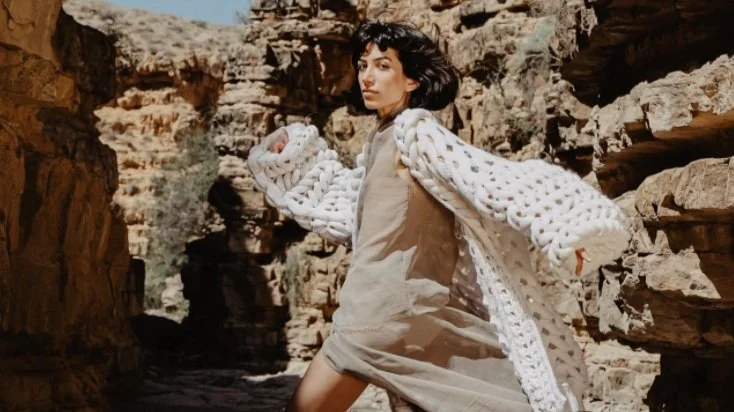
FDC Armenia Leads A Young Generation of Talent to Sustainable Fashion
Despite the potential grim outlook on this year’s London Fashion Week SS21 digital-only shows, a few young designers took it upon themselves to advocate for a change in the fashion industry with their sustainable collections presented in a series of films and photo stills that went live on Fashion Scout’s website on the 18th September.
Sprouting from a single event in 2017, FDC Armenia grew into a collective of over 200 talented designers, companies, and artisans, who have displayed their work in Mercedes Benz Kiev Fashion Days, and now, thirteen of them at London Fashion Week.
Each designer has their own unique style, from Armenian heritage weaving and biodegradable materials, to original printed photos on denim jackets. For some, it is their first time displaying their collections to the public. But unfortunately, due to current pandemic restrictions, the designers were unable to join the celebrations in London, but instead their own homes in Armenia.
Speaking in-between the digital shows about some of their designers with Fashion & Design Chamber (FDC) of Armenia president, Vahan Khachatryan, and Elen Manukyan, co-founder of Loom Weaving, we explore the future of fashion in the next generation of Armenian designers through ways of sustainability and ethical manufacturing, and how they feel about the digital Fashion Week.
2020 has obviously been a difficult year for many around the world. How have the designers coped with the pandemic?
VK - I guess everyone in the world is going through the same problems now. For us - as an organisation, we had a lot of physical events that were either cancelled or postponed to next year. We were supposed to be in London right now, but we’re sitting in our office in Armenia. We're glad that at least in digital format, we're still able to participate in this amazing event.
As for the designers, it's been really tough. It's a very big blow for the industry here [in Armenia], because it is still very young. It's just starting to grow and, in this stage, to get a blow like this, it's almost like going back to square one. Even those who have been in the industry for a long time and had some financial means to support themselves, are facing big problems - a lot of shops closed, which is a very big loss, because I think that it's important to have the physical service. That's why we're really hoping that even though we have the digital platform [of LFW], this will help them open some new markets, attract new buyers, anything that can help them in this situation. We launched an online e-commerce shop today. The first 13 designers participating in Fashion Week are already represented on the e-commerce platform. So, people who watch the videos, they can directly go to the ecommerce website and buy the collections now.
We hope this is going to help. This is also a part of our support programme, where we help them with their sales. Hopefully, in February for the next season, things will go back to normality and we will come to London.
You've mentioned the digital aspect of Fashion Week. So how do you feel about Fashion Week being digital and do you think/want it to continue after the pandemic?
VK - The good side of the coin is that we're learning how to present our goods in a different manner, something we haven't done before. Of course, we've always been doing photo shoots, and videos, but this is completely different. We’re used to touching the clothes and looking inside, how things are made, what's the quality. It's really difficult to show these things in a photo or on a video. So, this makes us come up with new solutions. Obviously, it's pricey. I've seen some really exciting ideas which we couldn't afford, because virtual reality is getting really big. So, the VR shows that people are doing, it's a lot of investment that we don't have at this moment. But I think that in the future, it will be a mix. Obviously, not everyone will want to stay in the digital format, but I'm sure that this is going to become a part of fashion reality in the future. I'm seeing so many brands who started doing digital clothing - you don't even buy the clothes anymore, you just buy the digital version of the clothing and you get it photoshopped on your avatar or in your photo.

I don't know if it's too early for this because I think we're still living in a quite normal world, especially in Armenia. We're really not that technological. I see some Russian designers, like Alena Akhmadullina, already selling digital clothing on her website, as well as the founder of Mercedes Benz Kiev Fashion Days, Daria Shapovalova (Paskal). They work with different designers around the world and have an online shop where they also sell digital. I think that's the future, but it's a bit further from where we're standing right now. I think it's good because you learn, you're seeing all these possibilities, and especially with our sustainability programme and trying to introduce sustainable fashion in Armenia. Obviously, digital fashion is much more sustainable, and it's less waste. But it's going to be a long way before we get there.
One of the main concepts for FTC Armenia collective was 'sustainability'. So, what does sustainability in fashion mean to you? And how important is it for the future of fashion?
VK - Again, for me, personally, everything started I think, three years ago. I have been in the industry for so long, and I do consider myself a more traditional designer. I like a lot handcraft and artisans, upcycling and recycling, I use old materials or curtains, tablecloths, whatever, can be channelled into a dress. I’ve never given labels to the sustainability process until a few years ago. I found out about the Green Carpet Fashion Awards (GCFA) competition organised by Eco Age UK, where I was in the semi-finals and invited to go to Milan. I met a lot of designers, other semi-finalists, who were working in sustainable fashion. It was a completely new world for me! I learned things I had never heard of before like pineapple leather, or recycled fishing nets. I was blown away by everything that has been done in sustainability – the part of fashion I didn’t know much about. So again, when we got the grant from the UK embassy, we thought that we should really focus on sustainability. The UK has such a big experience in recycling and climate change. We teamed up with Eco-Age UK and tried to focus on the biggest problem that we have now in the textile industry, which is the waste management. So, we’re trying to organise the recycling, fabric waste. Hopefully in the future, we will also start dealing with the other aspects of sustainability.
And do you think that pandemic will change the way we produce and consume fashion?
VK - I hope, but we can never tell until the time will show. Hopefully, people will be more aware of what they're buying, and how they're spending their money. But people have the tendency to go back to the easy ways. There has been so much talk about sustainability, especially among the fashion society now [during the pandemic]. To educate the customer, we should firstly educate ourselves. It is important that the designers hear about these things to start realising the importance of sustainability in the industry, and then they can educate their customers. So hopefully, at least, they've used these months sitting at home with some use and participated in online talks. I hope that they've really been engaged and that things will start changing, at least among the designers, and then for the general public.
Loom Weaving has deep connections in their Armenian Heritage. Does she ever feel pressure to design for a more kind of 'Westernised' audience?
EM - I'm not a designer, I have been working in the business sector within the Ministry of Economy for a long time and working with start-ups. My sister – she's the designer, and she was trying to open a business, for like six years. I supported her because she couldn't do anything apart from creating clothes! Maybe this was my purpose when I entered the business sector. From her perspective, when she [Inga] started her business, she was always thinking to do something that has never been done in Armenia before. And for a long time, she was doing her research on how to start it. I think it was the best idea that she could propose because at that time, no one in Armenia was using the old Armenian weaving techniques – which was the key idea that we used to establish the business. We started with handmade workers, who are in their 60s (about our mother's age), who are knitting and who know the techniques, but they don't use it in fashion. There is the added value that we put in making these old clothes fashionable. Her niche technique and product are what she is famous for.
VK - It's always difficult when you have a niche product for the market. When we were in Milan, anticipating one of the trade shows, there was big interest from Germans and Latvian buyers, because I think it was something they would use throughout the year.
Also, in Armenia, things are changing slowly. Before, knitwear was considered something your grandmother would wear or make, so it wasn't considered 'cool'. But times are changing. It's becoming something that is trendy and that young people wear. But it's not just knitwear, I think every niche product is going through the same path.


Damien (aka. Damink) is basically a one-man show. He does photography, art, film designs - he's doing so much! How does he keep up with everything?
VK - That's, again, a big problem for most of the designers and I don't think it's just a problem in Armenia. You have these designers trying to do everything because they cannot afford hiring other people to work for them - which is good, because you learn, you grow. But on the other hand, you cannot do everything. Just one person is not capable. And at some point, some of the aspects start limping. He's a photographer, who started using his photos on T-shirts. And then from t-shirts, he went to jackets, denim, pants and it became something more serious than just memorabilia.
On the other hand, because he's doing photography, cinematography, and short videos for advertising, and he does his own videos for the Fashion Week. But when it comes to administrative stuff, he does nothing, really. So, we try to help him with that fragment. But even if you go on our ecommerce website, you know, all the designers have uploaded their prices, they're ready to sell, and for Damien, you only have the pictures, because we didn't receive any pricing or a description of the items. You really have to sit him down to do it. But he has no time, he’s taking photos and doing a million other things. So, there is this problem of creative people when they have a lot of creativity they want to work with. They need a business person right next to them to help them with that part. And that's something we're trying to teach. In fact, you don't have to do everything yourself because sometimes it's more damaging than doing good. Hopefully they will start listening.
Do you think he will continue with designing or is he more set on photography?
EM - I think he will continue. His work is very exciting. When we bring his items to sell to international buyers, all of them are taking them, trying them on and taking photos.
VK - The core of his collection are the photos. I'm sure that his brand is going to evolve but, more or less, it will be probably looking the same for a few years from now. He doesn't have to sit down and design a full collection of 60 pieces every season. Of course, he doesn't consider himself as a designer – he always says that.

Z.G.EST has raised a lot of attention during this Fashion Week…
EM - Yes, Alla is the owner of this brand. She’s from finance sector, she worked in banking for a long time but she was very interested in fashion and she’s doing a good business. She’s not a designer, but she is a good manager and she’s one of two designers that are working on collection but she sells very good in our media and now she’s doing an international online shop and works with different online platforms.
I think she will succeed because she knows all the management of business and art. Now she has taken the road of sustainability which is the key, she puts a lot of emphasis on these materials. Yes
VK - She’s very clever. Even if you don’t call these ‘designer’ pieces, these are pieces that almost every woman can buy and have in every wardrobe on daily basis in almost all body shapes, so it’s a very good sellable product. .
She’s obviously very rooted in sustainability and ethics in fashion. How does she source her up-cycled materials?
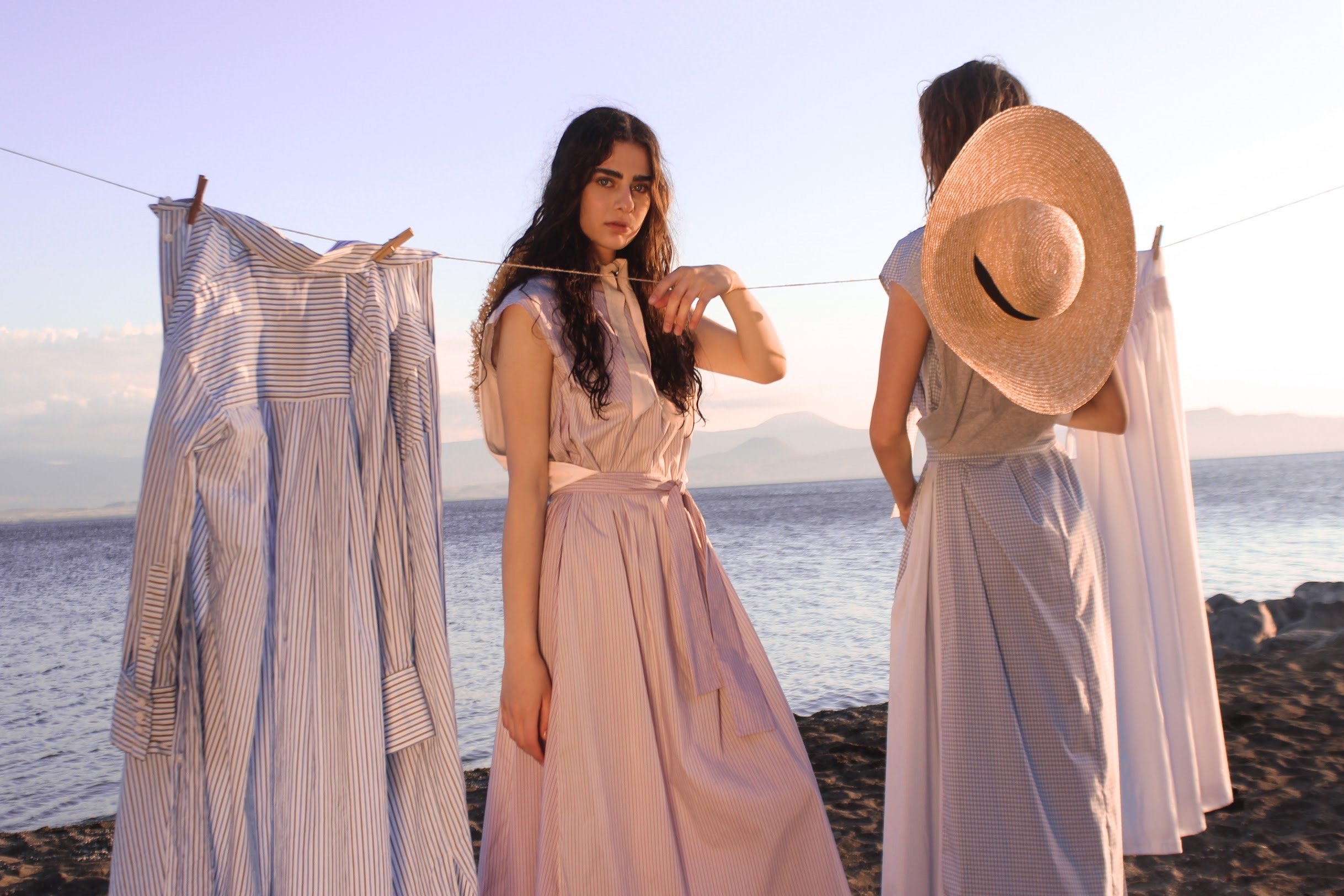
VK - When she started, she would turn shirts into dresses that would be quite versatile, which lead to bigger collections. The idea of having an element of a shirt in almost every piece has always been the philosophy of the brand.
Is she intending to eventually source materials from Armenia to completely minimise her carbon footprint?
VK - It’s not possible to source the materials because we don’t produce materials. That’s a big problem. So, if we’re talking about raw materials, and we always have to buy them from somewhere. If we’re talking about upcycling stuff, it’s obviously possible to buy stock pieces from Armenia. It’s very sad, but we have zero production of any kind of raw materials. The easiest way to make the footprint less is to buy from Turkey, which is our neighbouring country. But we have a bad history with Turkey. Also, Turkish materials are not really considered very high quality, and many of them don’t have the certification of sustainability, because they source their materials from Pakistan, which come with child labour, forced labour and all the other negativity. So that’s why we try to focus on European made fabric. That’s the least that we can do. Maybe in the future, things will change.
It’s hard at the moment. Even though sustainability has been around for so long, it’s only just starting to be really acknowledged in fashion. Do you know if any of the FDC designers plan to expand to the UK?
VK - That's the ideal, the dream! But it depends how things will work out. For example, I was talking to one of our designers, who's Iranian-Armenian. She sells both here [Armenia] and in Iran. I was talking to her and she said that there has been great interest from the UK media, some of which is paid media, and some are for free. But she said that she's going to advertise in Vogue UK and Tatler UK soon.
There was another designer, who said that she hopes this, together with a showcase at Fashion Scout, will really help her to get into the market. Some people are really taking this seriously, while for some it's the first time, so they don't really know what to do or how to do it. They're in the very beginning of their own career. So, this might be a good showcase, but business wise, it's very different. We hope that at least a few of them will really use this opportunity to grow the business.
EM - Z.G.EST is currently selling with Wolf&Badger in the UK, an online store. I as far as I knows, it's selling very good. Last month she sold about 20 pieces through them. Pretty good, considering she's presented with them for only about three months.
What do you think is the most effective way of promoting sustainable fashion?
EM - In our country, the textile industry is on the rise, because a lot of big companies are now actively working. So, from one point, we are working with these big companies and manufacturers, and have an established network for our designers. And from the other point, the company benefits from receiving a 'sustainability' badge, which is very important for them, and it will raise the level of their company as a more sustainable approach manufacturer. They mostly produce for the Russian market in big quantities, but they're also interested in the European market.

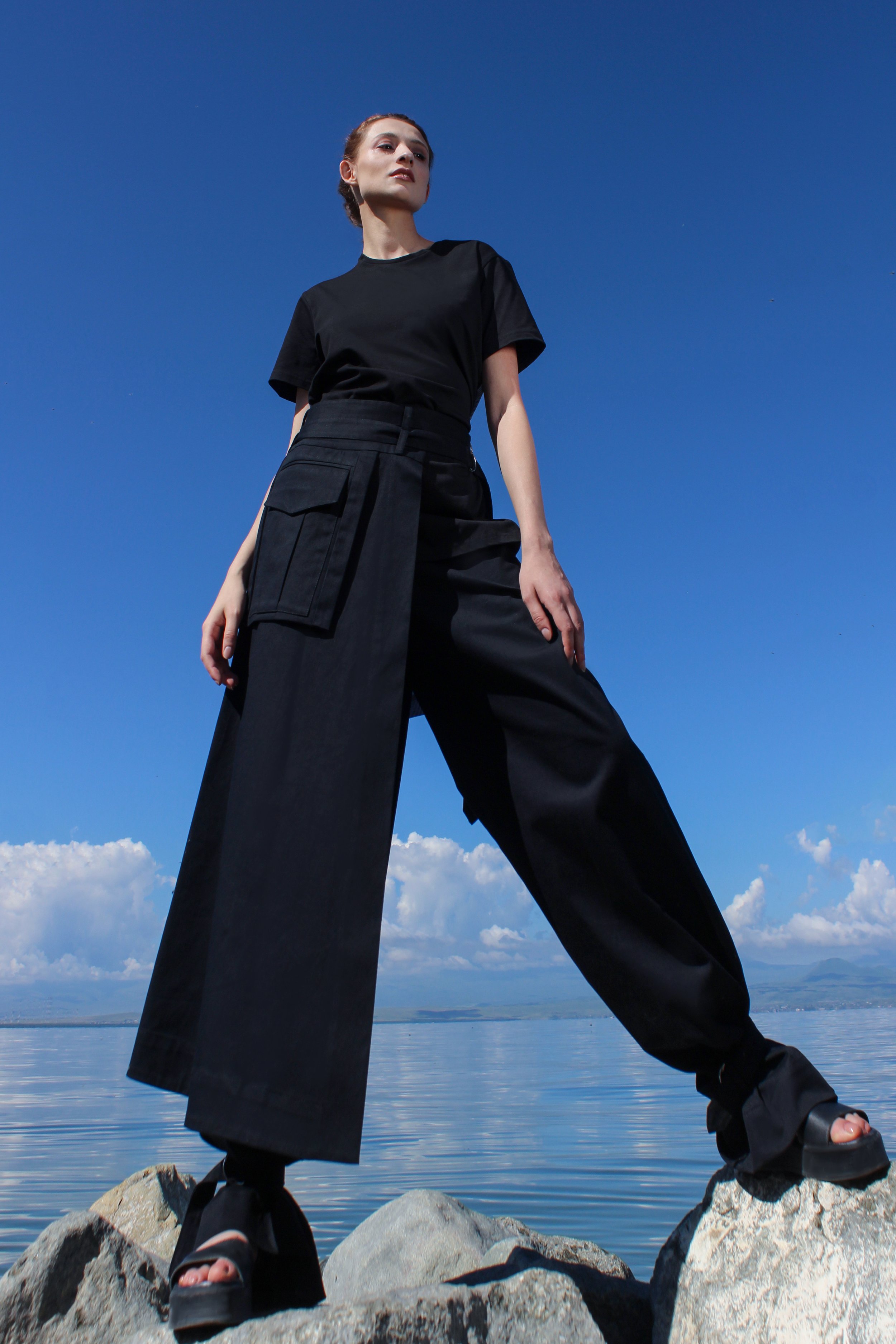
VK - I think that the best way to market sustainability, is to spread the meaning of it - as meaning is very new. People [in Armenia] don't have an idea about what their inner production or designs are about. It's a very good time now, if we're just starting with that, from the rights end. I think that the USP (unique selling point) for Armenian fashion would be that it's, in many cases, artisanal. It's definitely Fairtrade, it's very inclusive, there's no slavery, child labour, and it's fair pay. So, people are paid quite fairly for what their labour, at least for the local market.
EM - The big companies are in the regions, which is another opportunity for regional people to be employed, with good working conditions.
VK - We don't have all the negative aspects that many countries like Bangladesh, or China or other countries have. A unique selling point would still be the fact that it's never mass-produced. So we don't get things that are like 1000, 10,000, or 100,000. Everything is in a very limited quantity, so you get something quite unique. In the end, the pricing is very fair, so you don't pay the price you would pay for an international design effort but you still get the quality.
The problem, which is also something we're trying to understand how we can solve this problem, is the fact that we're not very far from Europe, but the shipment is a big problem for us. So the companies, like DHL or UPS, charge a lot for shipment which is sometimes not reasonable. But for the rest, I hope that people would find something interesting in Armenian fashion.
Do you think the future of fashion can be truly sustainable?
VK - Can the future of fashion be truly sustainable? Completely, 100%, No. But if we're being realistic, even if it's 50% sustainable, that's already a very big achievement, because it's going to be almost impossible to be able to be 100% sustainable in this industry. I mean, even in Armenia, there has so much production, which is underground, let's say in that small workshops, which are not sweatshops, these are still places where people get paid, but just avoid paying taxes, which means they're not registered. This makes it almost impossible to measure how they work, whether they are working in a sustainable way or not. And if you go to countries like China or Bangladesh, it's the same but on a much bigger scale. You may be able to monitor the official part of fashion, but the dark side is always going to stay in the shades.
Check out all of FDC Armenia’s designer products here, and their campaigns on Fashion Scout’s website here.
All photo credits are courtesy of the designers.