

AHS12 with Kim K: A Survival Move?
Kim Kardashian joins the new season of American Horror Story alongside AHS veteran, Emma Roberts
“This summer … Kim and I are DELICATE,” Emma Roberts teased on Monday on her social media platforms, but fans did not take well to news of the reality TV celebrity joining the gruesome franchise.
No stranger to celebrity guest stars, American Horror Story has a long list of previous stars including Lady Gaga, Adam Levine and Naomi Campbell, each of whom have shown incredible talent in the acting department. But will the Kardashian rise to the occasion?
AHS S12 will be the reality star’s first major acting role, but her status on social media and continuous presence in the news makes her the most talked-about celebrity in the western world. Previously making appearances in small roles in Disaster Movie (2008) and Temptation: Confessions of a Marriage Counselor (2013), the socialite has never starred in a tv series or movies, especially of the magnitude of AHS.
However, after the show’s grand success throughout its first years, it significantly dropped in viewership in the last few seasons, with barely any viral mentions on social media. Is AHS’ decision to cast someone like Kim Kardashian a ploy for gaining social media attention and viewership? Or are we about to discover the best AHS season to come?
Season 12 will star the fan-favourite AHS cast member, Emma Roberts, who is a frequent collaborator of the show, however this season was written with Kim Kardashian in mind specifically. It is rumoured to be derived from Danielle Valentine’s novel ‘Delicate Condition’, which follows a story of a woman convinced that someone is intentionally preventing her from getting pregnant. The deeper into the story we get, the more twisted it becomes – very American Horror Story-esque, but will the socialite deliver a worthy performance?
One thing is for sure, despite Kim Kardashian’s acting abilities, the 12th season of American Horror Story will be the most talked about show on social media come summer 2023.
Watch the trailer here!
The Best Female Looks from the Oscars 2023 Red Carpet
On 13th March the 95th annual Oscars kicked off at the Dolby Theatre in Los Angeles, California, and as you’d expect from the most-watched red carpet events in the world, the Hollywood A-listers came for the glamour, but some were riskier than others.
Despite The Academy Awards celebrating the best of film and actors, the event is just as much a show-stopping glamour runway of eveningwear as it is about the awards. A lot of pressure for the nominees, but this award season has already seen most of them deliver on the fashion front. Cate Blanchett, nominated for Best Actress for her role in Tár, known for being the Queen of Re-Wearing her red-carpet dresses, shone at the awards with a custom Louis Vuitton dress from a never-seen-before archival collection and Giuseppe Zanotti shoes. Classic and timeless, just like Blanchett herself.

Cate Blanchett in Louis Vuitton and Giuseppe Zanotti (Getty Images)
A look that turned many heads, came from Fan Bingbing with her Tony Ward Couture hand-embroidered dress and an exaggerated taffeta emerald green overskirt with sumptuous sleeves. The Chinese superstar, who starred in The 355 alongside Penélope Cruz, Lupita Nyong’o, and Jessica Chastain, channelled Old Hollywood glam and certainly took home the award for the best dressed attendee of the night. Her arrival to this year’s red carpet makes it her first time at the Oscars, but she’s no stranger to other events, like the Cannes Film Festival.

Fan Bingbing in Tony Ward, Tyler Ellis and Lorraine Schwartz (Getty Images)
Some A-listers were more daring than others, with Cara Delavigne gracing the red carpet with an eye-catching red Elie Saab Couture gown that features a very prominent and thigh-high slit, which certainly showed off her long model legs. The scarlet number boasted a one shoulder style with a full skirt and ruffles decoration on one arm. The perfect asymmetry featured all the ingredients of a winning look and made for a breath-taking moment.

Cara Delevingne in Elie Saab, Stuart Weitzman and Bulgari (Getty Images)
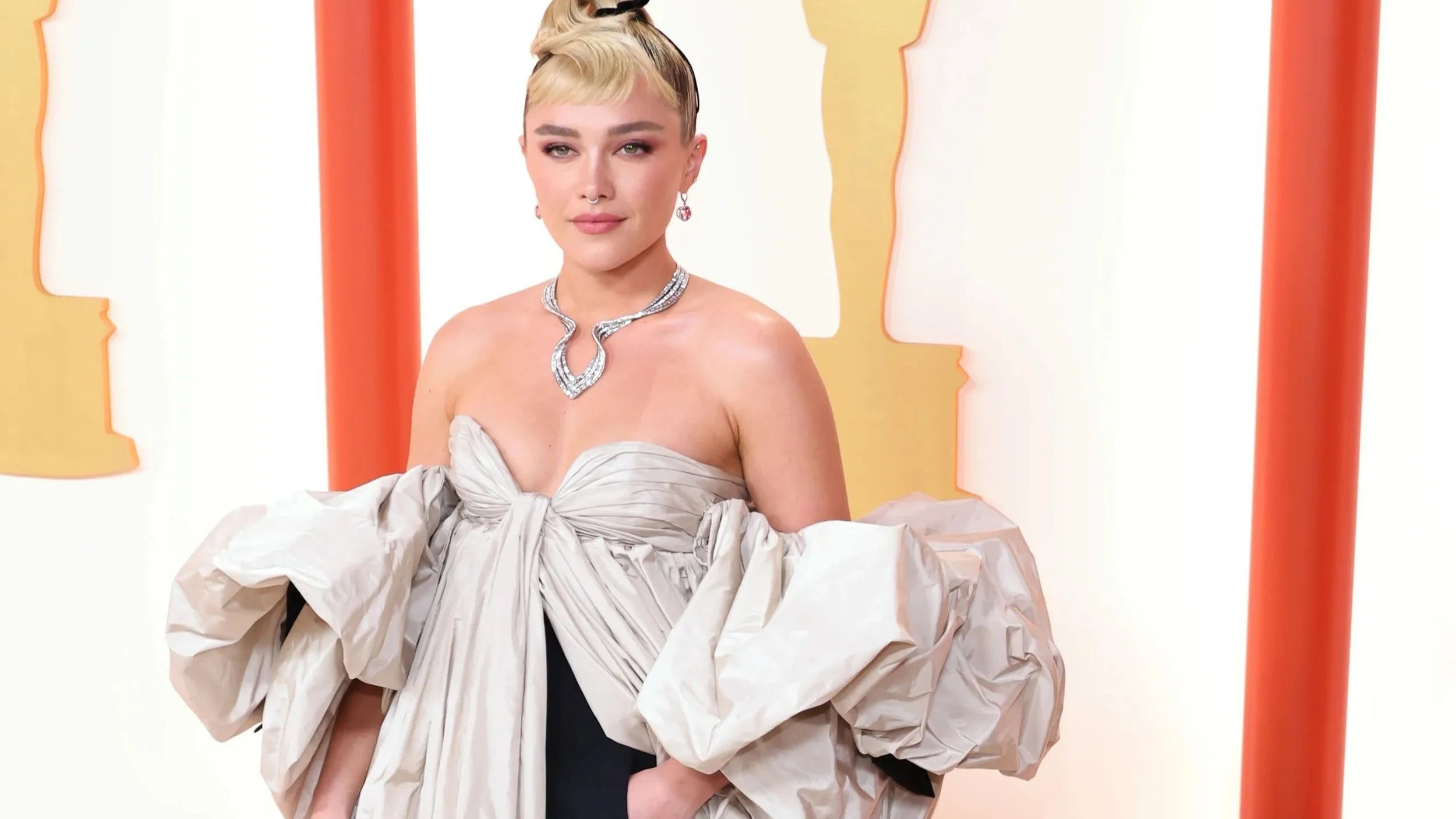
However, the most talked about on social media dress choice at the awards is certainly Florance Pugh who took the carpet by storm wearing a Valentino Haute Couture and Tiffany & Co jewellery accessories. The taffeta dress was completed with a flowing train and ruffled sleeves, along with a pair of black thigh-skimming stretch-caddy shorts (with pockets!), and platform heels. Known for her bold fashion choices, it wasn’t a surprise that Pugh would show her punk side at the red carpet, and she sure made an impression on social media with many comparing her dress to ‘bed sheets’ sparking some amusing memes and videos.

Florence Pugh in Valentino haute couture and Tiffany & Co. (Getty Images)
One TikTok influencer and artist @angelicahacks, known for her amusing recreations of expensive celebrity looks on the red carpets and award shows, took it upon herself to re-create the Pugh’s dress with just bedsheets, tinfoil, black tights, and cans of pringles, gaining her thousands of followers. The resemblance is comically uncanny.
Whether daring or simply glamorous, there’s no mistake that many have turned heads on the red carpet this year with their high-fashion looks. Check out some of the other best dressed A-listers gracing the carpet of The Academy Awards shows:

Rihanna in Alaïa (Getty Images)

Lady Gaga in Atelier Versace and Tiffany & Co. (Getty Images)

Jamie Lee Curtis in Dolce & Gabbana (Getty Images)

Winnie Harlow in vintage Armani Privé and custom CH Carolina Herrera (Getty Images)

Elizabeth Olsen in Givenchy and Giuseppe Zanotti (Getty Images)

Eva Longoria in Zuhair Murad (Getty Images)

Danai Gurira in Jason Wu (Getty Images)

Zoë Saldana in Fendi Couture (Getty Images)

Janelle Monáe in custom Vera Wang and Reza (Getty Images)
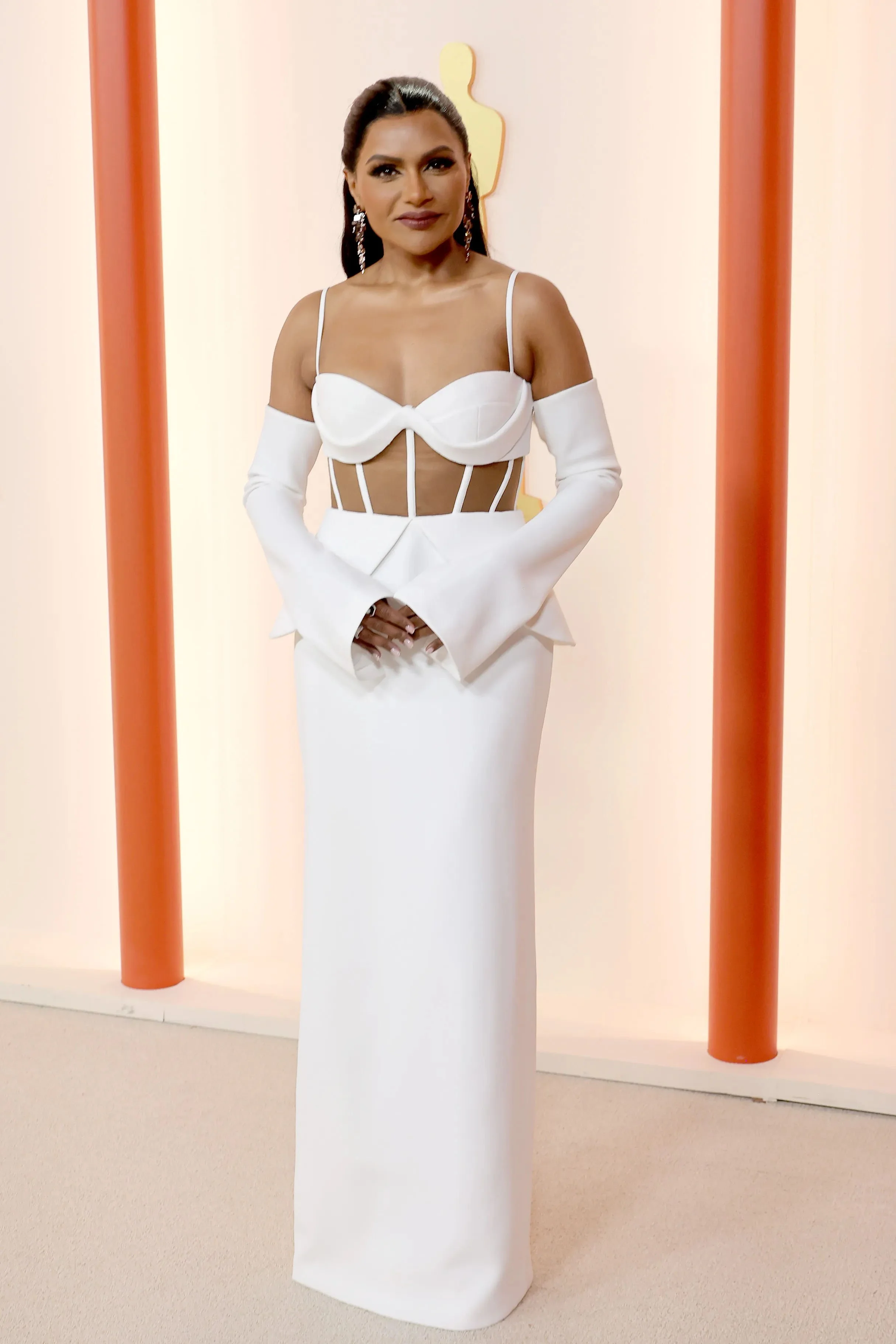
Mindy Kaling in custom Vera Wang, Giuseppe Zanotti and Boucheron (Getty Images)

Jessica Chastain in custom Gucci (Getty Images)

Tems in Lever Couture (Getty Images)

Ana de Armas in Louis Vuitton (Getty Images)
It is Now a 'Gwyneth Paltrow Fashion Trial'
Since the exposure of the Depp-Heard very public trial in 2022, celebrity court trials seem to be the new form of reality tv, but the ridiculousness of the Paltrow trial makes it that much more entertaining and captivating, which she is surely taking advantage of through her courtroom dress.
After colliding with a skier on Deer Valley’s Bandana Run back in 2016, Paltrow has been giving a testimony in a civil court case. The circumstances of the case, which began trial mid-March, are already pretty wild. The skier, Terry Sanderson, a retired optometrist is suing Gwyneth Paltrow for the accident, where he claims Paltrow ploughed into him, causing him damage like “permanent traumatic brain injury” and broken ribs, whereas Paltrow claims that Sanderson is the one that hit her and is exaggerating his harm.
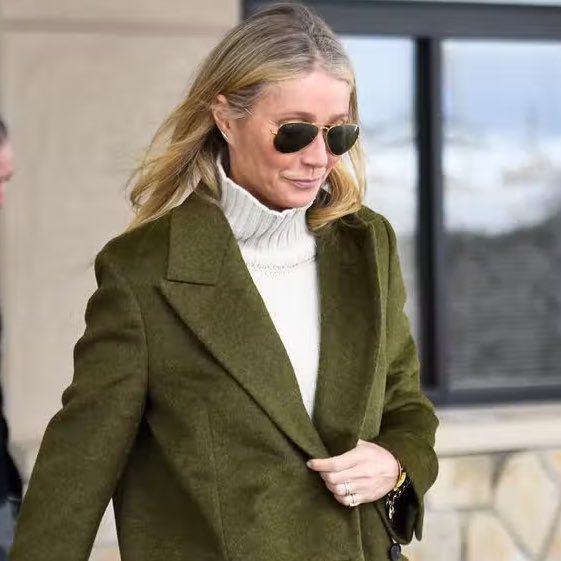
But all legal arguments aside, we cannot help but notice her courtroom style and outrageously expensive outfits you’d expect from the Olsen Twins. In fact, on Day 1 of the trial, Paltrow wore pieces from the Olsen’s label, The Row, including a $3,500 coat and $1,700 turtleneck sweater, and paired it with Celine boots and RayBan glasses.

Day 1
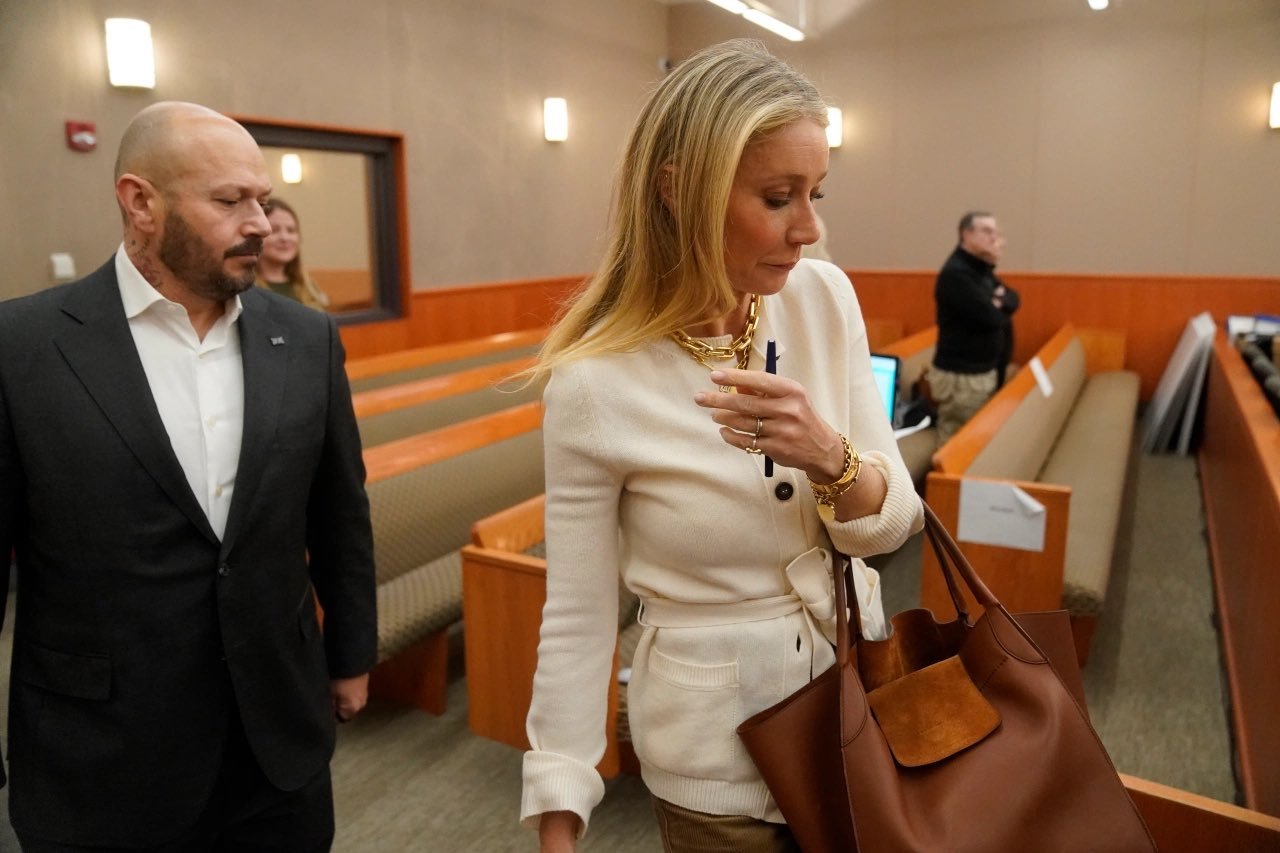
But Paltrow’s courtroom runway didn’t stop there. On the following days of the trial, she was seen wearing her own G. Label white cardigan worth around $600 styled with jewellery from Foundrea and a Celine bag. What better way to promote your own brand than at a very public courtroom trial?
Day 2
The ultimate showstoppers have been on Day 4 and 5 of the trial with Paltrow showing up to the courtroom in a full Prada attire on Day 4 and an elegant gothic shirt paired with a long black skirt from The Row accented with thick Prada boots on Day 5. Gwenyth is showing a display of not-so-stealth wealth flexing and, honestly, we’re here for it.

Day 4
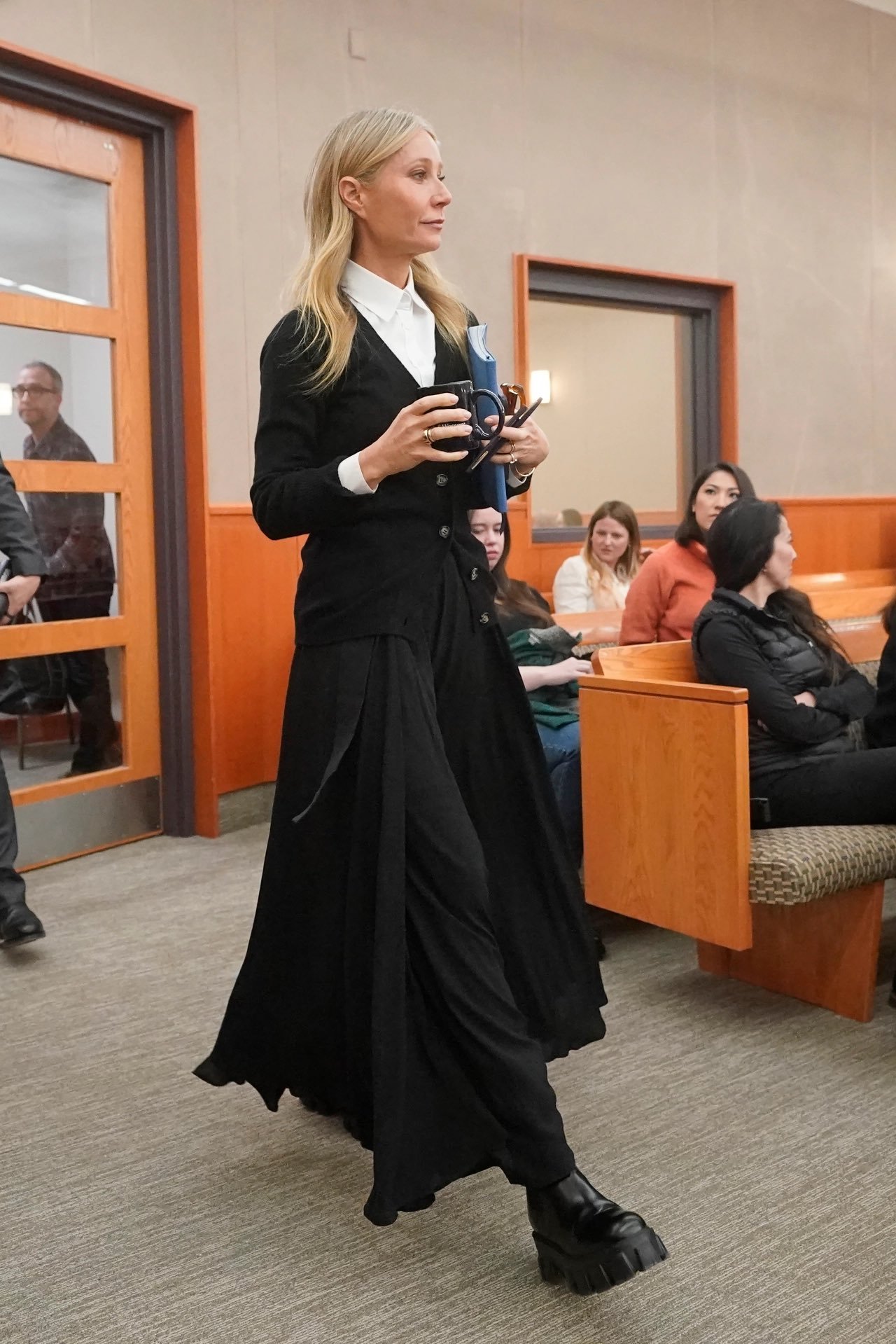
Day 5
Regardless of the outcome of the trial itself, Gwyneth Paltrow is pulling off some unnecessarily excellent courtroom looks, which isn’t even the craziest part of this trial.
Dating Apps: The Coding of 'Liquid Love'
Dating Apps: The end of civilization, the glamorization of hook-up culture or the greatest social scam? If you have read anything about dating apps, you will probably agree with all of the above– yet the realization of the masked truth may shock you.
Dating apps have been on the rise in the past decade, and more recently have become the ‘norm’ for millennials to form romantic relationships. The increasing popularity of mobile dating apps has transformed ways in which these intimate relationships are formed, formally known as networked intimacy. A recent study, which was published in Journal of Gender Studies, points out that in the contemporary age, mediated intimacy requires “a medium through which intimate relations can be established between the subject and the other”. In this article, Hobbs coins the term “networked intimacy” as it not only relates to the mobility and mediation of the mobile phones but also the extensive connectivity supported by dating apps.

Times have changed, and since the explosion of dating platforms in 2012 the world has never been the same again. Hook-up culture has taken over the youth and how we view relationships; the labels, different stages of ‘exclusivity’ and whether things are going too fast or not at all, are just some of the confusions we are faced with due to commitment issues and new social standards brought by the dating app giants.
In past generations, when the platforms were yet to be invented, if a man was interested in a woman, he would straightforwardly approach his interest at a bar or a café and start a conversation. You would imagine a similar concept exists in the dating world online, however the reality is, despite common speculations, that the potential pool of matches you have available to you is an illusion. As a matter of fact, due to the algorithms embedded in each dating app, your matches are determined through each swipe to the right or left – building a code which presents you with potential partners that the algorithm ‘thinks’ you will like.
Alike Google image algorithm, the apps use image placement and collaborative filtering on their platforms, taking into the account the number of likes the profile receives and how recent a user was active on the platform, as well as location. Therefore, through the use of keywords attached to each user’s image the algorithm can determine your ‘desired’ match and present you with potential partners who consequently all look the same. This algorithm is used to filter out any profiles that are considered as ‘not compatible’ to each individual. It’s a similar way in which Netflix uses their algorithm to recommend what to watch; which are partly based on your personal preferences and partly based on what is popular with other subscribers. Over time, those algorithms reduce human choice and marginalise certain types of profiles, and even though collaborative filtering may generate recommendations, they definitely leave certain users at a disadvantage.
This coding of dating may be a blessing or a curse, depending on what you are looking for. If you are searching for a specific type of partner, whether it is due to religious or cultural reasons, or possibly a preference to personal taste, then the algorithm has succeeded in its matchmaking. However, if you do not have a preference and are attracted to people regardless of their looks or ethnicity or even gender, then you may struggle to find ‘the one’.
For one interviewed individual, the algorithms disguised itself as an asset to her search of potential matches. When asked about her experiences of looking for a long-term partner on Tinder, Priya stated that her matches lacked diversity, however this played to her advantage of matching with Indian males due to cultural values.
Priya: “When I was on Tinder [5 years ago], I never realised algorithms even existed because it was so long ago and I was much younger. I wasn’t in tune with what’s going on behind the scenes. I personally think it helped me, in a weird way, because I was very niche in my search”
On the contrary to Priya, Connor developed his own algorithm with swiping and matching with partners. He values the state of mind over appearance, and it is hard for him to find a match on a platform dominated with shallow images of an individual.
Connor: “I am indifferent [to the algorithm], as I am more attracted to the mind rather than looks. My matches are diverse yet they still fall under certain categories of ‘stereotypes’. I am running my own social experiment on the matters of swiping patterns, seeing who I match with and then after a few conversations on the app decide to meet if we have the same state of mind”
Taking the perspective of a bisexual African-American woman, living in a predominately white society, Dalina argues that no dating app is diverse enough…
Dalina: “[On Hinge] I noticed a pattern starting to form after the first week. Algorithms in dating apps have their pros and cons. I see the positives in filtering out people I probably wouldn’t like in person based off my preferences, but I also don’t have the best judgement of men or women on dating apps. That’s where the negatives come to play. Sometimes people fall for those that aren’t their norm.”

The majority of internet dating platforms are based on the Gale-Shapley Algorithms; formally known as the “Stable Marriage Problem”. The two Nobel prize-winning mathematicians and economists created a series of mathematical patterns that can be applied to relationships. The theory states that when a set of men propose to their favourite woman, each woman rejects all but her favourite man. However, she doesn’t instantly accept the proposal due to the possibility of someone better coming along in the future, and keeps him on a string. Sound familiar?
This is the basis of every dating app created to day; Hinge, Tinder, Bumble. Projecting the rationality of ‘always someone better out there’, therefore the individuals searching for matches and potential partners are never completely satisfied and keep their matched partners on a string. Nowadays, there is so much variety and ease to form romantic relationships, with a swift swipe to the right you have the potential to form an intimate relationship with someone. However, when you have the same option with an X number of partners, along with the realisation that your match is most likely talking to X number of other matches, you are forced to ‘keep your options open’ in order to avoid heartbreak.
Statistics show that there is an imbalance of women to men ratio on dating apps, with an average of 7:10 on Tinder. However, the harsh reality is that women are more judgemental when it comes to rating men on scale of ‘attractiveness’. Studies have shown that a man is 6.2 times more likely to swipe right for a woman he finds attractive, compared to vice versa, which may be adding to the algorithm of matching partners. Since there are more men available to a single woman, men are forced to compete and women judge more brutally on their appearances, and accept some proposals with the idea of someone better coming along. Consequently, dating apps have become the perfect place to ‘shop around’ without responsibilities, risk or emotional pain.
Based on the answers provided by dating individuals and personal experiences of dating apps on diversity I created a social experiment that will test the algorithms in these platforms and how they present potential partners to me.
Tinder, Bumble and Hinge hold the crowns in the matchmaking business. According to 2020 statistics, Tinder has 50 million monthly users across the world, with 1 billion swipes a day. Therefore, I decided to create a profile on each of those platforms, with identical pictures and tag lines to test whether algorithms build upon my swiping patters and determine if I have been my own saboteur of my dating life.
After three weeks of observations and daily right-swiping I have manipulated the algorithm into showing me matches it recognises as ‘my type’. Subsequently, on Hinge, the algorithm developed within 3 days, showing me continuous profiles of males that the algorithm classified as to my desired preference. Throughout time I was beginning to see more consecutive suggestions of matches, as well as repetition of profiles. The other platforms, Bumble and Tinder, took more time to develop an algorithm, yet it still succeeded in results. Despite the main feature in Tinder being location-based, the pattern of my right-swiping and keywords embedded in profile photos allowed me to manipulate the algorithm into showing me males similar in their appearances.
Towards the end of the social experiment amongst the 10 profiles I would right-swipe, on average 8 profiles were consecutive on Bumble, and 6-7 on Tinder, with a staggering 10/10 on Hinge. This shows that in just under a month I have built 80% of the comprehensive algorithm and diminished my chances of matching with males who may qualify as ‘outside my norm’.

This experiment proves that algorithms play an important role in presenting profiles and therefore influencing your decisions in dating. Whether done attentively or subconsciously, the algorithms in dating apps will learn the patterns of your swiping habits and present you with matches that it recognises as your desired preference. Therefore, keeping you in a bubble of matches similar in appearances. For someone like Priya, the algorithms allow her to filter out the matches who are not to her inclination, presenting her with a niche assortment from which she has the ability to form intimate relations. However, for someone like Dalina and Connor who do not have a niche preference in partners, the matching becomes too precise and limited – filtering out other possibilities that they are open to yet have no access.
While these apps are designed to improve personal lives and form romantic relationships with ease, they also produce an over-abundance of connections at the point of establishing relationships brought forth by dominance of profiles and categorisation. I acknowledge that what I have found cannot represent dating app users at large, as users of different gender identities, sexual orientations and cultural origins may be presented with different results.
Therefore, if you’re thinking of creating a dating profile on any platform, pay close attention to the algorithm you create and whether it reflects your preferences to the online or offline world.
May the swipes be ever in your favour.
Taking Art to the Streets
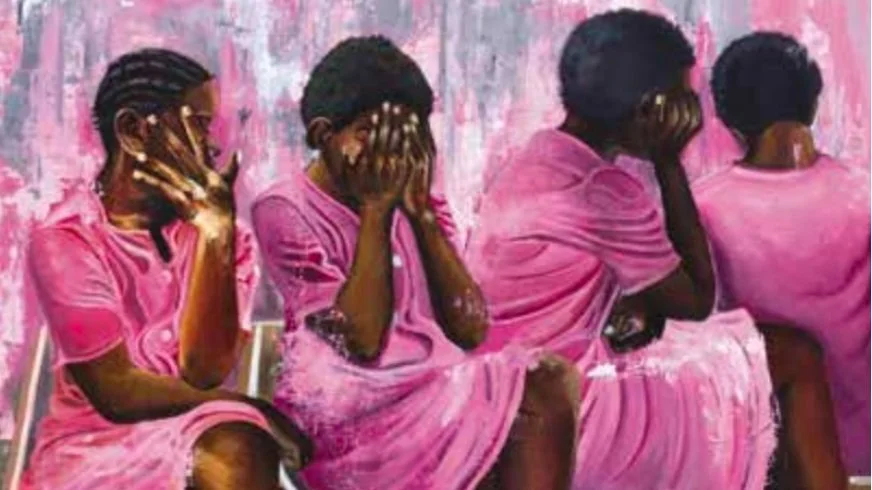
Tate Collective presents a new public art commission, Beyond Boundaries, in collaboration with Better Bankside, featuring five up-and-coming artists.
The prominent Tate Modern gallery; a host of exhibitions to some of the greatest and most celebrated artisans in the world – ranging from Louise Bourgeois and Rothko, to Ai Weiwei and Yayoi Kusama, since its opening in 2000. Tate Modern has a world-wide reputation of showcasing a multitude of art-forms from world-renowned artists to nurturing new and emerging talent.
Reopening its doors from the 17th May, after being forced to shut once again since December 2020, Tate Modern has announced many extensions to their current showings, as well as launching a new Young People’s Programme, Beyond Boundaries, in collaboration with Better Bankside to create a public art commission featuring five emerging young artists.
Launching on 26th May, each artist was specifically selected by the Collective Producers based on their personal style and mediums, which was later executed by Absolute Studios in the outdoor spaces. “As a team, we compiled a long list of artists who had been introduced to us either by partners or other artists we had worked with through the programme, and combined this with artists that were suggested by a group of Tate Collective Producers,” explains Péjú Oshin, Young People’s Programme Curator, who was responsible for the making of this entire project.
Working with the Southwark’s community in mind, each artist received a brief exploring various themes, including the past year spent in lockdown, which they expressed in their own unique style. The project also considers the role of museums and reopening of art galleries post-lockdown across the country.
“Beyond Boundaries takes our collective experiences of 2020 as a starting point,” explains Rachel Noel, Young People’s Programme Convenor, “but it also invites the artists to look beyond this in thinking about how we might use public space in different ways as we remerge into society.”
With restrictions still in place after easing of lockdown regulations from May, the gallery had to think of more inclusive and innovative opportunities, “to move beyond the boundaries of the physical spaces of our buildings,” explains Péjú. After a year of restricted movement, many are excited to experience the physicality of the art scene within the gallery’s walls, yet Tate’s curators acknowledge that for many, leaving their homes will be a big step – “these sites are intermediate spaces that offer the opportunity for people to (re)connect with the world, art, and our galleries through these chance encounters with art in the Bankside area,” says Péjú, “Beyond Boundaries is a reminder that art is taking place all around us.”
At 23, we had the opportunity to meet all the emerging five artists commissioned for the Beyond Boundaries project, and speak to them about their commissioned work, their practice, and where to view their public art pieces.
KOBY MARTIN

‘Spotlight Dreams’ and ‘Broken Renovations’ – Southwark Street Arches
A proud Ghanaian expat, who has nurtured his talents in England – Martin merges both worlds to create paintings based on the influence of his African descent. His work is an exploration of his life, portraying the human narratives of family, migration, nostalgia, and emotions; an autobiography that can resonate with many.
As part of the Beyond Boundaries project, Martin researched the history of Southwark to best express the community of the borough, while also weaving in motifs that resonate with his Ghanaian heritage and influence – known as Adinkra. These symbols are integrated in each one of his art works; the artist’s signature mark, and have a distinctive meaning of family, unity, or even death. “It’s important to know where you’ve come from; to know where you’re going,” says Martin.
“It’s so humbling to have this opportunity,” says Koby, who arrived to the project just two weeks before the deadline. Martin was previously approached by Tate Collective, as part of a commissioned collaboration with My Runway Group, and to talk about his inspiration of work; Lynette Yiadom-Boakye (currently exhibiting at Tate Modern) as part of a panel– making this his third project for the Collective.
What peaked Martin’s interest was the borough’s history of a bombed church; All Hallows Church. It was tragically destroyed during WWII, and converted into a recording studio, Blackwings Studios, in 1980s who recorded albums for the likes of Depeche Mode and Yazoo. Fascinated by its history, Martin tried to pay a tribute to the church’s unorthodox history, “a memorial of what it was before,” explains Koby, and with that, to religion itself, which always prevails in moments of trauma. “God gifted me with this ability,” he says, “I am his vessel.”

An additional segment of his piece, was influenced by the ban of women acting on stage until the mid-17th Century, which urged him to paint men dressed as women on stage. “I like the sense of humour in it,” explains Martin. The depiction of comedy ties the piece together and portrays a sense of light-hearted hopefulness of the post-pandemic world within the Southwark borough. The entire mural consists of a large wall piece on the Street Arches, as well as three floor pieces that connect the whole artwork.
“I hope this [art project] will make people more comfortable coming out of this pandemic,” says Martin, “to reconnect people through art.” The mural paintings are intended as a symbol of hope and refuge, regardless of religion or beliefs, reconnecting people after a year of isolation.
MEGAN VISSER

‘Gastro Gusto’ – M&S Square (Southwark St.)
A quiet soul with a fierce creative mind, Megan is a multidisciplinary artist specialising in video and sculpture - combining these artistic elements to create humorous and absurd short films. Their colourful palette and surreal aesthetic reveal references of advertising, pop culture, and feminist art history to reveal the underlying complexity of the images and sense of self in post-digital culture.
With her first artistic commission, Visser didn’t expect to have been approached by Tate Collective for a project of such large magnitude. “I really didn’t know what I wanted to do,” Megan states, with a sense of overwhelming. “But once I saw the site and the surrounding areas,” she continues, “I could visualise the piece.”
Fascinated and heavily-influenced by human anatomy and medical illustrations, Visser’s work explores exaggerated and surreal body fragments. Her previous work involves videos of abnormal feet and leg sculptures, and focus on the form of ‘reflexology’.
Inspired by the local community of people dining, gathering, and working, Visser instantly connected her allocated site to “elements of digestion,” as she explained, “there’s a movement through the space.”
Considering the restrictions we have endured throughout the last year, and our changed priorities, Megan wanted to emphasise the importance of eating and socialising, as well as free-movement. “Self-care, health, and eating are at the forefront of people’s minds,” explains Megan, “it is the only thing we can currently do to socialise.”
Despite predominantly working with videos, she decided to connect with her sculptural and illustrative side, creating an interactive floor painting where the audience can move through the bold and colourful ‘digestive system’, exploring various elements of the piece. “There’s a lot of high-rise offices in the area,” says Megan, “they’re going to get the best view [of the piece].”
“I wanted to do something else,” explains Megan, “something that was a little but more 3D.” The aspect of interaction was the most important component of the piece to Visser – she wants people to walk through it and see a different element each time; she wants kids to be jumping from tooth to tooth and question what the piece represents; she wants to bring the fun and curiosity of the urban outdoor back into our lives.


BLK MOODY BOI
‘Safely Trans Outside’ – Gambia St.
As a non-binary trans Afro-Indigenous Latinx self-taught illustrator, Blk Moody Boi aims to highlight love and tenderness as a form of radical resilience against white cis-het patriarchal capitalism and bring joy to other BIPOC trans kin through celebration, and archiving their stories.
Community narratives hold a particular significance in Blk Moody Boi’s artistic practice, “everyone has to plan everything that they do for their safety now,” they explain, “but for trans and queers, life is like that everyday – regardless of the pandemic.” Through highlighting the difficulties of the past year, Blk Moody Boi aims to shed a light of awareness for what trans and queer individuals face on daily basis to protect themselves from violence and harassment.
“I’m very concerned about the heightened public violence,” says Blk Moody Boi, “as I, like so many other queers and trans people, have experienced.” Self-defined as a socio-political art activist, Blk Moody Boi is an advocate for a Latin American organisation against domestic violence and a previous worker for a trade union organisation –sharing the narratives of trans people, which strikingly come through in their pieces.
Their self-taught illustrations portray non-binary characters, which were nurtured by receiving an old iPad from their fellow trans friend and watching anime, cartoons, and comic books. “I don’t see myself as an artist necessarily,” they said, “it’s such a recent phenomenon.”

“I try to draw things that I don’t see other people do,” they say humbly. Centring representation of marginalised communities in their work, Blk Moody Boi is guided by stories of racism, ableism, colourism, and transphobia. “When I draw,” they say, “I think about the beautiful that has been denied.”
Their expressive use of bold colours can be linked to their upbringing in the Caribbean, surrounded by many plants, lively hues, and patterns; the artist’s signature style. The simple, yet powerful, illustrations convey the message of “what you see, is what it is,” says Blk Moody Boi.
Their mural for Beyond Boundaries explores the safety and security of trans individuals, “specifically what will bring my kin joy,” they explain. “There’s something about a public space,” they say, “that makes people reconnect with art.”

HANNAH HILL
‘He(art) is Everywhere’ – Terry’s Caffe (Great Suffolk St.)
A London-based illustrator, of Guyanese and Indian descent, Hill uses the unconventional medium of embroidery to spread awareness of body positivity, feminism, sex, and politics, concentrating on human narratives and starting conversations.
The previous Tate Collective curator is inspired and motivated by our 40,000-year-old connection to needle and thread. Hannah creates small motifs and illustrations to reconnect with her female ancestors, “in the Western society, embroidery has been adapted as a domestic hobby – not an artistic skill,” she explains, “it still isn’t widely respected.” However, Hill is breaking the stereotypes by using juxtaposition and irony of using embroidery to speak of feminism and politics.
Her mini motifs; bold in colour and distinctive style, resonate emojis – each being punchy and interpreted subjectively to various viewers. Concentrating on the aspects of work/life balance during the pandemic, Hannah highlights our reassessments, changed perspectives and priorities during isolation, focusing on ‘life’ past the pandemic.
“I hope it makes people smile,” says Hill, “I hope they see something different every time they walk past it.” The art piece will be spread across two walls of a building across Terry’s Caffe; brightening a previously dismissed and disregarded location.
The art activist felt limited in the commission due to restriction to speak her political mind (to full extent), which has intensified during the pandemic. However, she did incorporate subtle hints of socio-political history of the borough and current conflicts within the canvas – “the red umbrella is a universal symbol for sex workers,” says Hill, for which she felt important to tribute in the mural. “Sex workers are still not seen as labourers,” she continues, “they are and always have been exploited.”
Through her arrangement of the motifs, Hill positioned burning candles and crossbones next to the red umbrella to symbolise a memorial of the mistreated and forgotten sex workers of the borough, where their remains were disposed. “By the way the images are placed together,” she explains, “they tell a story.”
“Some of them, aren’t necessarily relevant to one another,” she says, “it’s for you to make those connections.” However, the overall piece guides you through a story of the borough through small connections that represent the community of the past and the present.
Hannah will be releasing an embroidery colouring book in Summer ’21, Hanecdote’s School of He(art), aiming to share her skill and magic of embroidery for people to freely express themselves – more info @hanecdote.


ZEINAB SALEH
‘Tunes For Your Head Top’ – Canvey St.
Born in Kenya, the London-based multi-disciplinary artist uses a unique combination of painting, drawing, video, and music to explore her intimate histories; linking the personal to the collective. Working with her family’s VHS tapes of home videos, featuring famous songs by artists like Mariah Carey, Saleh examines her family’s relationships, culture, and self.
“Music has gotten me through a lot of things [over lockdown],” says Zeinab, “it lifted my spirits.” Influenced by Jeremy Deller’s ‘The Histroy of the World’, the Venn-diagram piece is an accumulation of songs that correspond and overlap with different feelings the artist sensed; isolation, loneliness, safety and danger, love, and social distancing. “It’s about forming different relationships where you wouldn’t think there would be,” she explains.
Working across different disciplines, Saleh includes layers of meaning to her work – “I want there to be a variation, that marries well and is not revealed to you all at once,” she says, “you have to sit there and take it in.” She continues, “like with bass notes,” – there’s layers to it.
“A lot of the times, when reading books or watching TV, we’re told what to think,” she says, “but with paintings and music it’s pretty open to your own interpretation – which is what I love.” Designed as a floor piece, Saleh intended for the artwork to be interactive; a local to be stopped in their tracks when they recognise a song and “send a photo to their friends or their bae,” she said, or a child hopping in-between the theme’s circles like hopscotch.
“I want to bring that conversation, that art is inclusive of music,” she says, “music is so universal, that a lot of people can enjoy.” The borough is famous for the birthplace of the acid house music genre; where in the 1980s it was the biggest youth revolution and underground scene in the UK for decades. To this day, various artists reside in Southwark for the music scene and its history.

“A lot of the work at galleries can be quite alienating,” she says, “I wanted this to be something that can resonate with the community.” Zeinab is a co-founder of Muslim Sisterhood, an inclusive art collective that centres around the Muslim community. Beginning as a photography project on Instagram, the collective has expanded to a global community of Muslim women and non-binary people.
“I didn’t grow up with positive images of Muslim women,” she explains, “so to be able to create that for girls, and a younger version of myself, is something I find really fulfilling.” The Muslim Sisterhood produced a debut zine featuring stories of female and non-binary Muslim identities in contemporary British society.
The Muslim Sisterhood Zine is available to buy at the ICA Bookshop and online on muslimsisterhood.bigcartel.com. Check their website for their launch of hoodies and crewnecks soon!
Beyond Boundaries: Tate Collective x Better Bankside public art commission will launch on 26th May 2021, and will be available to the public for at least six months.
Lynette Yiadom-Boakye’s ‘Fly in League with the Night’ exhibition has been extended until 31st May 2021, bringing together 80 works from 2003 to present day; the artist’s most extensive survey to date.
Tate Modern will be opening its doors from Monday 17th May and extending their dates for previous exhibitions – check online for extended dates. All visitors and members must book timed tickets before visiting the gallery and/or exhibition.
Samantha Siu: Designer of Lost Craft
Looking out the window on a late February afternoon, the sun slowly descended beyond the horizon of the trees’ silhouettes, unveiling a rich palette of warm reds, ambers, and pink blushes - and yet, just across the vast ocean, the day has only just begun for Samantha Siu, an unorthodox jewellery designer of New York City.

The first thing I noticed about Samantha, was her warm and kind demeanour which made for an effortless conversation on our Zoom interview. Humble and talented, yet assertive in her success, she reconciled an old friend, with whom I met for an overdue lockdown catch-up.
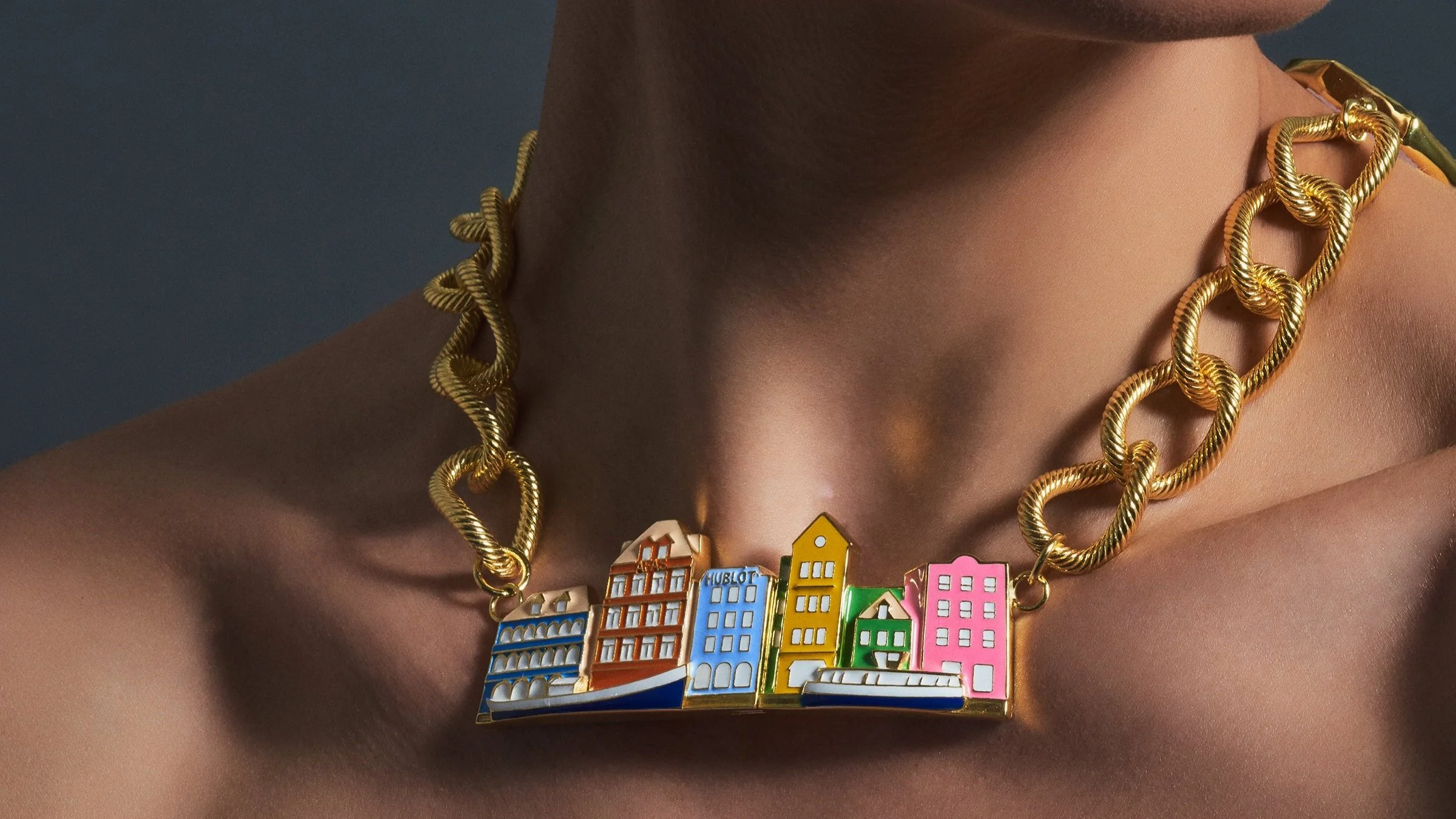
The second, more alluring, were five earthy jasper stones discretely settled on her blue mint turtleneck sweater, encircled by bulky, yet graceful, golden cable chains. At first sight, the necklace may appear of a modest design, but as Samantha explains, “it is so much more daring than you think.”
“Every jeweller has a story to tell,” states Samantha, and her story is A Love Affair - the designer’s enchanting collection, exploring her first love and their travels around the world together; celebrating culture, history, romance, and the designer’s upbringing through intricate wax-carving and metalwork.

Debuting her first jewellery collection at London Fashion Week in February, Samantha Siu’s pieces may be considered unconventional, yet revolutionary. Where traditional jewellery designers generally concentrate on the aesthetics of their pieces around the neck, Siu thinks of the back as her canvas.
“We can create different types of jewellery,” she says, “jewellery that is not necessarily what we usually see.” Her unique and functional craftsmanship accentuates the curvature of the neck and the back simultaneously with their reversible elements, whilst also establishing a modern take on back jewellery.
“I think every person has two sides of them,” explains Samantha, when asked about the aspect of reversibility in her designs. This unique component allows for a sustainable and contemporary design, dependant on the wearer’s personality and desire. The stones may be considered for “a more quiet you,” Samantha explained, and switched around for a greater statement - “it’s about seeing one thing from different perspectives.”


Yet her vision wasn’t entirely appreciated in its beginnings. Alike every young designer starting out, Samantha has heard that her pieces are ‘nothing special’ or ‘stones strung on a string’ - but the belief of achieving her dream and continuing her journey relinquished the skeptics. “An eyewear artist, Kerin Rose Gold, told me that the most important thing is to have blinders on,” she explained, “just focus on your work and believe.” Upon hearing the advice from a fellow artisan, Samantha grew thick-skin and concentrated on making her dream a debuting collection for London and Paris Fashion Weeks.
Each necklace from A Love Affair archive is specifically designed with natural gemstones and hand-crafted clasps, depicting a significant moment in Samantha’s journey. Whether a mythological Phoenix to represent rebirth or female entity in a relationship; or a ying-yang carp symbol alluding to the Chinese meaning of love and transformation - as well as being Samantha’s astrological sign, each necklace tells a personal story of the designer.
Every detail; shape, positioning, colour, and design, has a greater and more significant meaning than meets the eye. “Wherever I am; whatever I’m designing - is a representation of where I’ve been,” says Samantha, gently caressing her Eternity Necklace. “This necklace,” she continues, “is a representation of how I see China.” Brimming with earthly tones and shining gold chains, the Eternity Necklace’s two carps are intertwined, forming a circle - a very traditional symbol in the Chinese culture, which illustrates a balanced duality.
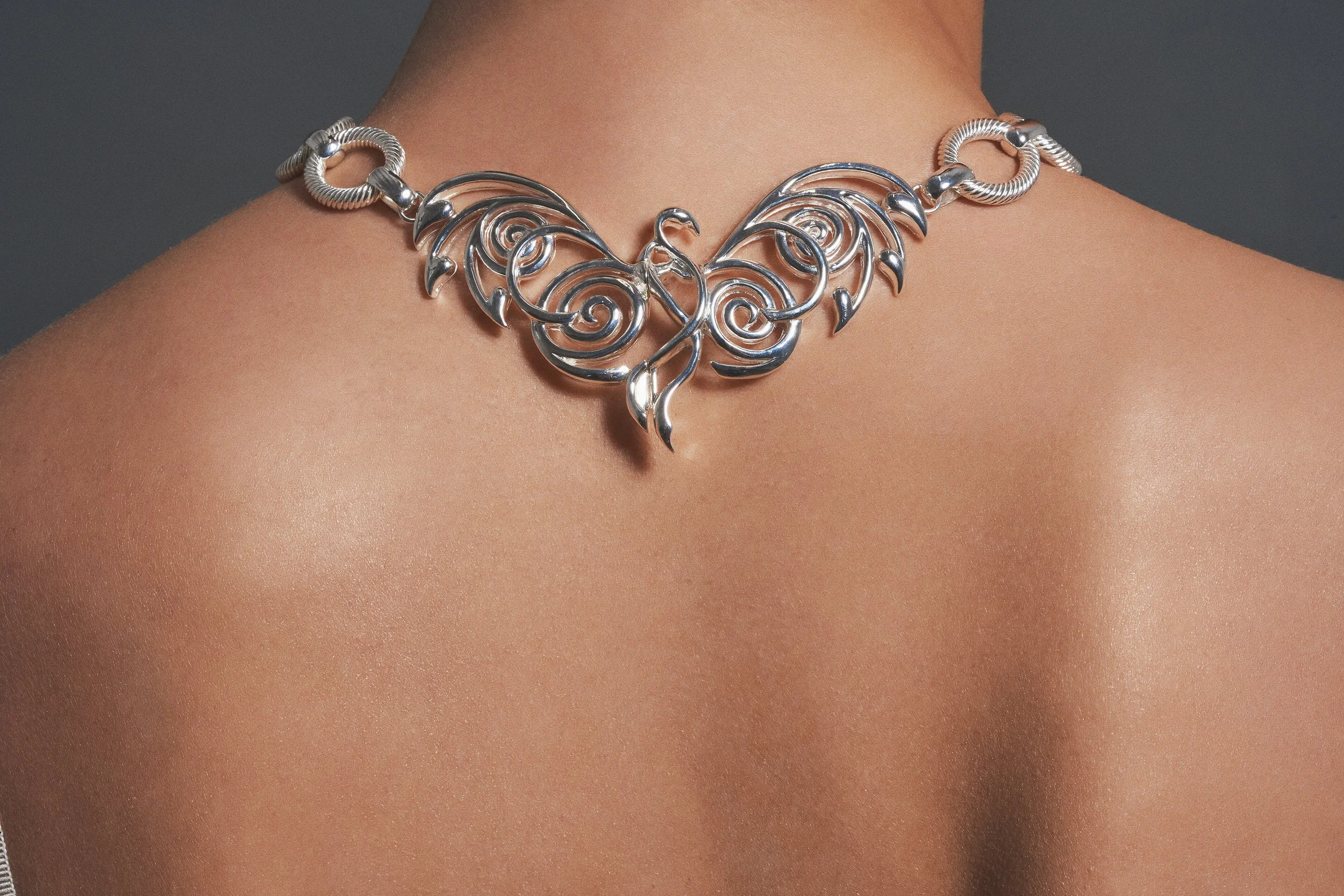
Recognising the importance of tradition, Siu was integrated into her family’s jewellery business with packing orders at one cent a piece from the small age of thirteen. But it wasn’t until much later where she was asked to join the family craft, urging her to venture out to learn outside trades of her own, where she considered other opportunities.
“I had an itch to create something different,” says Siu, who discovered her passion during her studies at the Fashion Institute of Technology (FIT) in New York City, identifying a long-lost art of wax carving. A 6,000 year old technique has been forgotten by many artisans within jewellery design, yet it remains the most intricately detailed method for sculpting in this versatile craft.
The traditional technique has strong roots within the Eastern culture, where the brand’s craftsmen construct the necklaces to completion in Thailand, all while prioritising ethical conditions. Yet the decision to produce the collection through the lost art wasn’t entirely based on its history: “I wanted to explore my culture a little bit more,” explains Samantha, “it’s part of the story; it’s part of who I am.”
The sentimental production technique is extensive and complicated. The substantial process involves chiselling, assembling, and sculpting the clasps and stones by hand. With each new design taking approximately six months to create (the waxed clasp itself takes approx. 3-4 months), while the entire collection took 3.5 years to complete.

However, art and jewellery enthusiasts don’t need to reserve themselves to the 10-piece collection of A Love Affair. Samantha regularly works with her clients to produce one-off pieces, leading them through the entire process. “What is so symbolic about life, are the images we want to preserve,” she explains, further revealing her fascination with people’s sentimentality. “We become sentimental for different things for certain reasons,” she said, “because we have different touch points in our lives.”
When asked about what it felt like to be a young débutante of London Fashion Weeks, Siu responded, “this season’s Fashion Weeks is particularly special, because it’s where people start having hope again.” With the pandemic circling our lives, this year’s LFW continuing on a digital schedule was inevitable, yet that didn’t mean sacrificing talent and artistic visions - on the contrary, “creativity is at it’s peak,” said Samantha.
With the excitement of reopening the world and the potential of new opportunities, Siu feels hopeful about the future of jewellery design. Despite her concerns that more can be done within the industry to have greater representation, Siu shares, “I hope the brand will become a charging force that will allow new jewellers to think outside the box.”
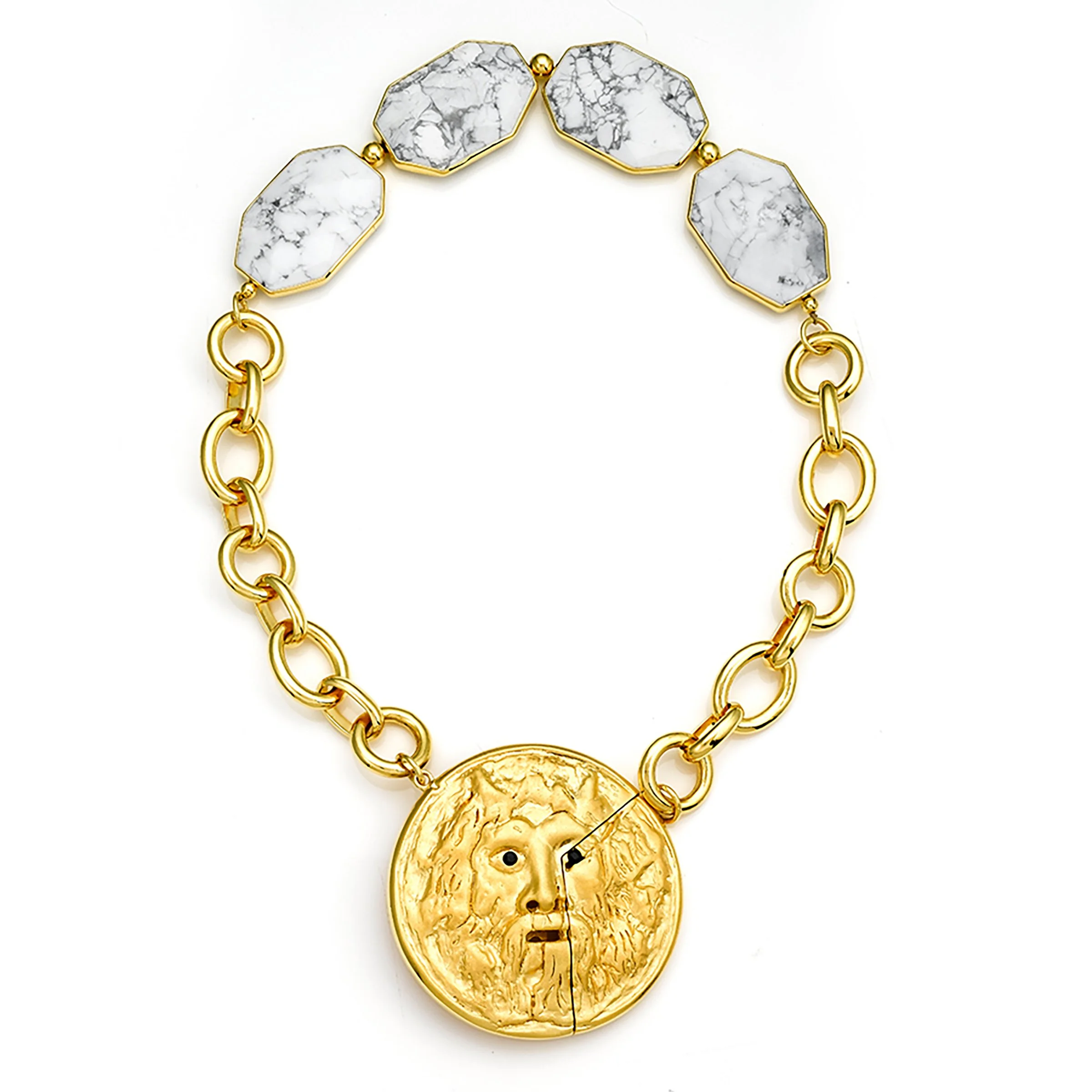


Siu is not only passionate about the future of jewellery, but is consistently contributing to the bettering of our planet and people. Each sale contributes 10% to the brand’s sister non-profit organisation Phoenix International Foundation, which was born out of Samantha’s passion for teaching underprivileged children English in China. The chosen organisations “embody what our world should be concentrating on,” explained Samantha. They include; STEM Education, Medical Outreach, and Wildlife Conservation. “Those three things are really close to my heart,” said Samantha, “the partnerships go hand in hand with every project that we do.”
Samantha Siu’s collection explores the love story of her personal desires, memories, and the significance of helping to better underprivileged people and wildlife. Despite the intricate artwork signifying her romance, the collection represents moments that may be relatable to ones with a similar journey. “A Love Affair is not just about my love affair,” said Samantha, “– it’s about everyone’s connection to it.”
A Love Affair is Samantha Siu’s illustrative love story - what will your’s be?
Samantha Siu’s collection A Love Affair was part of Fashion Scout’s London Fashion Week virtual exhibition, and is available to purchase on her website online (US) and through Wolf & Badger (UK)
Samantha Siu is the official bronze sponsor of the National Film Awards UK 2021 of the Best Screenplay category.
Images courtesy of Samantha Siu and Black PR.
The Essence of Joy
“I'm just a designer, not a psychologists.”
Diane Wallinger is the new force within the fashion scene that aims to challenge existing perceptions of fashion design and sustainability through physical and emotional well-being.

Clothes can bring you joy - we all know that. The feeling of unravelling a brand new pair of boots from between the tissue paper; the smell of fresh leather in the air and the delicate touch of smooth finishings could bring a smile to just about anyone - but that’s just a temporary solution. An instant of gratification and feelings of amusement which are gone by the second or third wear. But what if the clothes were designed specifically to stimulate your feelings of joy, comfort, and empowerment? Ones that would last much longer than your average shopping-high?
Emotional and physical well-being have long often been associated with beauty and fashion industries, in ways to convince you that their product will make your life ‘better’ through ads and marketing - encouraging you to have the same lifestyle as the model of the advert by continuing to buy the product over and over again to achieve it.
But one designer has figured out a way to bring the principals of well-being into fashion, which do not involve propaganda and manipulation. Diane Wallinger, a traditional-turned-digital fashion designer, has embraced the latest technologies to pursue her exploration of fashion design for well-being, through sustainability, emotional and physical empowerment.
“A place that is more sustainable; is a happy place”
Considering that 80 per cent of garment impact is locked at the design stage, Diane felt propelled to take action to make sustainability more accessible and in-demand within the fashion industry. “That was an (optimistic and hopeful) lightbulb moment for me,” says Diane, determined to find a solution to our ecological crisis through bettering our own well-being and a change of perspective.
“A place that is more sustainable; is a happy place,” says Diane, “I don’t think we are happy consuming the way we do.” Through the feelings of ‘temporary fixes’ of shopping and buying unnecessary items, which (unsurprisingly) lead to results of dissatisfaction in the long term, Diane begun to think of alternative shopping behaviours that not only give a much longer feeling of fulfilment, but are also beneficial to the environment.
“It was problematic to define the aspect of well-being,” says Diane, ”because I'm just a designer, not a psychologists.” By adapting the Earth Logic model (developed by Prof. Kate Fletcher), Diane was able to enhance a person’s well-being through garments by modifying "resilience and care of self,” she says.


Why self-care? Because cultivating and building emotional resilience, Diane believes, is necessary to face the psychological challenges of the inevitable consequences of climate change. And what better way to hone in on those aspects than an object that embodies all these elements: the bed?
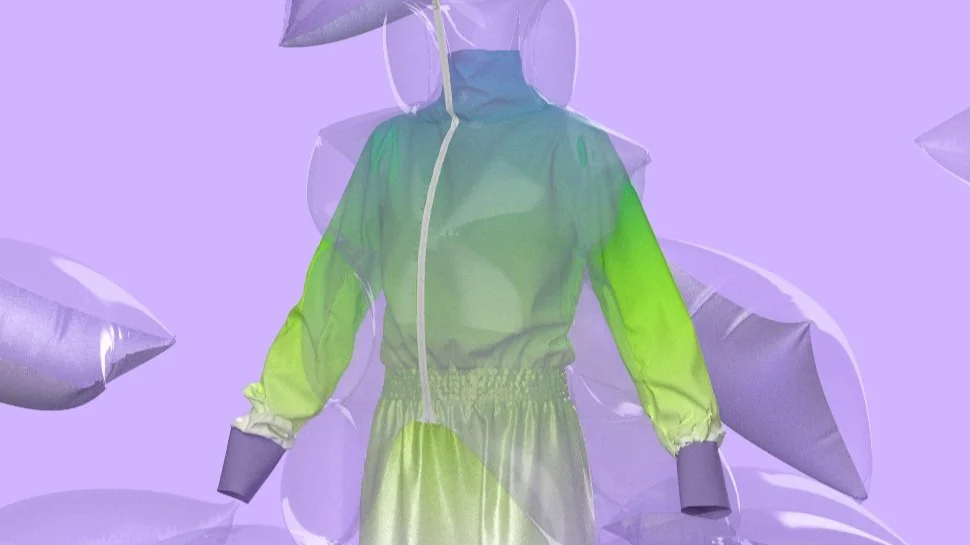
“I wanted to keep the energy field strong and empowered,” she says, “it’s not about laziness.” Despite the common misconception, beds are in fact our personal space of tranquility, health, empowerment, and comfort. Her latest digital collection, ‘Care of Self, Care of the World’, is imagined to generate positive emotions through the use of pastel colours, while comfortable shapes of ‘duvet-like’ garments invite the digital wearer to engage in ‘self-care practices’.
Diane invites the collection’s digital wearers to become their own “self-care heroes” and enjoy late mornings in cozy (and ethical) satin pyjamas, as taking care of the world starts with taking care of yourself.
The collection is accompanied by a series of self-care Fashion Meditation videos, lasting five minutes each, to transport you into a glamourised futuristic world of tranquility. Guided through gentle sounds of chimes and crystal singing bowls, it may feel unorthodox to watch a digital rendering of a catwalk show of the collection - but it certainly works.
“be your own self-care hero”
“Mixing the digital platform and physical reality; you don’t really know where the barrier is,” she says. Through designing a digital collection, Diane hopes to encourage wearers (particularly those of ‘influencer’ status) who would normally buy a garment to only wear once, to embrace digital alternatives. “A digital garment is way less impactful,” she says, “it’s incomparable!”
Fashion has been reluctant when it came to embracing new technologies, yet the current coronavirus pandemic has deeply exposed the shortsightedness of the industry. With designers already abandoning the Fashion Week calendar, “digital fashion came back in full-force during the pandemic because it was already pressing us as designers,” Diane explains, “it’s an obvious solution that’s been ignored for too long.”

The industry’s capitalistic roots have come to the surface, which forced many to reevaluate their values and business strategies. “It's astounding how much is wrong within the industry,” she says, “but I like how we can all make a change by working in it. There's so much space for change.”
Within a short time-frame, designers threw themselves at the possibilities of digital catwalks and presentations to showcase new collections, whether it was through short films or Animal Crossing gaming. The fast-pace of the industry limited the potential for growth with technological advances to be recognised as a benefit.
“It’s so rewarding to be a part of change as a young person,” she explains, “even though our generation already has enough on its shoulders.” Diane may not be a ‘hard-core’ protestor at climate strikes, but she is making a change through more suitable ways that align with her personality and ability, saying, “I know I’m not perfect, but at least I’m trying my best.”
Through using sustainability, Diane hopes to empower people and drive them forward with means of positive expressions - which she believes, would eventually lead to sustainable behaviours from her consumers, emphasising that “[sustainability] is a way of life.”
Fashion Meditation videos are available to view on the designer’s IGTV channel (@dnwllngr) and the collection ‘Care of Self, Care of the World’ is available to purchase at dress-x.com/collections/dnwllngr.
Slovak Origins: The Handwoven Heritage
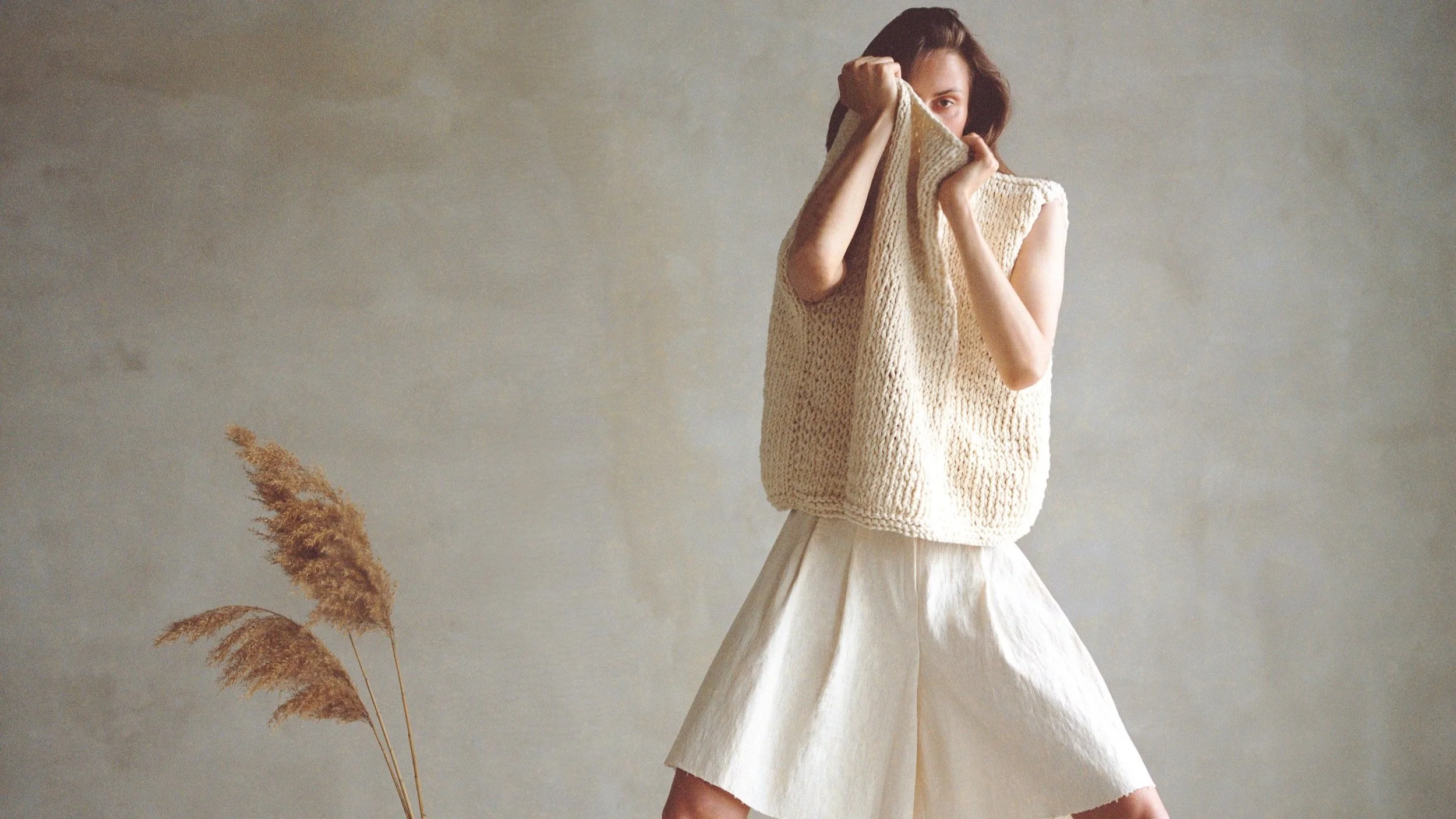
Slow-pace and patience with every designed piece, Kristína Šipulová makes garments to last for generations. Debuting as the freshest edition to Slovak Fashion Council’s emerging designers, Šipulová encompasses the raw heritage of Slovakian textile materials through the use of handweaving and wooden loom machines. The designer’s unique craftsmanship brings ancestorial traditions into London Fashion Week and the modern world.
Revealed on 20th February 2021, at Fashion Scout’s Digital Fashion Week, Kristína Šipulová’s short film entitled, ‘Post Process’, was like being transported into tranquil field of melancholy. With precise explanations of her production process, the viewers were able to thoughtfully comprehend the thoroughness, dedication, and uniqueness of her sustainable collections in the three-minute video. From grown crops to wooden loom machines – no process of production is missed by Šipulová.

As Zoom-meetings are part of the everyday, I speak to Kristína prior to her première collection show, her warm, gentle voice, and thoughtful pauses as bewitching in conversation as they are embraced in her collection. What follows is a committed, caring, and thoughtful débutante, with a dedication to bring an emotive connection to our garments.
How does it feel for you to be debiting your first London Fashion Week during the pandemic?
It feels different because of the format, but I feel very grateful that this possibility came - and luckily, during this COVID time, we can really present and bring this message [sustainability] to the public. It's an amazing opportunity thanks to Fashions CAD and Slovak Fashion Council, so I'm really happy that it could happen. And of course, I'm missing the physical format, like the installation itself and the show; working with people physically, but everything happened so fast. It was perfect with all the people who helped me, so I'm really thankful that very prompt and active.
Your work is very intricate. Can you tell me how you make your designs, and why your collections are considered 'one off' pieces?
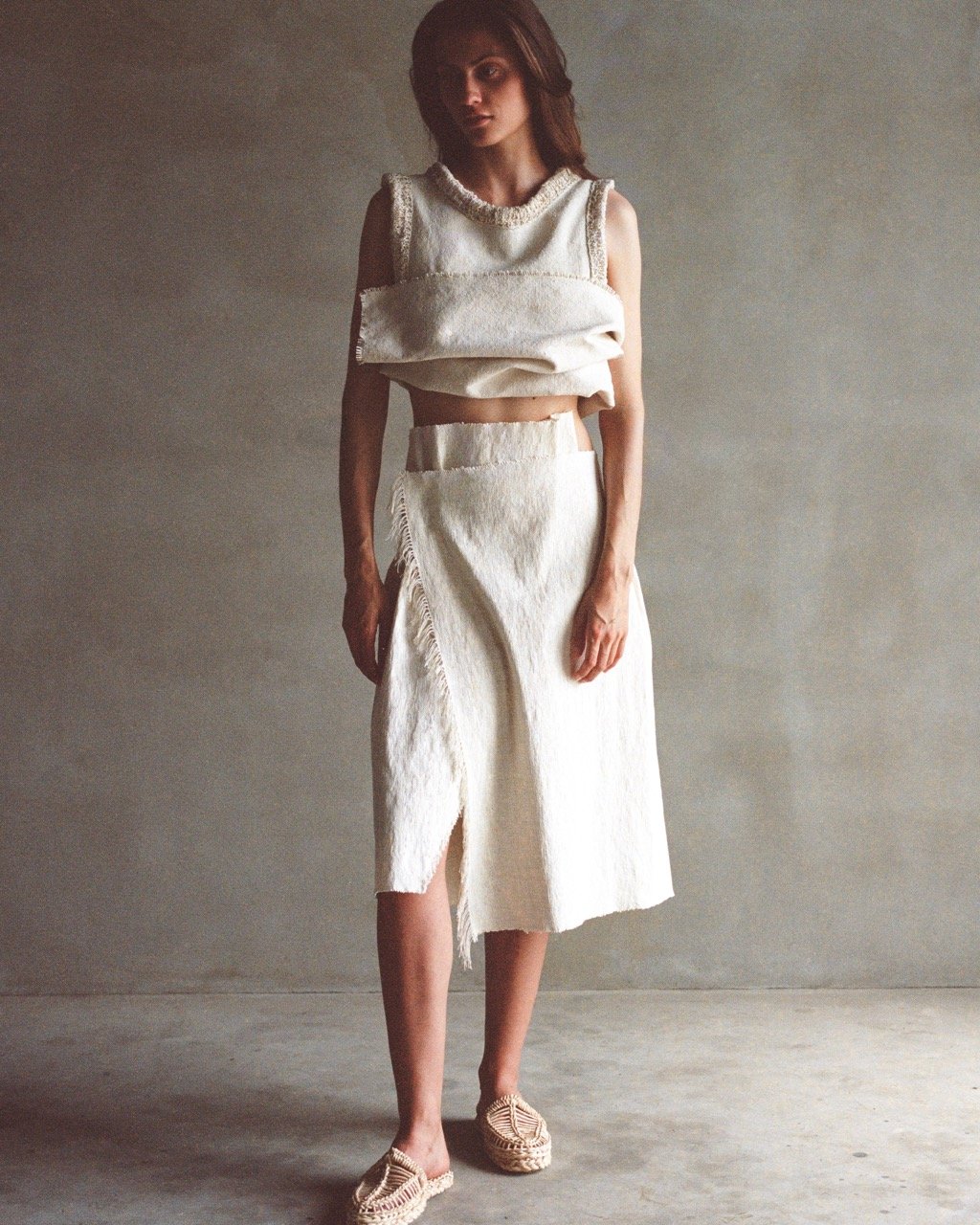
Yes, so everything starts basically from the yarn - I don't order fabrics. I have two ways of working; one is building the garment from the yarn, and it starts with weaving or other techniques like Macramé or handknitting. As I weave the fabrics for each garment, I often think of the pattern that is going to be directly for trousers or a jumpsuit. So, there is zero production waste. And the second way I work is collecting vintage hand-woven linen canvas. It's a textiles from where I come from in Central Slovakia and they are almost 100 years old. They were hand woven and the linen was hand-spun. So, the yarn itself is completely different quality because the linen in the past is much better quality because the environment was better and the soil was healthier. So, I collect these hand-woven precious textiles and reuse them in garments like coats, blazers, and jackets - giving them a new life. So, there are these two lines one is more like 'one off' from hand woven fabrics, and the second line is this reusing vintage and woven textiles.
It’s like a process of upcycling, that's amazing. And the production process starts even before you start making things because you do your work with zero waste...
Absolutely. First of all, there is the ordering of yarns; I'm combining hand-spun yarns from Japan (when I work with silk mostly), and hand-spun linen from Slovakia. Also, these yarns are vintage yarns. So not only am I recycling fabrics, which have been hand-woven, but I also try to recycle vintage yarns because no one really works with them anymore. But when you combining them with other kinds of qualities, it works really well.
Then the pattern making comes alongside the weaving, as we can already tell how it will behave. I collaborate with a pattern constructor, who also comes from my village, and craftsmen for when I weave and set up the work, because it's impossible to make it all by yourself. It's better to have more people.

You use a very traditional and old-fashioned handweaving loom machine for your pieces. What urged you to start using this process?
It was during an internship at Beck & Kinch [Danish Studio], where we used hand-waving techniques on the wooden looms for Chanel and Dior.
I was actually going to ask you about that - is that where your interests of traditional weaving techniques began?
Yes. Definitely. While being there, I just realised that craft can be presented differently - that it's not just about using new technologies, or maybe digital looms. It can be very innovative and a smart combination of materials - it's an investment of time, and it lasts longer, making it more sustainable. But yes, it was there, where I realised that this is very interesting to me, and I wanted to examine it further.
How long does each piece take you to make?
It depends, it's really hours and months of work. The setting up of the work; that takes few days, then setting up the looms; another few days, then the weaving itself - I don't know. One piece can take from around four weeks to make.
Because you make everything by hand, there's an aspect of personalisation in your pieces. Do you work closely with your clients?
Usually, I work with made to order model. The sizes of the garments I work with are not traditional sizes, but more suitable for everyone - almost like 'one size'. These are very precious pieces, and I want them to be worn from generation to generation. And that's why I don't want to create a pattern which is specific to a particular body type - it's more relaxed and adjustable, so that it can fit more sizes. That's very important.
You mentioned that you incorporate traditional Slovakian craftsmanship in your collections. Could you tell me more about them?
Yeah, so there is a macrame technique, which I learned from a very old lady - she lives just next to my village in another region - it's very typical for our traditional costumes, an embellishment. It's not like weaving, but what comes at the edge of a garment - like a scarf. It's made with knots, lots of knots by hand. Then there is another craft which I use, that's weaving from corn husk. These leaves from corn are collected, and dried which changes their natural colour from green to beige. This is also a lengthy process. Then, the separate leaves are hand-spun into one long thread, like a small rope, and then it's hand-woven into a shoe form. I collaborated with one craftsmen from south of Slovakia where this craft is typical.
In future collections, I would love to incorporate some embroidery and leather work. These are my small dreams. Also, I collaborated with craftsmen, using a typical craft of making buttons from cow horns, which can also be made from deer horn when they lose is their horns in a natural process. It's a waste material, that is hand-carved. In my coat, there is a button made by this craftsman.
The aspect of sustainability and longevity in garments seems to be very important to you one of your core values. Since everyone has a different idea of what it means, what does sustainability mean to you personally?
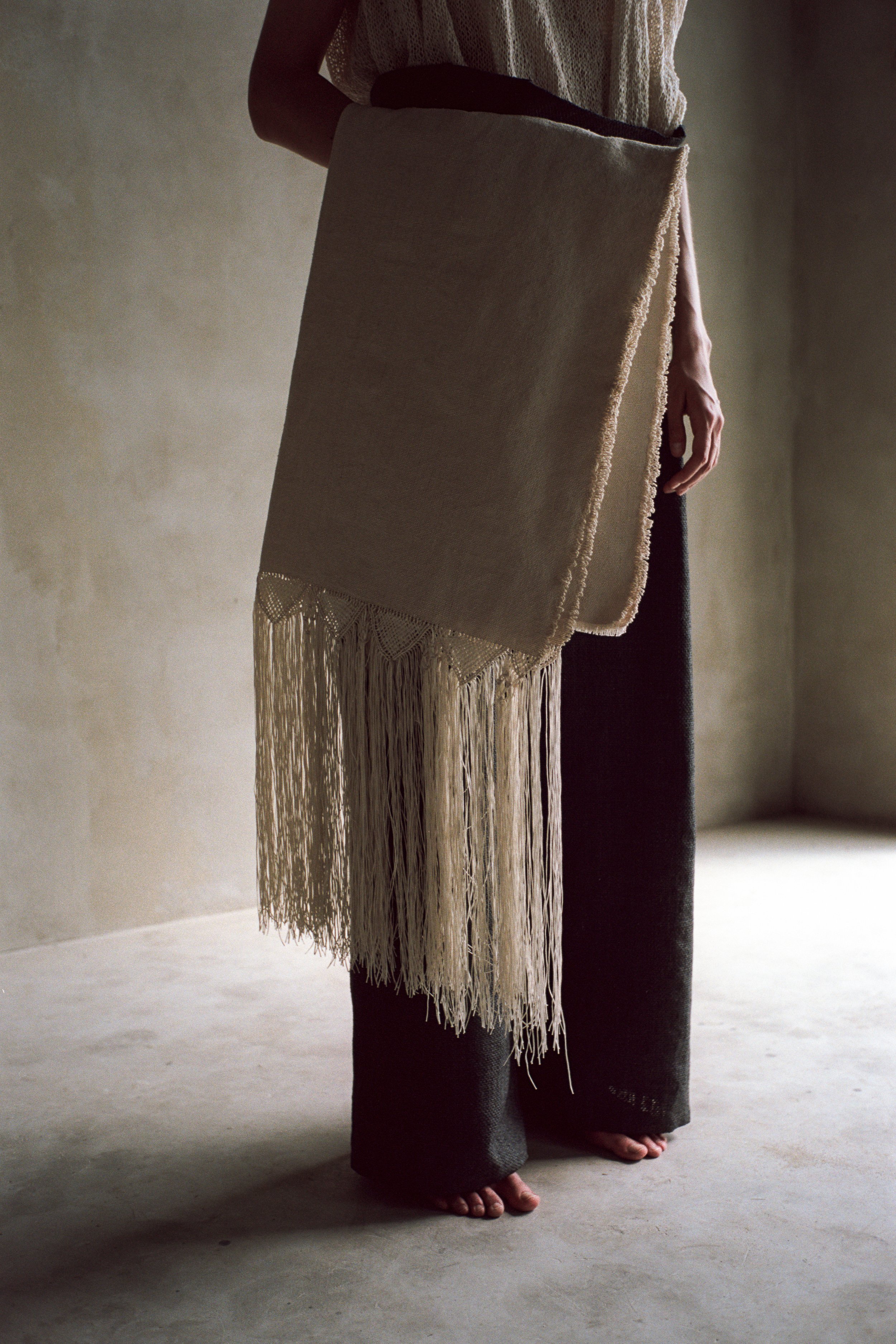
I actually started to think about sustainability, when I visited an exhibition at the V&A - "What is Luxury?" in London. It was really inspiring. I remember standing there with my small diary, and writing down all these keywords like, 'legacy', 'heritage', and 'what is new luxury?', for me, sustainability is what was represented there. It's something that's I long-lasting, where I can focus on making fewer pieces, invested more time in their production. I also believe that, as a designer, I don't really want to make so many products, I'd rather focus on making a few, which last longer. Which is why I want to use craft techniques, because for me, that's a representation of quality, and choosing the best materials possible, working with natural materials which are naturally durable, recyclable and organic. It's about the long-lasting and emotive relationship with the garments, as well as making them locally. I want to combine older generations with younger generations, to pass on skills that are disappearing.
There's so many factors, of what it means to me, like the usage of water in organic cotton, which is a huge dilemma. But also, the craftsmanship is a must - with not only the weaving, but also sawing. I am very inspired by traditional folk garments. They've lasted to this day, for hundreds of years. It's something that we value and is super precious for our families for generations, creating a relationship to our ancestors.
Yeah, definitely! I mean, I have clothes and bags passed down from my mom, that she got from her mom, and those are the things I absolutely adore!
Exactly like that, yes! Also, I really believe that the garments from your grandma, were of much better quality of fibres, as the materials were grown in better conditions. I really think that working with yarn, you can really control the process of how you build the fabric, which is the base of the garment. That's my crazy choice of working with yarn.
As you know, many brands now are focusing on sustainability, especially in the last few years. Do you think this aspect of sustainability, craftsmanship, and longevity is the future of fashion?
I wouldn't say that this is the only direction for the future. There are so many interesting biomaterials growing in laboratories, like materials from bacteria - which are so fascinating! Or maybe some futuristic 3D printing with sustainable or recyclable materials. There's so many designers, each with a different direction and taste, but there needs to be a greater variety. I believe that reviving craftsmanship is one of many, as it's impossible in this century to have just one. I'm not an expert, but for me, it's just my choice.
That's so fascinating! And what inspired the cuts and shapes of your current collection?
Well, I always observe the details of folklore clothing - not copying, but more how certain details have been made. I try to think about how to wear a garment for multiple occasions, but still have just one outfit. I would love to show this kind of mentality through my collections, and consider how we use for our requirements and how much do we actually need?
As you said before with zero waste...
Yes, exactly. Also the pattern should be very easy to move. When it's not super fitted to the body, it can be worn for much longer, because it breathes, it moves better, and there's no need to wash it every day, because some materials are able to clean themselves with just the exposure to fresh air.

That's incredible. Who, would you say, are your designs for?
Hmm. I think it's more women with very strong personalities, who have already found their path, and believe in this philosophy. Our clients are like believers - it's not just that they are not buying it, because they look great in it, but because they believe in the philosophy. Once I got an interesting question, "what is the best thing that happened while building the studio?", and I thought - speaking louder in what I believe in and meeting people alongside that. My clients share the same philosophy and that's very meaningful to me.
It's like growing a community, as you said, with the same philosophy and like-minded beliefs, to get a conversation started.
In my village, we have lots of folklore clothing, which we don't wear every day, but you just have it. Years or decades from now, your kids will find a hidden message within it for future generations. It can be something like a souvenir, to keep and to take care of. Just like with the pieces from your grandma; you wear them, but you also value them, and take care of them.
And how have certain moments in your life shape the way that you create now?
Certain moments? I think I absorbed different experiences. I have a certain aesthetic in me, and it created a certain sensitivity within myself, that's brought out through the creation. But I think that it was many experiences which created this particular picture of what I want to create, and it always changes. At the moment, I have a desire for more colourful expression. It changes - sometimes you're more in the shades of white, sometimes it's more contrasting, and sometimes it explodes with colours. It's like when artists have their periods in life.
Lastly, what would you say your biggest milestone has been?
I think the greatest experience for me was when I had the opportunity to teach at the International Fashion Academy IFA in Paris. I didn't feel I was ready. But for me achievements are these situations where you can really do what you love to do, and feel free in it. That was the biggest achievement and privilege in work. That's the lecture.
Post Process made-to-order collection is currently available at Prelude.store online.
Waste, But Make It Fashion
An innovator, an entrepreneur and a force for change in the industry - Olivia Weber rolls up her sleeves and makes it her mission to force fashion to be more inclusive, sustainable, and ethical for all women.

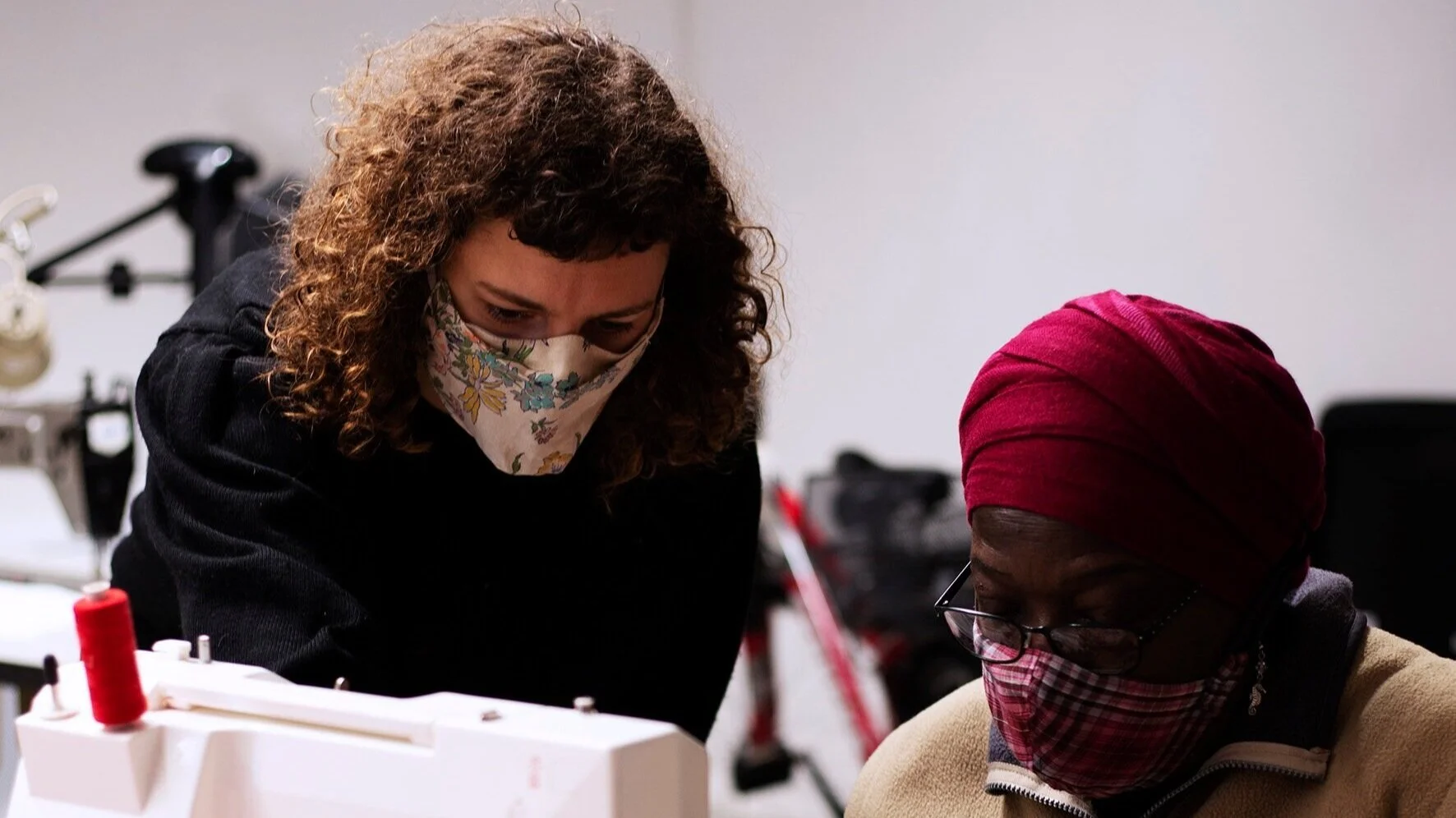
Scissors glide through patterned fabrics and the smell of white chalk hangs in the air. Six women work tirelessly at their allocated spaces, measuring tapes hanging from around their necks, barely noticing my presence. I’m at Trashion Factory, Olivia Weber’s latest sustainable fashion endeavour.
Defining herself as “an inclusive feminist”, Olivia Weber has been a force for change within her borough of Walthamstow. The founder and creative director of Trashion Factory, she provides free upcycling workshops dedicated to supporting women and single-mothers from low-income backgrounds. Weber’s workshops give them the opportunity to find employment with their newly learnt sustainable craftsmanship skills in the highly-competitive fashion industry.
Before her solo endeavour, Weber was part of a trio - JOA (Julia, Olivia, Anna). “We started JOA together,” she explains, “[but] then COVID happened, which made us rethink the way we make, where we live, and how close we are to the people we love.” Olivia’s former partners decided to go back to their home country, to be closer to their family - yet for her, London was home and she wasn’t about to give up on her passion of community engagement.
Her love of upcycling sprung from the loss of her aunt to cancer a few years ago. Unwilling to part with her belongings, she decided to bring them back to life by merging different items to form new designs.
The JOA trio graduated from London College of Fashion in 2019, where the brand won them that year’s Enterprise Challenge Award. Their ethos was (and still is) about using unwanted clothing and repurposing them into personalised bomber jackets. Championing zero waste and the upcycling of materials, all of their workshops are designed specifically for the local community.
Running different workshops throughout the year (lasting 6-10 weeks each), Olivia’s students have a true opportunity to learn different craft skills; pattern cutting and sawing to kimono design, eventually involving them in Trashion Factory’s branded t-shirt production and design, where chosen designs give profits to their creator “I try to involve them in as many opportunities as possible,” Olivia explains, “nurturing this factory of kindness as a support system.”
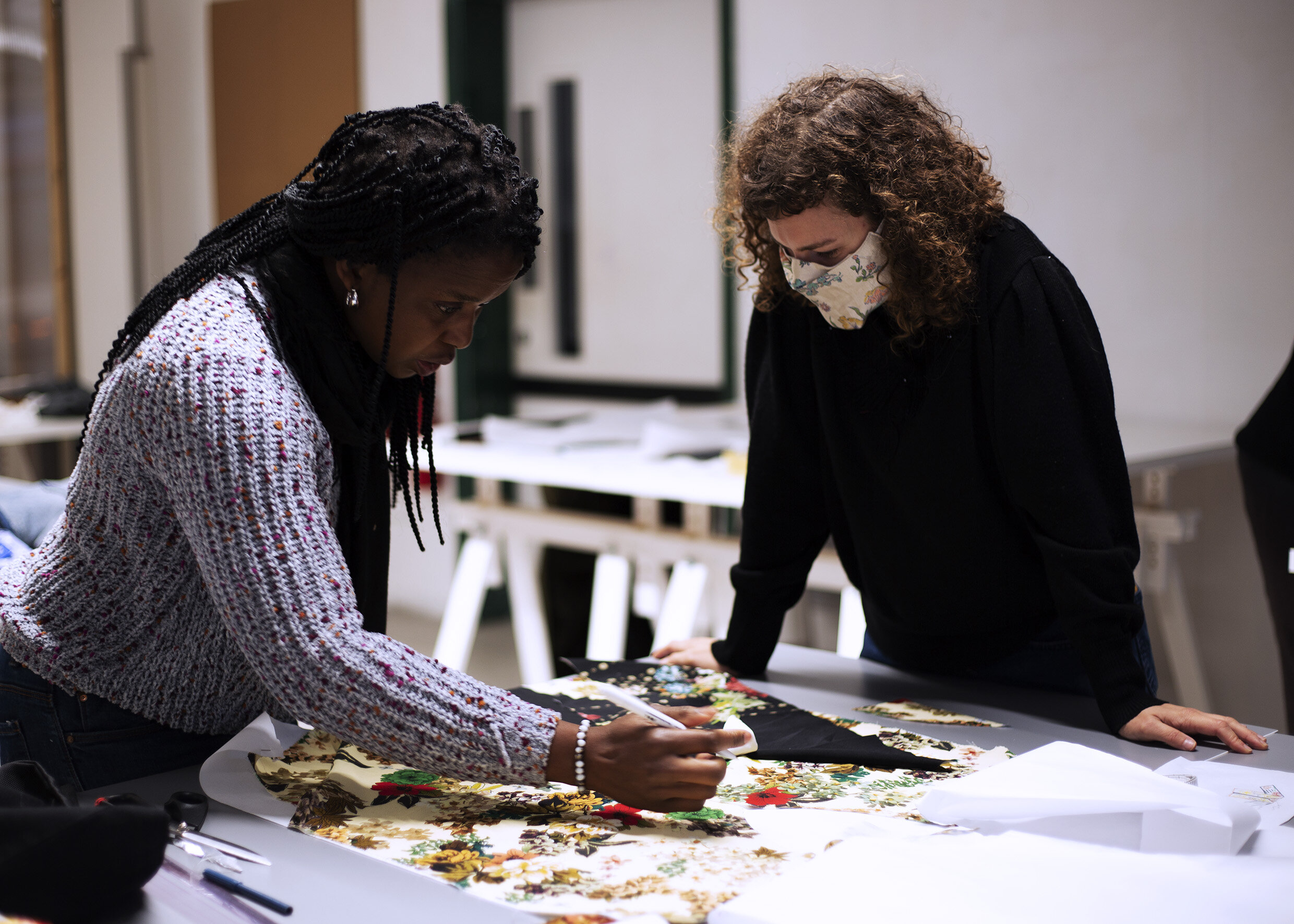
Besides providing her students with life-long skills of craftsmanship, Olivia educates them on the matters of sustainability. “It's interesting how fabric is actually quite an easily available material,” she explains, “once you know what you're doing.” Through gathering excess materials from warehouses and reusing unwanted fabrics from friends and family, Olivia has created a stable and sustainable business model for her brand that is truly beneficial for the environment and the local community.
Tired of the so-called ‘craftsmanship’ many companies market themselves with, Olivia explains that in reality “it’s just constant producing and manufacturing”. Many luxury and fast-fashion corporations define themselves as ‘craftsmen’, yet their garments are mass-produced in factories overseas. “I find craft to be people actually making things” she says, “not seeing them as human machines.”
“I’m hoping that in the future, there’s going to be loads of different sizes, designs, style, and diversity.”
The realities of the fashion industry are no secret to anyone - worker exploitation, hazardous chemicals dumped into drinking water, virtual slave labour. “There’s so much going on in our society that’s illegal,” says Olivia, “and the people know about it, the state knows about it, and they don’t do anything.” Designers like Olivia have had to create their own sustainable fashion future that puts the planet and people first.
As a designer, Olivia doesn’t have experience working for major manufacturers or designers to which she sees a huge benefit. Established designers and fashion houses are sceptical to change, and they don’t realise there may be other options of production that are more sustainable and beneficial. “The design houses and manufacturing are so separate,” she says, “[it] seems to be the common problem where designers are not taking enough responsibility.”
Being a strong advocate for sustainability, Olivia is conscious about her clothing habits. Consumers are so used to buying excess amounts of cheap garments, but for Olivia, making a change primarily comes down to a shift of perspective and appreciation of what you already have.

“I see my clothes almost as people”, she says. “I’ve had some of them for so many years, that I have a wardrobe full of memories.” She puts an emphasis on establishing relationships with the clothing you already have and, if you are adding something new to your current wardrobe, to buy second-hand.
“What I find sad at the moment, is that all brands create very similar things,” she says, “and that’s why so many items are thrown away - because it’s not interesting or doesn’t fit right.” The beauty of buying vintage or upcycled clothing from sites like Depop, is the personalisation and range of style from various fashion eras; those iconic flared jeans from the 70s, that altered bomber jacket from the 90s, or that pair of Dr. Marten’s that you’ve wanted for so long, but couldn’t afford.[2] Instead of being thrown away, the items are repurposed and find a new home, allowing for a circular fashion system.
The constant production of new collections, repetitiveness, and endless seasons contribute to the ‘throw-away culture’ we have succumbed to. “The system is not made for the diversity of human beings we have on our planet”, Olivia explains. We are not all made of identical physiques, each of us is completely different from one aspect to the other, so why are we letting fashion companies treat us like we’re all one person? “I’m hoping that in the future, there’s going to be loads of different sizes, designs, style, and diversity,” says Olivia, “a very colourful future.”
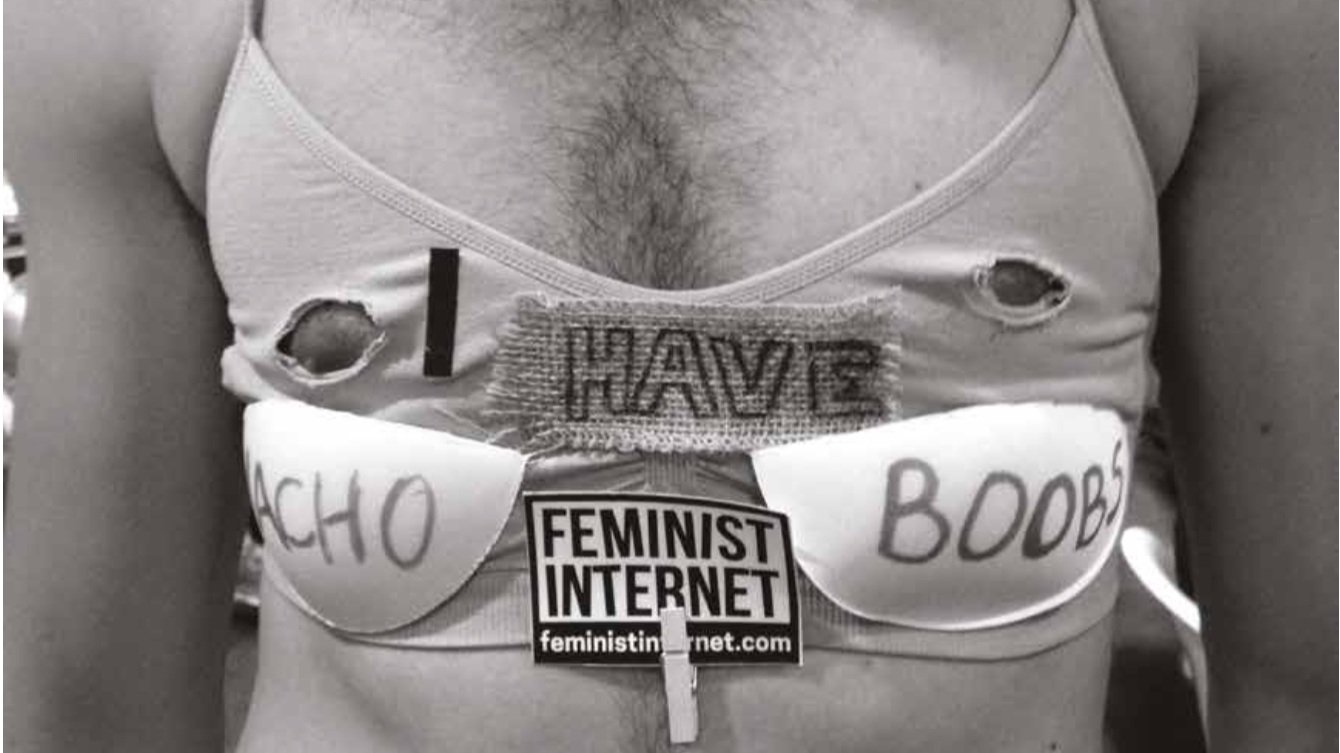
Towards a Feminist Internet: Combatting Algorithmic Gender Biases
Words: Ellisha Walkden-Williams and Viktoria Bielawa
The Internet has often acted as a stage by which gender biases have been acted out. Just looking at the gender parity in the tech industry, algorithms automating sexist datasets, or the blatant gender stereotyping in subservient female chatbots and home artificial intelligence assistants, gender bias is prevalent in different aspects of the Internet. Humans tend to see sexism as a social problem that needs to be addressed, but AI is not programmed in the same way.
Algorithmic bias is the result of structural limitations in its design. The imagined objectivity is often conflated with pure, mathematical logic. These AI programs utilise algorithms to function. Algorithms are a procedure for solving a problem by using machine learning and artificial intelligence, typically for the purpose of search engine optimisation. AI is designed to measure, analyse, represent and predict human behaviour. The people who code these AI systems insert their own societal norms and values. Only 22% of these creators are women, which is why popular forms of misogyny may at times be automated within these systems and reflected back to users as unequivocal fact. The problem is language. Cultural biases are constituted through language, then recorded, and finally transferred into ideological meaning. This is coded into the very interfaces of algorithmically designed technologies — exposing and consummating existing social prejudices and identities.
The tech world is starting to realise these problems, and The Feminist Internet launched in 2017 by Charlotte Webb to challenge systematic gender bias that was circulating on the Internet. It has programs like Hollabot, a prototype app that tackles online abuse, or F’xa, a chatbox that educates users about AI bias, to help eliminate gender bias online. The team has introduced ‘Designing a Feminist Alexa’ workshops, allowing students to prototype and code alternatives to Alexa using feminist standards. Then there’s the configuration of a Feminist Alexa, which fights for a more equitable Internet for all users.
As part of Our Algorithmic Lives, Feminist Internet will be presenting ‘In Your Shoes’ Chatbot in collaboration with UAL MA students. The chatbot has been designed as a futuristic job-hunting tool that purposefully discriminates against marginalised subgroups. Imbued with humanistic qualities, users are able to interact with the bot within the exhibition space — making you think about your own attitudes and the need for algorithmic accountability for the sake of future generations. We spoke to The Feminist Internet’s founder to discuss how the movement is changing the conversation around AI and bias.

What urged you to create Feminist Internet?
I had just finished my practice-based PhD looking at how the Internet changes the way we understand creative authorship, and was increasingly frustrated with inequalities I saw both in the digital creative industries and academia. I was invited to propose a research project for UAL looking at tech and gender, and it evolved into a 10-day course for UAL students, where we co-created the Feminist Internet Manifesto and prototyped creative responses to gender inequality relating to the Internet. Many of the participants wanted to keep our work going, and so Feminist Internet has evolved organically ever since then.
What are Feminist Internet’s key principals?
Our mission is to make the internet more equal through critical, creative practice. We address issues such as AI bias, online abuse and the environmental impact of technologies. Our approach is always to engage audiences with the complexities of these topics in a clear, accessible and playful way. As well as the points our manifesto, we focus on bringing feminist approaches to technology development, encouraging the next generation of talent to foreground equality and inclusion in their practices so they can be a force for good in the digital (and wider) world.
What do you hope to achieve through this movement?
We hope to raise awareness amongst young people, particularly those interested in becoming designers, developers, social entrepreneurs, and equip them with the practical, technical and conceptual tools to promote equality in techno-social systems. We also hope to contribute to the growing field of activists, academics, and developers who together are calling for tech companies to be more accountable for the negative social impacts their platforms and services can cause.
Is it the technology or the programmed algorithms of the platform that are non-inclusive, or is it the users shaping them?
There is a feedback loop between existing social biases, data sets, machine learning models, and people’s behaviours. We can’t separate these from each other since they all co-exist and tend to reflect each other. For example, take a healthcare algorithm that prioritises white patients over sicker black patients. The algorithm is designed to direct medical care to those most in need, but it makes its predictions based on data about people’s past health costs. Black patients historically receive less health care than white patients, so the system flags white patients more often because they have spent more on health care in the past. In this case, there is a problem with the design of the system - using cost as a proxy for health status, but there is also a problem with society! The reason black people spend less on healthcare is due to systemic social and economic inequalities.
Due to patriarchal and capitalist values still being so rooted in our society, do you think the world needs to change before the internet does?
The world and the internet can’t be separated - they are part of one ecosystem. As long as racism, sexism, white supremacy, capitalism and other oppressive systems exist, the internet will reproduce them. That’s not to say there isn’t great potential for the internet to be a liberating force, but that it reflects society, as society reflects it.
As Retail Sales Plummet, Are Major Brands Read To Embrace Sustainability?
In the wake of COVID-19 and it’s increasing economic disruptions, fast-fashion giants are beginning to fall one by one into administrations and bankruptcies. Could retailers finally embrace sustainability to recover from the pandemic?
We’ve all been told many times over that the fashion industry is the top pollutant of our planet, but what many may not realise is how some companies are establishing sustainable and value-orientated practices to boost their sales, making vast profits right in the middle of a global pandemic.
Seeming to have fuelled a new eco-consciousness, consumers have begun to increasingly look for sustainable alternatives in the market. Luxury fashion leaders, like Gucci’s Alessandro Michele, have spoken out about the rigorous nature of the fashion business - pledging to going ‘season-less’ and taking on more responsibility within the industry.
Since the stay-at-home orders were enforced in mid-March, consumers increasingly re-evaluated their priorities - particularly when it came to fashion. Encompassed by the trend, which highlighted the troubles facing fast-fashion retailers, more and more shoppers begun demanding sustainable practices and transparency from brands - willing to expose and abandon those who do not oblige.

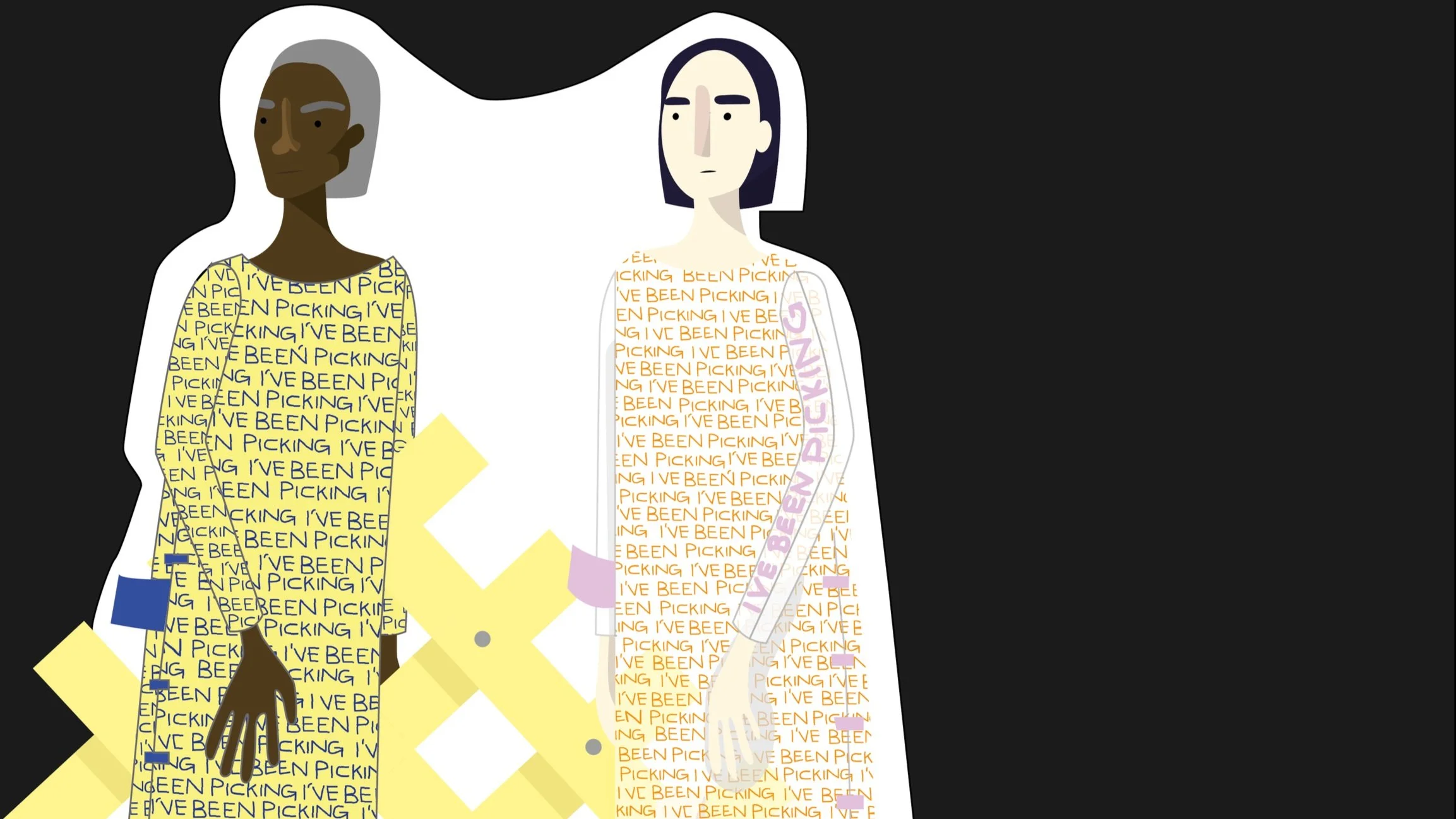
Illustration by Nienke Creemers
Retail giants like the Arcadia Group, Debenhams, and Victoria’s Secret, have all entered administration after the first lockdown wave. The announcements plastered on every news outlet in the country - but are we really that surprised?
Their business models, like many other fast-fashion brands, prioritise profit over people and planet. During the first wave of the pandemic, they cancelled over £100 million orders from overseas manufacturers - causing much criticism for their behaviour and treatment of the vulnerable manufacturing workers, leaving thousands without income.
Temporary store closures and mass unemployment caused a decline in sales across the whole sector, leaving major companies struggling to sustain their affairs in the wake of the pandemic. Businesses took a huge loss over the whole year, with Kering alone having a £2.9 billion decline in the first 2020 quarter.
For some brands, this was a wake-up call to reformulate their business plans and go back to basics. Earlier this year, Alessandro Michele devised a plan for Gucci to cut down to only two collections per year, saying, “I hope that the choices we do make will respect the actual timing of fashion and factories, and the people who work there.” By reducing the collection output, Michele wants to increase the sustainability of the fashion we buy, and as an industry leader (with a revenue close to £9 billion), other brands are expected to follow soon.
Companies who have embraced sustainable business models earlier in the year have been thriving during the pandemic. Recent statistics show that E.l.f. Cosmetics have generated a 60 per cent surge of new customers - offering high-quality, vegan, cruelty-free, and inclusive beauty at an affordable price point.
“Gen Z consumers are looking to vote [with their wallet] for brands that care about the things that they themselves care about,” says CMO of E.l.f. Cosmetics, Kory Marchisotto. “The strength of our purpose has come up loud and clear from them as one of the features driving our success right now.”
A key player in the race for sustainability has long been held by the high-street brand, H&M, with their Conscious collection - made of at least 50 per cent sustainably sourced or recycled materials. Despite facing backlash for their fast production cycles, which are the very antithesis of sustainable practice, Georgina Waltier, H&M’s sustainability manager in the UK, justifies the brand’s approach by saying, “we want to use our large size and scale to really drive systemic change across the entire industry”. Waltier explains, “we are investing in new innovations to bring more sustainable materials to scale, so [they] can be affordable.”
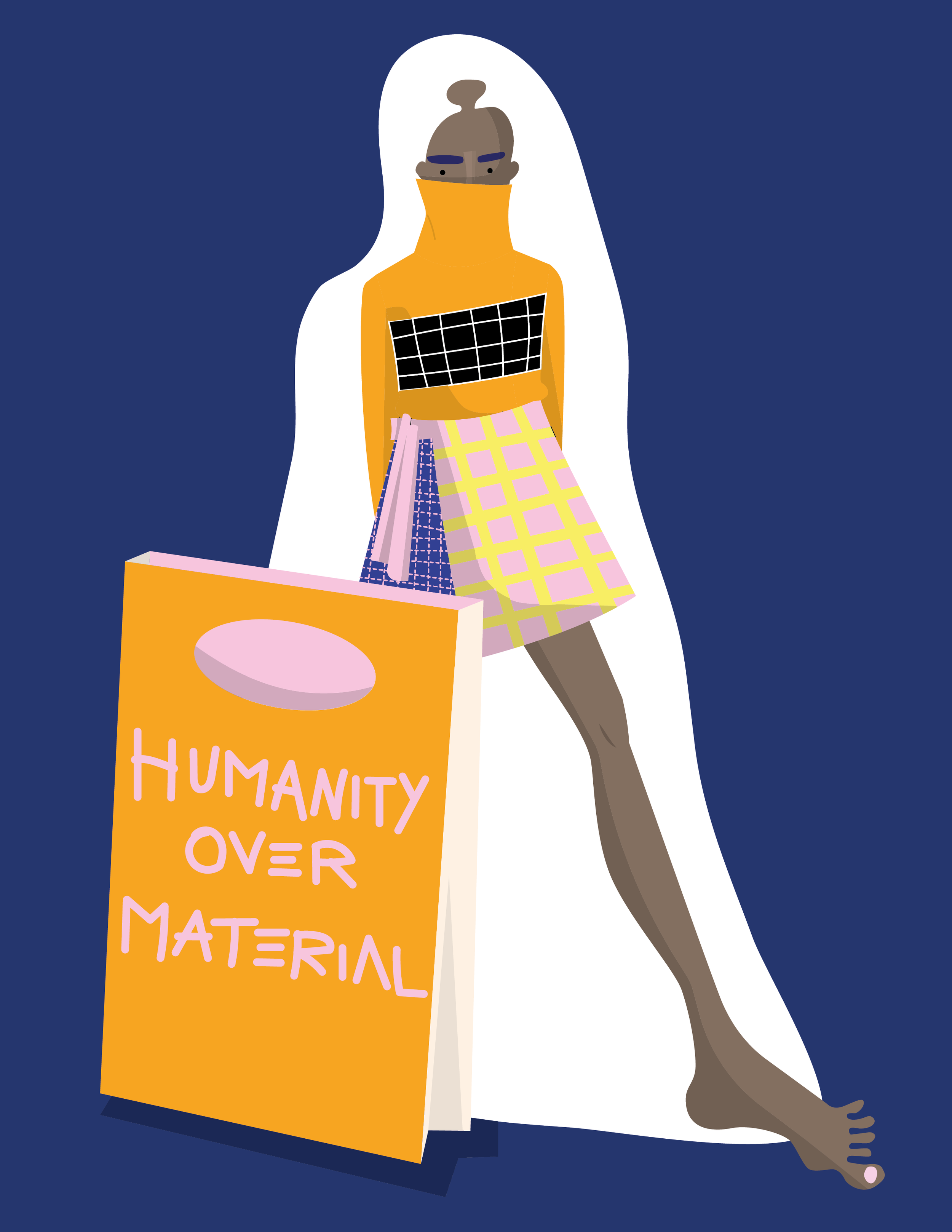
Illustration by Nienke Creemers
The brand’s strategic decision to keep on track with all its initiatives gave them a strong advantage at the start of the year. The Swedish retailer reported only a 10% loss in the fourth quarter (approximately 8% less compared to other high-street brands), positioning them well in the fight to recover in the industry market post-pandemic.
Their ‘Conscious’ collection and the brand’s sustainability-focused values are their greatest advantage. A survey conducted earlier this year found that 67 per cent of consumers consider the use of sustainable materials as a purchasing factor, while 63 per cent also look at the way the brand promotes sustainability.
A recent study done by MSCI Index found that the COVID-19 pandemic vividly highlighted the intertwined nature of the world’s social and economic systems, showing that sustainable brands with higher environmental, social, and corporate governance (“ESG”) factors provide higher success rates in the long-term. With consumers shopping mindfully and cost-consciously, raising demand for sustainable and value-orientated brands, why aren’t more brands adapting the sustainable model?
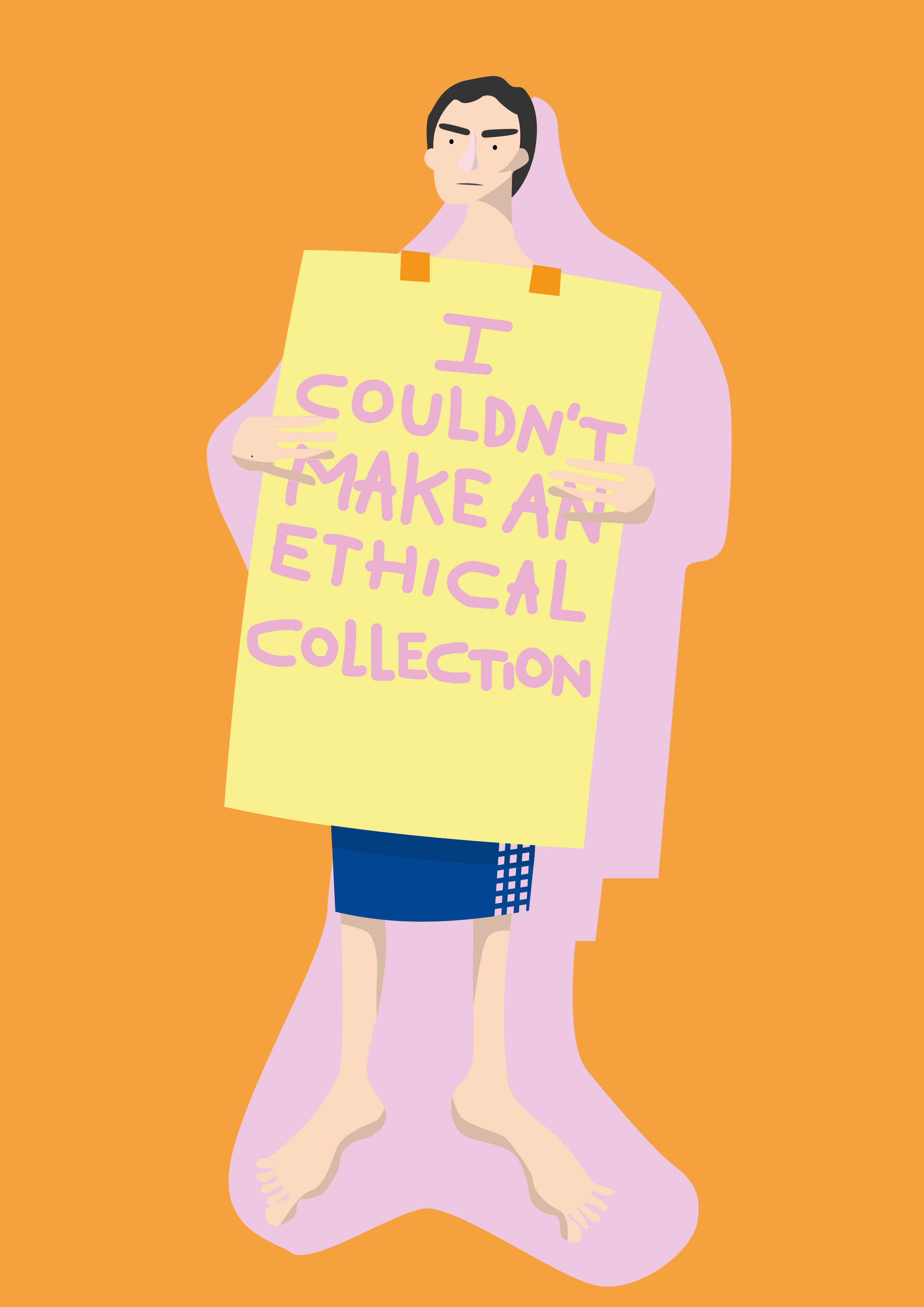
Illustration by Nienke Creemers
Having suited their demands and preferences with the times, it is not enough for fashion and beauty brands to just sell high-quality and stylish products. Consumers look for brands who have values and make an impact on society; whether that’s environmental, social, or inclusive ideals, and they are willing to abandon the brands who do not represent and identify with their values.
Balancing the short and long term, is critical for sustainable investment, and finding that balance in the midst of COVID-19 is a real challenge. Businesses who have shown greater resilience against the pandemic implications have been those who demonstrated a nature of sustainable approach on a macro and micro level.
The future of retail, fashion, and beauty past the pandemic remains unpredictable, but with the considerable increase of ‘eco' popularity and the rise of the sustainable consumer, maybe it is time for the major retailers and fashion groups to take note and re-evaluate their business models to fit with the increasing consumer and society demand - if they want to adapt to the ‘new normal’.
TRANSPARENCY reworked

How did you get into sustainability and why did you chose MA Fashion Futures at London College of Fashion (UAL)?
I was looking into sustainability in my third year (BA Marketing), and I got really interested in it. When I started in fashion, I worked at Arcadia and Boohoo fast-fashion companies. I felt like I needed to be part of the different side of fashion - the one that's not doing all of this crazy stuff to the people and planet. I love the outline of the course because it's ‘Fashion Futures,’ not specifically sustainable fashion. It's a really diverse course in how we approach sustainability, no one's got the same perspective of sustainability as anyone else and there's only 15 of us on the MA - we all feel differently about different things.
That's really interesting to see that everyone has very different outcomes of their work. You recently started your upcycling brand, Looped. When did you start that?
We started that with two other girls, as part of the collaborative unit at the university. I really liked the idea of upcycling and I got into it when I was in my undergrad and when I was working in fast fashion. Seeing the number of samples before they even get to any customer or sign off point, there's so much waste already! I wanted to hone in on making use of all of the products that are not being used, that will go straight to landfill otherwise.
We tried to put on an event with a charity, but then everything happened and the world shut down, so we decided to focus on online. We did tutorials of how to dye your clothes with avocados and cocoa - that was really fun to do! It was great to share ways to be creative in lockdown. Looped is doing well, so far. I mean, people are really buying the face-mask, because that's what people need right now! I hope I can expand it a little more soon.


So you're thinking of expanding into a clothing line of various different types of garments?
Yeah, sure. So, one aspect of my face-masks is that they're reversible. I feel like if you've got two in one, then you know it's a more sustainable outfit because you've got two things for your money’s worth.
I'm trying to upcycle things with a bit of meaning as well. I think it's nice to give things a personal story. I try and work with different samples, not fabrics. It's a really different way of working. You've got to get a bit creative and stingy with your materials, as everything's made to order. It's really fun to play around, just chopping up all these samples, then making them into something really cute.
And where do you get those samples from, normally?
I've got quite a lot of personal samples that I've acquired over the last three years in fast fashion - literally boxes and boxes. But apart from that, I do a lot of charity shop runs. I aim to get fast fashion brand clothing, like TopShop or Primark, because I feel like people don't value that as much in charity shops, and it's more likely to go to landfill. I aim for things with cool patterns and fabrics. I go for something different every time but also I reach out to wholesalers and suppliers who have got old samples - which is something that I'm working on expanding, but I've got a lot to go off, at the moment. It's absolutely crazy how many clothes you acquire over a few years!
What is the current project that you're working on, at the moment?
I'm looking at is social media, how we can bridge the gap between what people say they care about in sustainability and how they actually act. I think it's really interesting how people are going to be more engaged in sustainability in a realistic way, and whether people actually want to do it in a way that is fun, gives people the feeling of shopping. I don't think that should go away, but it should come in a different way. With sustainability, it's not that there's a problem, it's just that there's so much going on in the world, it's really difficult for people to prioritise. I think it's quite like intimidating sometimes as well.

I've been listening to podcasts and talks where major companies and even models, like Cara Delevingne, were talking with NGOs about how to make fashion more sustainable. After a few weeks, it just stopped. At least it started the conversation...
I was reading on your website and the article with Imran Amed. That was quite early on, and it was really positive and seeming that everything's going to change. And now I feel like we are going straight back to normal. I can't really believe it's happening.
I had some hope that, through all these talks and webinars they had about fashion sustainability, it seemed something might change in fashion. I mean, I'm not crossing it out yet, but it seems like everything's just going back to the old ways.
It's just so daunting as well with how everything is in the market, and we don't know what's going to happen. It's really expensive to be a sustainable brand, in terms of packaging and products, it's almost double the price. You need to be in a good position to be making those decisions as a brand. It’s frustrating that it's still not a priority. There's so much value in sustainable businesses, and it's just really scary what it's going to be like in 10 years, if actions don't happen at a big level. In terms of a social level as well with what happened in Leicester. Whenever something's made in the UK, really often it's made in Leicester. You wouldn't dream of directly handing your money to these exploitative companies, if you saw first-hand the breakdown of costs, because it's really crazy.
I was so shocked to find out it was so close to home. I was actually going to ask you about the Boohoo scandal and your thoughts about why do you think it's been ‘hushed’ under for so many years with no consequences?
From an economics perspective, it's really interesting how Boohoo have spoken about not disclosing their list of supply chain, because it's hundreds of suppliers. A lot of factories are great, not all the suppliers are bad people. They've tried to say that they will lose money if they expose their supply chain, because it's their business secret, and the government didn't question it for one second. That's not how things should work. Any of the conglomerates that own massive chains, they don't make all of that money without their costs being very low. In fashion, the wages are really low across the entire industry - they exploit everyone where they can legally get away with it. So I think it's the legislation that needs to be looked at and what is driving the economy.

Speaking about sustainability, and how everyone has a different meaning of it. What does it mean to you?
For me, it's being more conscious in the ways that you're approaching the product. In terms of an economic and social journey, I've learned to be more aware of the process that might have gone through. But I think it's also just trying to invest in products that you're going to wear. I know there's that whole thing, “make sure you can wear it 30 times,” but I do feel that if you really love something, you should be able to buy it and not have to feel guilty. I think there's so much guilt - we're only human! I think it's taking ownership of something, really making it last, and taking better care of it. Changing our mindset and educating yourself, or educate others in a relatable way, to me, that's what being sustainable is.
How would you describe your brand values from Lopped?
I think the value is trying to look at something in a creative and relevant way. I'm trying to have fun with sustainability and revert these attitudes towards second-hand clothing. I'm trying to put across how much waste there is, that's completely unworn, and it's just going to end up in landfill if we don't do something with it. I think it's just trying to have a new approach to sustainable fashion.
You put an emphasis on personalisation within fashion for sustainability with your one-off pieces. Is that how you're pushing your brand?
Yeah, I'll literally have my fabrics there and video call someone or send them pictures of everything I've got, what I think would work, and get an idea of their style. I think to be involved in the creative process, is what I think is most exciting about upcycling. That's the kind of personalised element that I really want to get going. When you feel like you're part of the production process and love what you're designing, you might be a lot more attached to it. It's a lot more difficult to do on a larger scale, because it's just me. It's a great way to be testing the waters in new ways that we could work. do on a larger scale, as it's just me.
Coming down to London and starting in sustainability compared to fast fashion has been a bit overwhelming, but I’m so surprised with how open everyone is, and everyone wants to genuinely help each other. We're all doing it because this is a really urgent situation, not for the money, and we really care about it. I think it's that genuine care, that is really unique about the industry and the support from other people, everyone is just so willing to answer your questions. Everyone wants to help everyone.
Oh, that's so nice! Well, fashion is known as this ‘cutthroat’ industry - very competitive. It’s so lovely to hear how completely different it is, with the approach from designers and creatives within it.
It's really made me feel like everyone's on the same page. You find people who have the same values as you. It's great to be surrounded by people who actually are in fashion for the same reasons. There's just more honesty and creativity that comes with that as well. I mean, I never did dying until I came to London and started asking some of them about dyeing fabrics and found my little avocado obsession.

I was not expecting an avocado to make that colour, to be honest.
Red sock in the wash!
Love it. How can we, as consumers, increase the life of clothing to decrease the amount of landfill and pollution?
Education is really important. If something rips, most think it's not worth getting it repaired, because in London it's really expensive to get things repaired. Just YouTubing it - that's literally how I learned how to sew and do everything. It's just such an amazing tool for creativity. Empower yourself, don't just think that that's the end of it. I know it's hard to find the time in everything that we need to be part of and educated about today, and that it's just another one of those things that we need to step up on. Try a bit harder, because we could all do a little bit better. I think, myself included, and it's easy to slip into old habits and you just have to think - if it was directly paining you, you wouldn't do it.
Looped Reworked masks are available to order @loopedreworked - just DM!
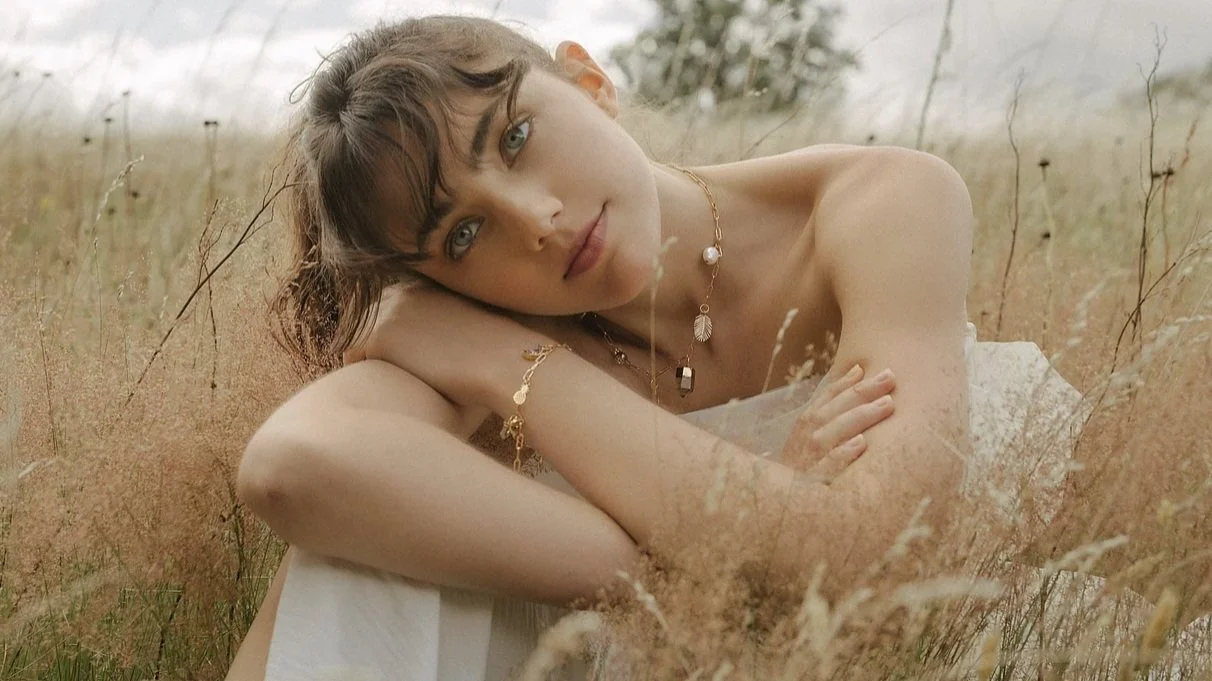
Bring On The Positive Vibes with Tiana Jewels
Passionate about spirituality, healing and bringing positive energy during these bleak times, Tiana Jewel holds the most harmonious and elegant raw healing crystals this SS21 season in forms of mesmerising jewellery accessories.
Miri, the founder of Tiana Jewel, is deeply immersed in gemstone design for better health and wellbeing. The gemstones present a much broader association than just beautiful statement pieces, but ones that come with spiritual guidance, protection, and mindfulness.
The bohemian brand’s latest 2020 collection, entitled Celestial, is a beautiful illustration of celebrating nature and its creations through bringing crystals to the essence of our vibrations.
When did you first realise you wanted to pursue a career in jewellery design?
That's a good question. I did a course a long time ago, about 10 years. It's called beadweaving - very popular in America, which uses these tiny seed beads to make up different patterns. One piece would take you a couple of days or even a week to finish. Alongside that I learned the basics of jewellery making, and it was just very addictive. I would make pieces for my friends, for my family, then eventually my best friend said to me, "why don't you create a collection and start selling it" and it grew from there!
I guess because each piece takes such a long time, it was hard to price it because it takes hours and hours of work. I eventually came across crystals, and I just felt as soon as I saw them, I was really drawn to them. I just felt like it was a good match for my lifestyle, because I'm very into holistic and natural, alternative healing, and I'm a bit obsessed actually! I decided to source crystals, and people really loved them from the start. What I love about crystals is that each piece is unique and one of a kind. So, you're always getting a unique design piece. And I think people that really understand that can appreciate that everything is just random. I always like to be a bit different than the crowd.
So, is that how Tiana Jewel started with you making jewellery pieces for your friends and family?
I was already into the whole 'selling to people' when I started my beadweaving. But I'd always make pieces for my mom or my best friend as gifts. As soon as I started, that's when I started on Instagram and people loved it! And it grew from there.
And you talk about sustainability as one of your main causes. How did you get into the sustainable side of jewellery design and production?
I think for me, when it comes to sustainability, it's about ethical practice. So, I've met my suppliers, who are family-run businesses in Brazil and India. They know me really well. I haven't been there, unfortunately, although I would love to go one day [That's the dream!].
Mining can be a very corrupt industry. There's a lot of slave labour and exploitation of workers. But the main suppliers that I use, I know them really well - actually, I've been working with them quite a few years. They tell me about the whole process and explain to me how it all works, and they're on the same wavelength as me, I guess.

How would you describe your latest collection?
My latest piece is about celebrating nature and also bringing the high vibrations of crystals into our lives. I use some signature pieces as well as bringing in some new designs. I also brought into this collection, which I haven't done before, is pearls which I really love. Each pearl is quite unique and for some reason I kept coming across pearls - I think they're quite iconic, actually as well.
You started saying about what sustainability means to you. Obviously, sustainability can mean so many different things. So, what is it specially mean to you?
I think Fair Trade is very important, and also not harming the environment. But I think crystals do the opposite. I think that they very much, can only bring harmony and healing to people. That's really the whole ethos of the brand - it's all about healing. I'm very into healing into natural ways of healing. I've seen how crystals have helped me in my life. I mean, not directly, but indirectly. And I literally sleep with a whole array of crystals next to my bed side, and I even sleep with one under my pillow as well. I keep buying them, but I keep coming across them just randomly in shops and places that I would never even think that they would be. I feel it's like a calling in a sense, because, like, crystals are very intuitive, and you need different crystals at different times. And I seem to come across what I need at that time. I feel like they actually call me.
You said a little bit about sourcing your materials, and that you have that strong bond with your suppliers. How did that start? How did you find out about them in the first place?
It was mostly just research on the internet. I actually have a Brazilian friend who helped me out a lot, actually, she would find me some suppliers. I always said to her that I want them to be a small business, not these big factories. Because there was a bit of a language barrier, at the beginning she helped me overcome that. It was like a indirect way of finding them.
Oh, amazing. And your collections are so unique, and not mass produced. Do you do everything by hand?
So, the rings are manufactured in Brazil, and I tend to design them with my supplier. I'm quite specific about what I want that I actually choose all the gemstones myself as well, because there is quite a lot of variety within each piece. I think I drive them mad a bit actually! But all the earrings and necklaces are done by hand.
How many of each piece do you have in the collection?
It's grown recently, but around 30 to 40.
Because, it's considered personalised, isn't it? It's such a small number of similar pieces - it's so unique, that it's very hard to come across another person with exactly the same thing.
I had a customer contact me and she randomly said, "I'm a Leo", and I was like, "so am I!". And she said that she is really into statement pieces (That's like a Leo thing). I didn't even know that because I'm also obsessed with statement - I never realised that was a Leo trait. So like you say, because each piece is quite unique, I was sending her pictures and she was telling me what she liked. I think it's really special in that way.
So, you go through that personal process with some customers to give them the best product for them?
Yeah, so that's what I love. That's my favourite thing to do, because I feel it's really important that people choose the pieces. Everyone's drawn to something different, so sometimes that's hard to gauge online. And that's why I love doing pop ups as well. I recently relaunched my website, and I've got a chat on there. People have been really responding to it, they really like it! I feel like it's more of a unique assessment, like you say, a personalised service. I just love interacting with customers, getting to meet them, and know their needs. That's what I love about this job.


And I also saw that you have this guide and blog on your website, where you can go through the different gemstone properties and characters. Which gemstone would you identify most personally with at this moment?
At the moment, it's agate. I'm literally obsessed, and I haven't stopped wearing it since March. I think the reason is, because obviously we're going through a really strange time, there's a lot of uncertainty. And for me, agate represents protection, and it's very grounding for me as well. The backstory of the agate stone is that soldiers used to wear them on their breastplate when they were out in war. Most crystals, they have lots of legends and stories around them.
I mean, it's definitely fitting with the times at the moment.
At the beginning I felt like there was quite a lot of negative energy around, and I needed to stay grounded and focused and that's how I felt when I wore my agate.
What would you say inspires you creatively and brings out your flair for new collections?
I think it's actually the crystals that give me a lot of inspiration and, and checking what the trends are as well. But also, I love statement, anything big and chunky, but with class. The crystals are like a piece in themselves. So, it's like getting the balance between not losing the focus on the crystal whilst designing the jewellery at the same time. I tend to play a lot with components that I have and making mood boards, etc...
Would you say that certain moments in your life shaped the way you create and design?
I think it's probably about having the confidence to design. Sometimes I'm like, "Oh my gosh, will people go for this?", if it's a bit, you know, loud or too statement-y. Mind you, this this collection, I did a couple of delicate pieces, which is kind of unusual for me.
Yes, from what I saw in your previous collections, they're all quite "statement-y" and bold. But then I saw those delicate bracelets and they are so beautiful as well.
I don't know why I had a bit of a change of heart. I knew I wanted to design something with kind of like a the 'charm' scene. I don't know, it just came about somehow. I say, unusual for me, but I still really identify with it. I felt like, maybe because we're all going back to the simpler times, simple but still beautiful. pieces. I think that's why I brought in the pearls as well, because I was blessed to have them.
How do you sustain interest in the most mundane tasks of production when you produce and design?
Sometimes I take a break. I have my best friend, she's always rooting for me and encouraging me, because obviously, there's been times where I've wanted to quit. And she's like, "No, you've got to continue!". So, she's had a huge impact in my life. Just always so positive and tells me to go for every opportunity I can. She been my backbone. Also, I think taking a break helps a lot, because even now I'm thinking that I need to design and plan ahead for next year. But I don't feel so inspired at the moment. I think it's because I haven't really been out much, so I'm hoping now the lockdowns over, I'll be able to get my inspiration back. I love like, people watching, that's a big one for me.

Interesting. And so obviously, during this whole pandemic, we've massively slowed down as a society in general. Do you think this whole experience will change the way we produce and consume fashion and design?
I think that a lot of people have just been buying online. Consumerism has moved to an online portal - which is great for small businesses. But I think people are also reconsidering what they buy, how they buy it and focusing more on what they really need, as opposed to the fast fashion impulse buy. But I feel like it's not the same experience as when you go to store and you see. I'm very much a people's person, and I like to touch and feel things and see, I'm a very visual as well. So online doesn't always do it for me.
I completely understand I'm the same, I need to touch see everything and feel it myself, in order to think whether it's worth the money of if I see myself wearing it.
When you're out and about, and especially when you're in a boutique. In the summer we went to Hampshire, and there's lots of little boutiques there. I just loved going in there and seeing the people, speaking to them, and seeing the unique, unusual things that you wouldn't find in the mainstream stores. I feel like London is not how it used to be. But for me, that was such a treat, being able to go into boutiques and speak to the store owners or the designers.
What would you say are the main problems in fashion and design today?
I think there's a lot of repeats. A lot of people are just doing the same thing and just reproducing. You know, everyone's just copying each other, basically. Which to me is very boring. So, that's why I like boutiques, and I like designers because they always think outside the box. I guess the idea of fast fashion is that consumers are always over buying with things that we don't need.
And do you think jewellery/fashion/design, it can ever be truly sustainable in the future?
I really hope so. I think there's a lot more awareness right now, and I think people are looking for that thing to tip them over the edge to buy something. I think educating people about what sustainability really is because, like you say, whether that's true or not all the time? What does it really mean? Is it the same thing as organic? And especially to designers and fashion, because I hear it nonstop, but I still don't really know what it meant until I looked into it and checked for myself.
So true. What do you think is the most effective way to promote sustainability?
I think through education again. Designers are talking about it all the time, but I think, we need to be getting into the nitty gritty details of it, because I'm all about details. We really need to explain it to people what it means not just throwing the towel around.
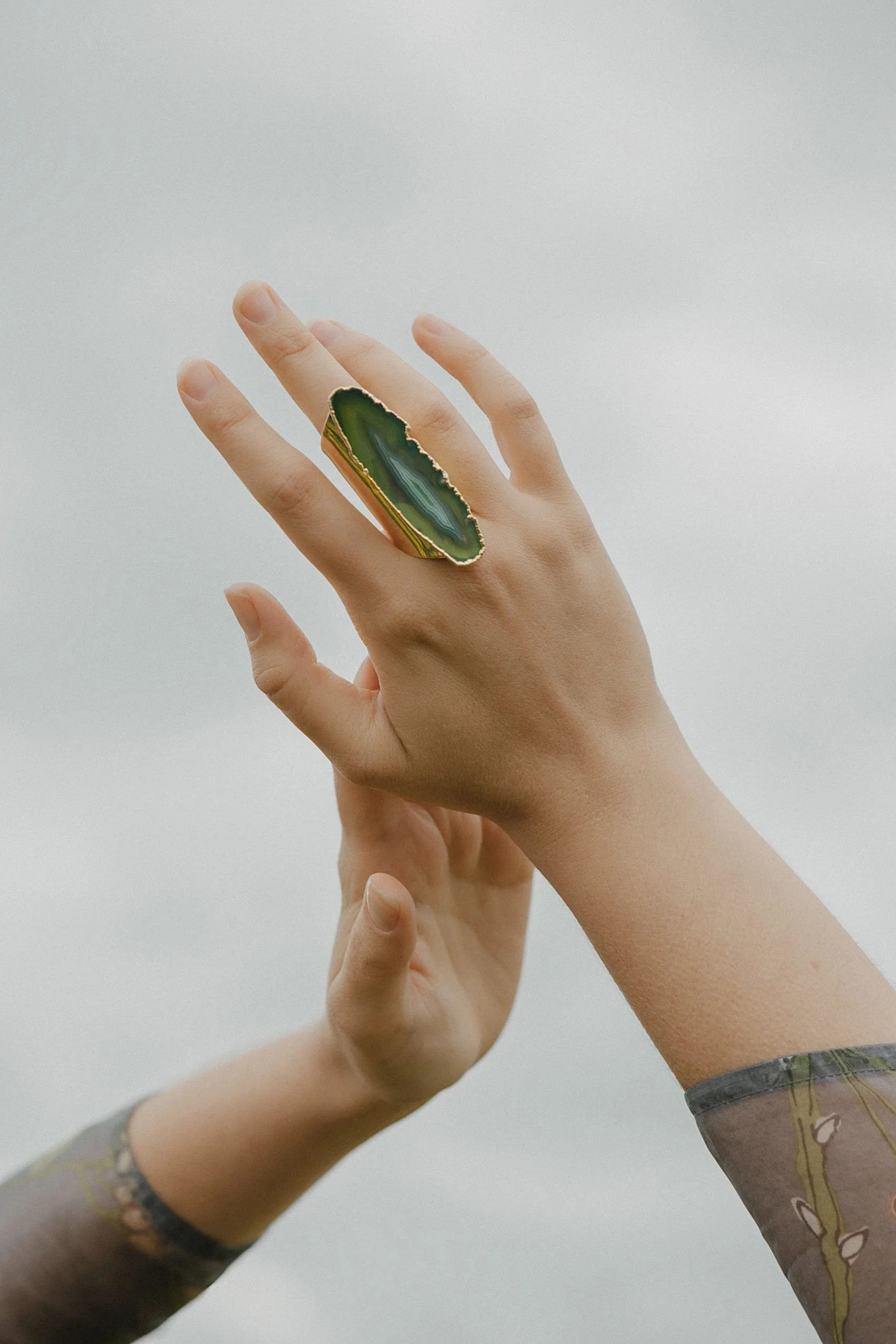

Yeah, that's true. Do you have any ideas of where the next collection of Tiana Jewels might go towards?
I really want to do a kid's collection, because kids are so intuitive. They totally get crystals and they're so mesmerised by them. I'm also trying to raise awareness in children, because they don't have any blockages and they totally understand when they see a crystal if they like it or if they don't. I have started to do a kid's collection, I need to do a bit more work on it. I'm hoping that my daughter will model for me as she's really excited about the collection. She wants to help me design it as well, so we're going to do a little collaboration.
That is so wholesome! Do you plan for it to be a kid's collection on the side of your normal collection?
I want to do like a 'mum and me' kind of thing. I'm looking into matching mom and daughter pieces. I see with my own kids, they love crystals and because I have them everywhere all over the house, they're really into it.
I can't wait to see them!
Check out the collection online now! Available to purchase at La Maison Couture.
Special thanks to Black PR for providing Tiana Jewel Celestial campaign photographs.
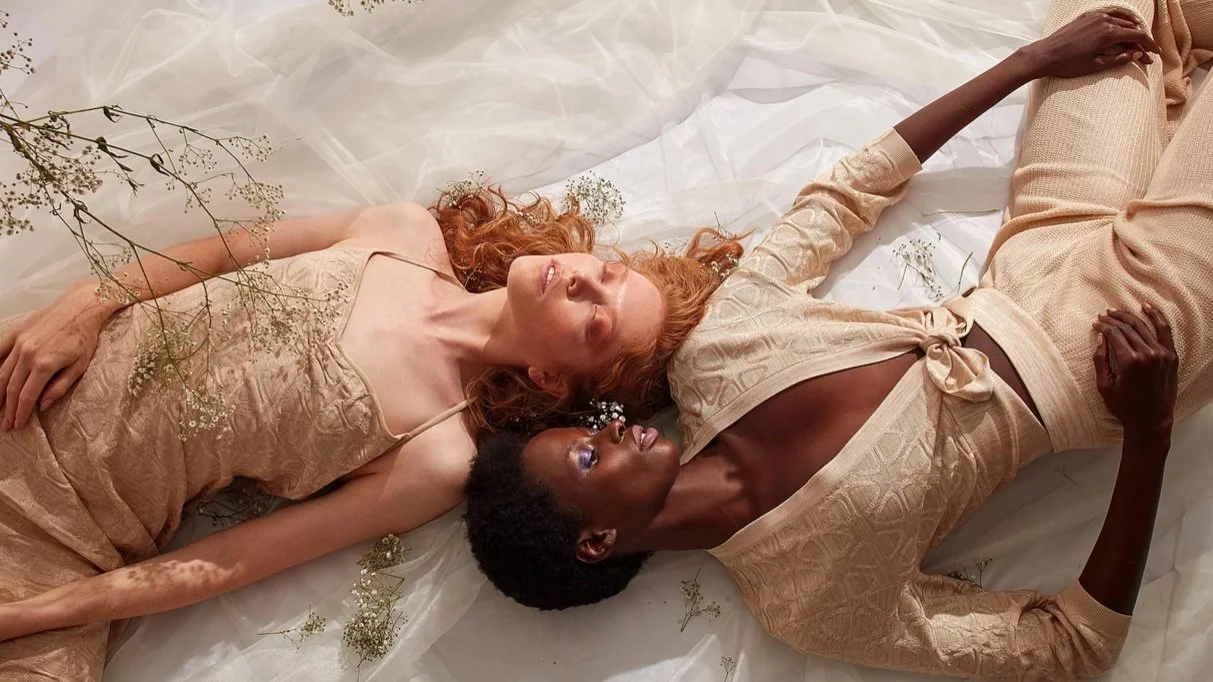
Embracing The Feminine Silhouette with KNITSS
Taking inspiration from powerful women, the contemporary knitwear brand, KNITSS, brings back the traditional feminine silhouettes of comfort, confidence, and style will certainly boost any mood in the new year.
Throwing 2020 behind us, yet embracing some concepts of simplicity, melancholy, and positively moving forward, the “Beautiful Flora” collection grasps the perfect balance of nature’s colour palette with bohemian style that perfectly reflects the brand’s core values of sustainability and modern sophistication.
Speaking with the Founder and Creative Director, Duygu Boz takes advantage of the world lockdown to absorb and explore her creative reflection. Embodying her Turkish heritage and producing every collection in-house, Duygu emphasises her production process, inspirations, and hopes “for a better world”.
How do you feel about LFW being digital? Do you think or want it you continue past the pandemic?
I feel enthusiastic about what we have seen so far! It’s interesting to see how each designer has adapted in a different and original way. This new format for fashion week provides opportunities for designers to think differently and possibly even more creatively. It can be a real opportunity to reset the industry for the long term and set it up for a more responsible future.
Do you miss the physical shows?
Not so much. We can now take the advantage of the global inclusive reach of digital - whether it be through stills, film, or livestream. As creatives we are always looking for a new way to express ourselves. This is just another avenue for us to do.
How has the pandemic affected you personally and creatively?
I think it’s good for us to recognize that a lot of things can be done in different ways - it’s another way to unlock our imagination about what we do and how we do it. When you think about “creating”, it always comes out of isolation because you need to create a space that is uniquely your own to make something beautiful. I changed my life in a way that can make that different point of view possible. I can say this period made me more mindful and creative in a good way.


What was it like creating on entire new collection during lockdown?
During the beginning of lockdown, I thought ‘how could it be?!’, but after a while it became natural. I just focused around “what the world needs”. For my own life, I see this period as a chance because I had enough time to take a step back and look around and think about. So, I focused and started the new collections with a fresh mind and nice ideas.
You have a background in Film and TV. What made you want to switch to fashion design?
I studied Film and Television, thankfully, because it helped me to see the world from a different perspective. After a couple years of working in the sector, I jumped to the fashion management and design because of my family business in textiles, but I always took the advantage of studying Film and TV. I like to tell the stories by KNITSS collections in the seasons like shooting a film. That’s a great excitement and motivation for me. That’s the way of my telling story.
Do you see yourself taking influence from film/cinema or tv?
Absolutely! What we see in the film is life itself. You can find the inspiration by a character, period, attitude, costume, decor or whatever. So, I’m always taking influence from these sources.
One of your care values is “corporate responsibility”. What does sustainability mean to you and how important is it to the future of fashion?
Sustainable fashion is gradually growing into a “hot topic”, and the most important aspect is to inform the consumers. İt is really important for consumers to think about how their purchase affects the environment; the lifecycle of their garment, and how to invest in clothes that last longer. After all, as a brand, KNITSS promises to take care of our beautiful world with ethical codes because there is no planet B to live!
Your new collection centres around heritage as well as new and old. What inspired the concept for the ‘Powerful Aluure’ collection?
With the rise of digital world, KNITSS focused this season at combining the new and heritage styles in a strong way. It’s all about the focus on making betterand providing longevity. Inspired by the power of now and affected by the past, with womenswear moving back toward traditional feminine silhouettes offering comfort and a strong style with the effect of digital era.
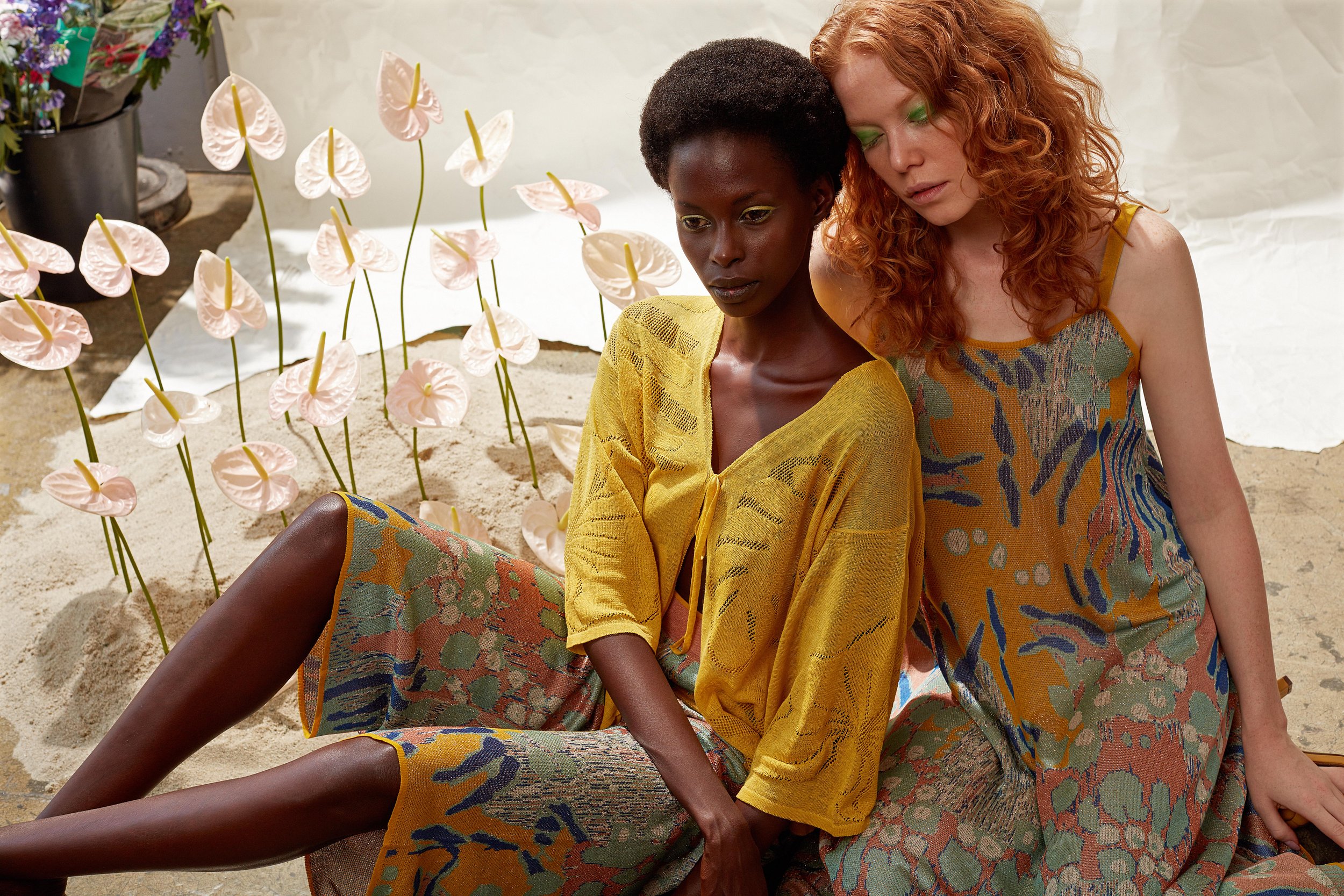
How do you source your materials?
We only use 100% Italian yarns in the collections. With upcoming pieces, KNITSS is shaping the fashion of tomorrow with unique designs and sustainable collections. Always giving priority to the conservation of natural resources, collective living and developing for a “better tomorrow”. This upcoming collection emphasises exactly that - a brand that is sensitive to recycling and protection of the environment. Our motto is “KNITSS for a better world”.
What inspires you as a creative?
I’m always taking inspirations from life itself. Art, hobbies, people, city… Whatever I can find to be inspired by. My most creative moments happened while I was travelling, as if another chakra opens my mind. Most of the time, I visit art galleries and organisations that enter my radar to get inspired with design and collections.
How have certain moments in your life shape the way create?
I grow up in a family which runs a manufactory for international fashion and textile brands. While I was watching the process. I remember that I said one day I will make my own brand and have my own voice. I think childhood period is valuable for the future decisions.
Do you think the pandemic will change the way we produce and consume fashion?
There is no doubt that the pandemic will change the way we produce and consume. I believe that the future of fashion depends on its ability to adapt sustainability and embed this concept in its core. Sustainable fashion has the potential to empower consumers with the feeling of fulfilment, by making more conscious choices and their consumption of sustainable fashion products. Therefore, brands and producers should focus to make it better around the ethical codes for our future.

What are the main issues with fashion today? Who is responsible to fix them?
Certainly, the main issue is sustainability in fashion today, because we all started to be concerned about our future. In this view, all the players in this landscape - including suppliers, manufacturers, regulators, and consumers, work together in synergy and interdependently towards a higher level of welfare.
Can the future of fashion ever be truly sustainable?
Achieving sustainability by its definition is not possible as the dynamic characteristic of nature defies the concept. A sustainable institution embraces human nature at a very high level, because it has the ability to satisfy both our egoistic and altruistic needs. But in my eyes, I believe that sustainable fashion has a big potential and motivation for all the players in this landscape. Nevertheless, consumers are more aware of the environmental and social issues associates with the production and consumption of fashion than ever before.
What is the most effective way to promote fashion sustainability?
I believe that small steps make a big difference. People should pay close attention to how brands use the term “transparency”. Do they really prove it? Are they committed to ethical sustainable practices? One of the biggest culprits in the fashion industry is “fast fashion” or clothes made cheaply to meet demands for the hot new styles. However, fast fashion is putting our future planet at risk. Therefore, every human being needs to take responsibility for our daily choices; commit to buying less, invest in pieces that last longer - these are the small steps but can make big differences for our future. On the other hand, the fashion industry response will shape the future supply chain. Actions to ensure long-term sustainability will strengthen the resilience of business along the supply chain. At the end of the day, it could be a fair mutual relationship between consumer and the players in the industry for our mother nature to thrive.
Their AW20 collection is available to purchase here: https://www.knitss.com/
The ‘Beautiful Flora’ SS21 collection will be available soon. Keep an eye out!
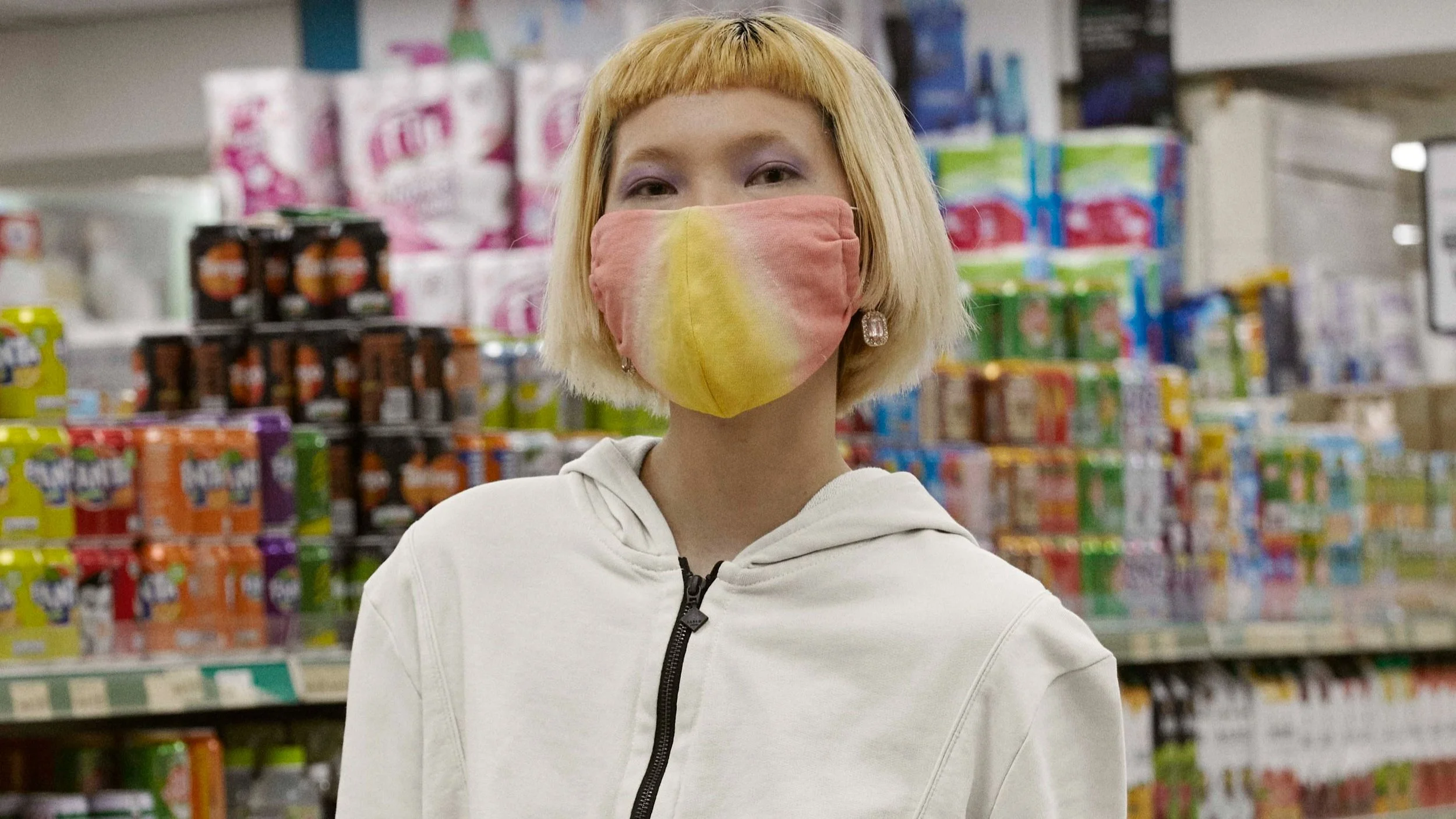
Let's Talk About...Harem London
The Turkish-sister-double-act is taking the sustainability world of fashion by storm with their Harem London SS21 collection, which they presented at the digital London Fashion Week.
Merging cities of Istanbul and London, the streetwear brand changed up their style for the new season by dip-dying the entire collection by hand in their Dalston studio, allowing for a unique gradient for each piece. The spectrum of colours is hand-crafted from 100% organic and up-cycled materials from their previous collections.
Minimal – yet vibrant. The SS21 collection is a true ray of joy and comfort for the last few months. Taking their Turkish heritage with a contemporary London spin, the designs are a journey of growth through the lives of Harem London sisters.
Below, we speak to the design-duo, Dee and Begum Ozturk, about their heritage inspirations, the pressures of design, and the importance of sustainability for the future of the industry.
How has lockdown treated you both?
Dee Ozturk - In the beginning, it was difficult. When you produce something, you can't really do much at home, but then we got used to it. We try to be cautious at the studio and keep our distance. We’re getting this new system.
How was it designing an entirely new collection over lockdown? That must have been a challenge...
DO - That was difficult. As a designer of the collection, I always get my inspiration from the streets. So, whenever I feel like I have the designer's block, I would go out for a walk and be around people, get inspired by the amazing diversity in London. Whenever I wanted to create something new, I would travel back to Turkey; to my roots, and do some research, but obviously I couldn’t travel. Turkey has a huge history; it's made of seven parts, and each part has its own traditions. When I wasn't able to travel, that was very, very difficult. We were even considering maybe skipping this collection because we didn't know what the fashion scene is gonna be.
Begum Ozturk - We had a different kind of stress compared to the physical shows. This was the very first time that we're doing something very different. We wanted to do something different and bit more interactive, as our physical events are always very interactive, because of my sister's [Dee] theatre background. She always likes to get in touch with the clients and the audience.
DO - That's another thing whenever you have a live show, you can always improvise if stuff goes wrong. But when it's digital, you're very limited.
BO - Being a small brand, sometimes you have only one shot. And if there's a technical glitch in one person's video...
DO - It's not good for our reputation.
How do you feel about London Fashion Week being digital? Do you think or want it to continue even after the pandemic?
DO - This is interesting. I think there's a good side that London Fashion Week slowed down. But being able to do something live is a completely different feeling. I would much prefer having something live, where I can be present, explain, and answer questions. Every time we try to do something, we create an atmosphere of our environment, our habitat, where we share, but if it's digital, you use less of your senses. Where else if it's a live show - you can smell things, you can hear things, or you can touch things, see the texture. I think that's very important. So, I would love to go back to the live events.
BO - During the physical events, you can see people's faces and how they react, and you can talk to them. It’s really tricky. The advantages are that we can push ourselves to different levels. I think that the industry is out-dated, maybe there's a different world to discover now. But the priority now is obviously everyone's health.
DO - When you think about it, it doesn't have to be either one or the other - you can always mix the two aspects. That means being creative, I think. A good advantage of doing a digital thing is that you're able to reach a wider audience. So, there's pros and cons to both sides, I think.
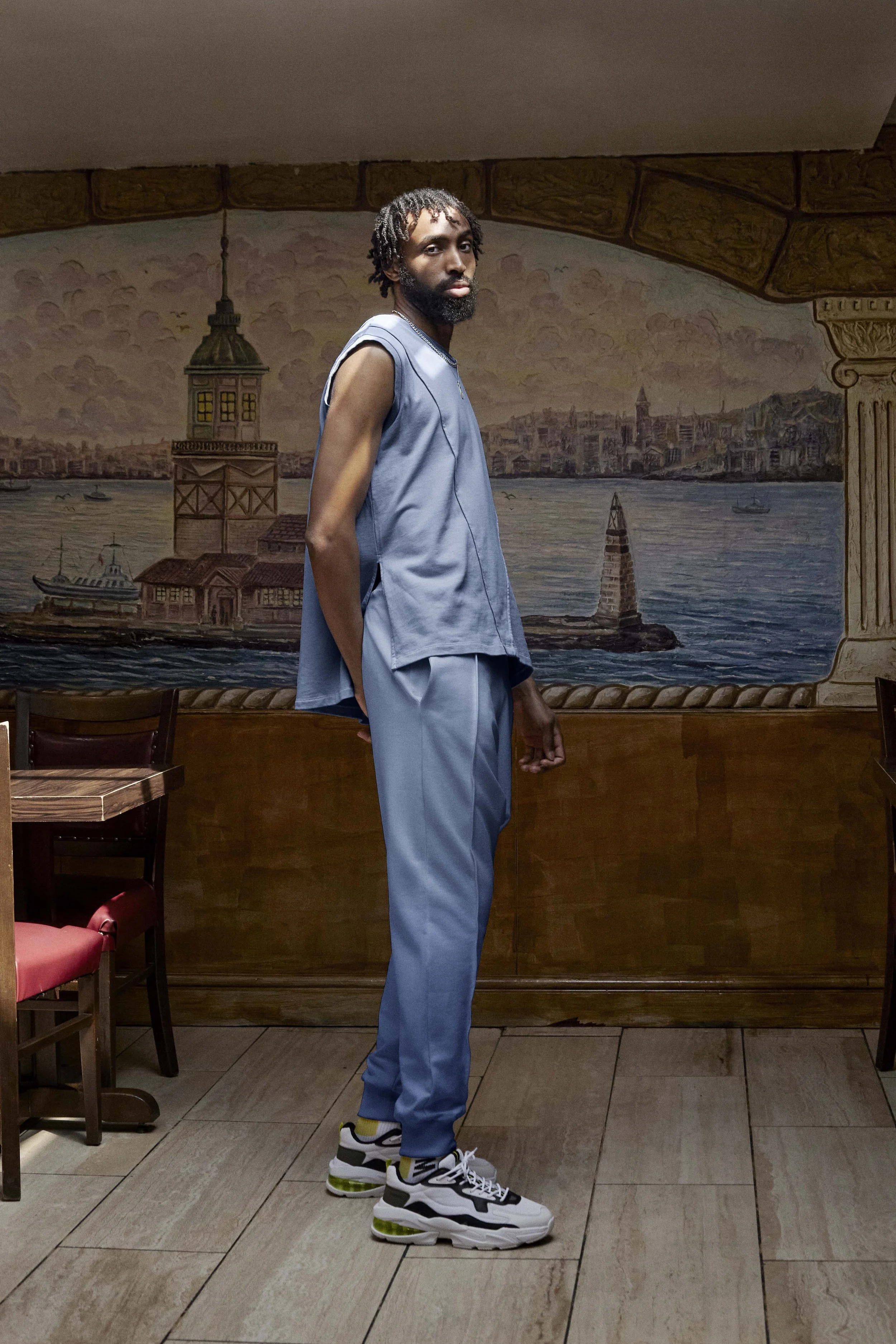
Images courtesy of Harem London SS21 campaign.
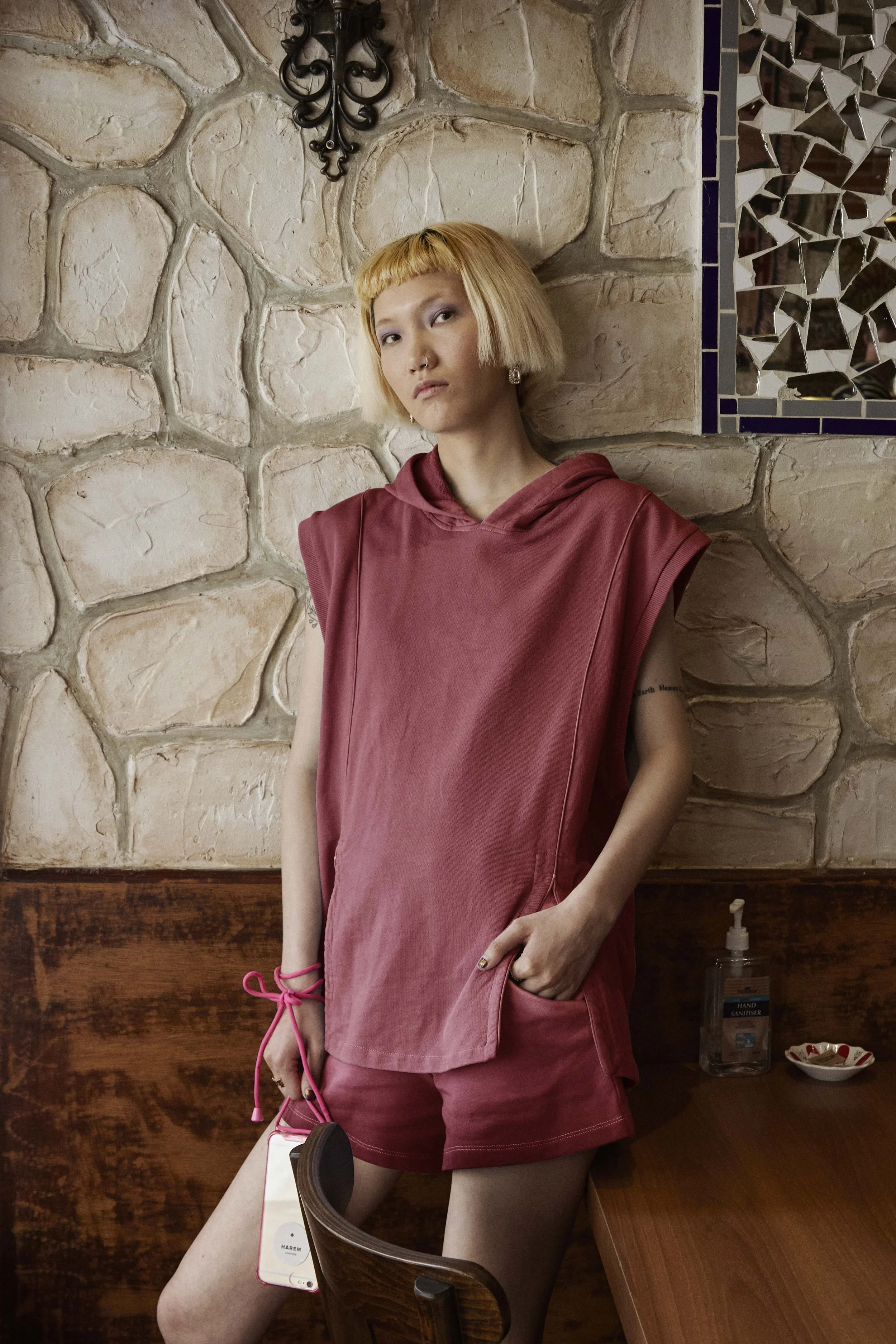
And do you think the pandemic will affect how we produce and consume fashion?
DO - Oh, 100% Yeah. There's the good side of our industry is that people have slowed down. I believe we were living super-fast and trying to shove everything on social media; show how active you are. There was this kind of greed before. We believe fashion is going to be more seasonless, and I really hope it will be. There's a very big pressure, even if you're a small brand, to create two seasons every year at least. I think this is gonna change. Absolutely, for small brands and big brands in the future.
BO – Now, the demand has fallen dramatically. People are buying less and being more environmentally friendly, which will make small brands like us more appreciated. We put so much effort and consideration into one item, a simple t-shirt. Also, I think seasonless would be great for the designers. The artists' biggest asset is their inspiration, and when you pressure them to deliver they get more stressed and lose their inspiration. I think seasonless is really great - for the sake of art.
DO - After this, everything will reduce, almost equalise [production-wise]. That's the advantage for small brands like us because you can't really compete with them. Once it's about sustainability and ethical producing, it gives me the enthusiasm to not quit and actually do more. I know, I will be appreciated more at one point.
One of your core values in your company is sustainability. What does sustainability mean to you? As a brand, and as a designer?
DO - Sustainability in terms of production, for us, it means there is no waste, as well as labour sustainability, for us, that's really important. We get our fabric from Turkey. We don’t buy factory-made fabric, but organic, ethically produced for us; there is no minimum order with our suppliers, which is also about supplier relationships. That's the side I think is also linked to sustainability - it's material and labour. The great thing is that we have control from the beginning of our production so we can see what's wasted, what's used, so we don't over-order, which also great for the environment. We always recycle and we upcycle.
That's really great. You have put a lot of emphasis on your Turkish heritage in your designs and brand. Do you incorporate any traditional Turkish techniques?
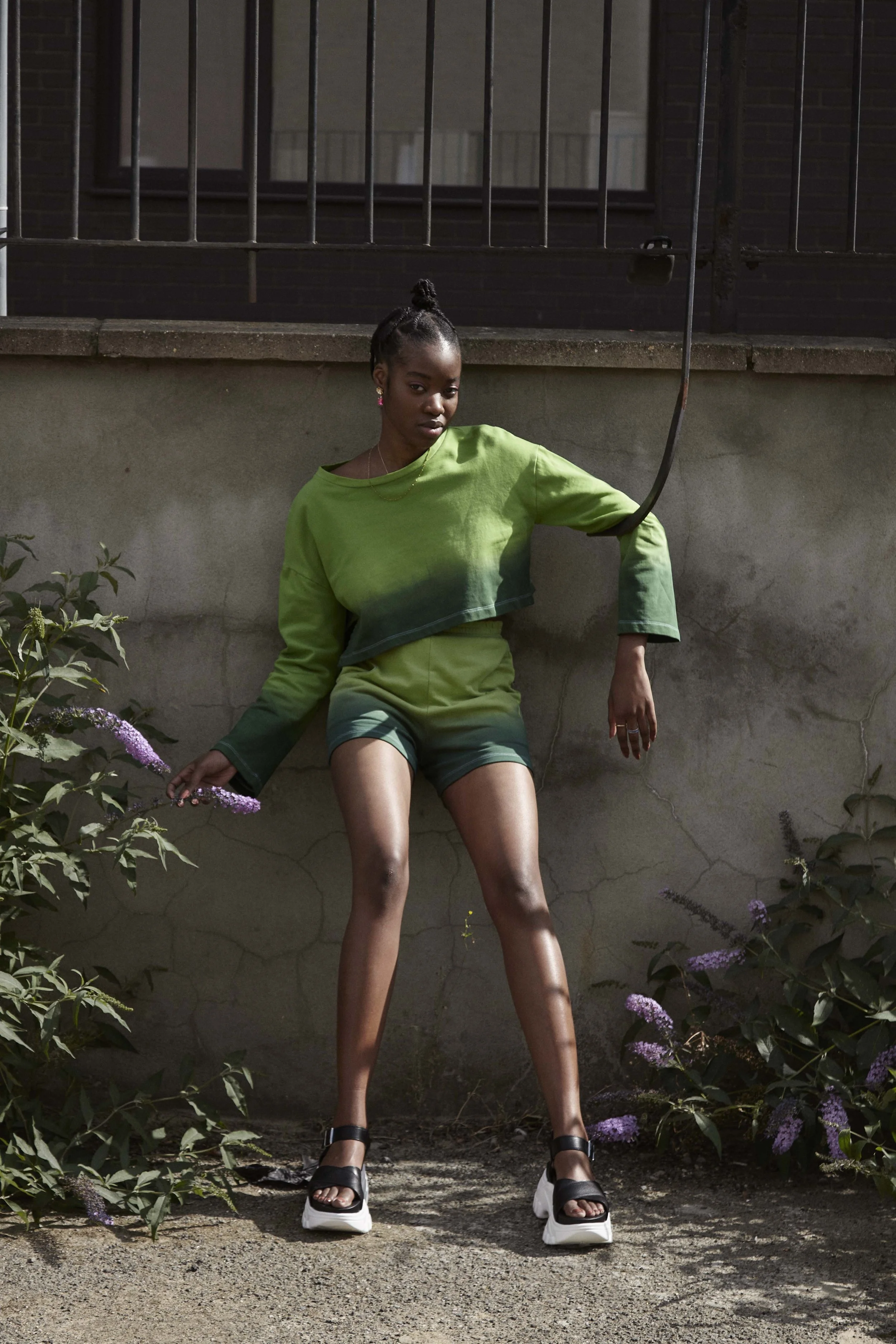
Image courtesy of Harem London SS21 campaign.
DO - I was planning to include more handcraft, like embroidery or different techniques of metal engraving, but obviously, I couldn’t travel. I usually get inspired by the cuts of the Turkish traditional designs, for example, in our AW20, we got inspired by carpet patterns, which holds so much meaning. I studied what every sign means, then we came up with a design of our own. The collection is going to be on our website in October. I don't want it to look like those super traditional brands, because half of our lives were in Istanbul and half is in London, we're a mix of the two. Neither of them is more than the other to me, weirdly. This cross-culture is also a core element for us. That's why we love diversity and the cross-culture fits between the two cultures that we come from. We like to interpret this in our designs.
As you said, your designs are a mix of London and Istanbul. Which aspects do you take from which city?
DO - I get the biggest inspiration at the starting point of the design from my own culture; my own life and where I was born, then I develop it away as I live in London now. It's like the development of my life, the grand parallel. I take the traditional aspects and make it into a more contemporary and modern version, so it's very variable. My starting point is always the heritage that I try to interpret to my today.
This collection, for the first time we did colours and the colour inspiration was Turkish as well. So again, the starting point is Turkish like the whole set started from colours.
I was about to mention the change of palette because everything you did in your past collections was black and white. What urged you to try the pop of colour?
DO - A few things actually. I think it all depends on the psychology of the designer. I always loved monochrome colour, I was never a colour person. During the pandemic, Begum suggested, "let's do something we've never done before, why don't we make it more positive this year". I started going back to my favourite movies, books, paintings - the obelisk paintings from Harem because I couldn't go [to Turkey]. I selected colours, and we tried it and everything we dyed inside our studio. This was Begum kicking in creatively!
BO - Ah thank you! [Laughs]
DO - We thought that we have time now, so let's take on this challenge.
Your Interactive lookbook is so unique and fun! How exactly does it work?
DO - This interactive book was an inspiration not for the next collection, actually. But this one is just for you to play with. Every garment will be individually dyed in one colour but it's gonna be available in all seven colours. We wanted to make something more playful, and we wanted to see the reaction of the people, to be honest. We turned it into more like artwork rather than the actual garment.
BO - You had to see the day we had to colour! It was really fun and funny at the same time. They had to do a lot of experimenting, lots of lots of buckets and lots of colours. It was really funny!
What are the factors you look for in when you're sourcing materials?
DO - Sustainability is very important. We never get anything factory-made, like ever. And we try to source from local manufacturers, both for fabric and for embroidery. It's always people that we know what they do; a family business, always local producers. I think that really shows in the material.
BO - It's really important for us to have a relationship with the supplier. All our suppliers, we know them in person, we've been to their factories, we go frequently. Sometimes we talk on WhatsApp with them. It's really important for us that they understand what we do, and they appreciate our work.
DO - We share the final product with them before we launch anything as well and they give us their feedback. We always try to have this special bond between our suppliers.
What do you think is the most effective way of promoting sustainable fashion?
BO - It's doing its own marketing, to be honest. Especially with the COVID situation, and with the environmentalists going - shouting really, they're not even protesting anymore, they're actually screaming. We must take care of this world, the environment, the climate change. Fashion is the second most polluting industry in the world at the moment, we have to make sure that we produce sustainably in order to make sure that we don't damage the climate anymore. I think people are already aware.
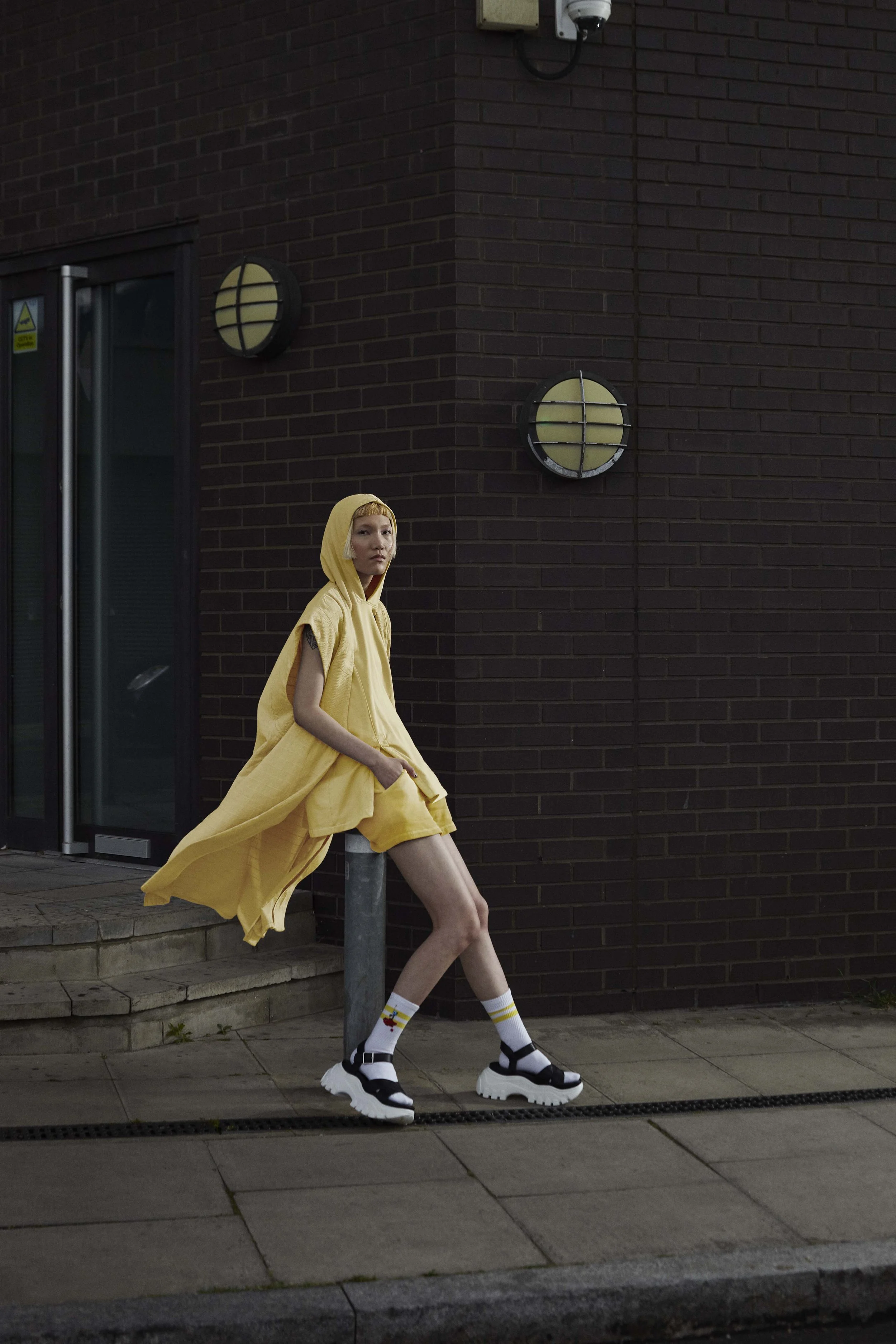
Images courtesy of Harem London SS21 campaign.
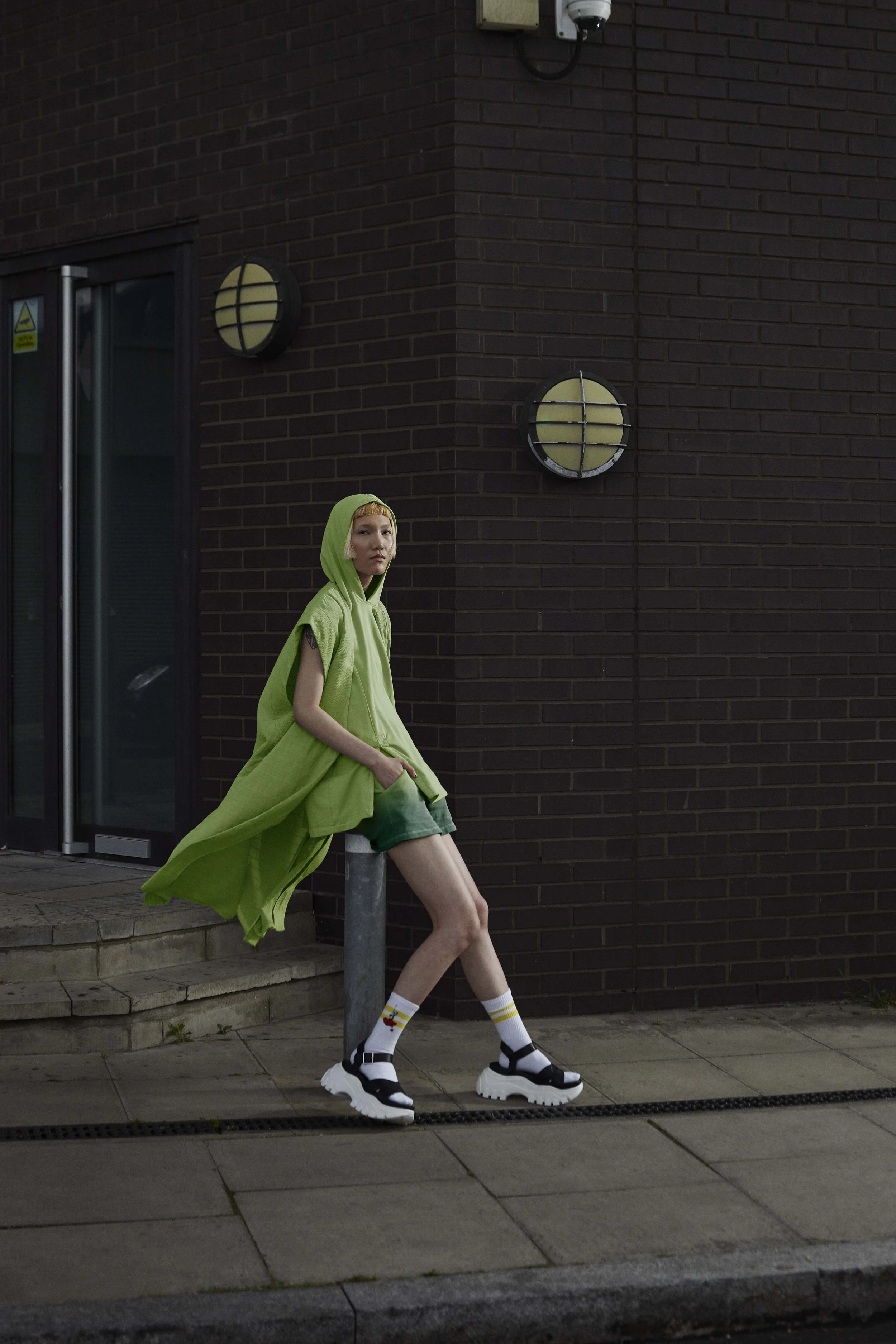
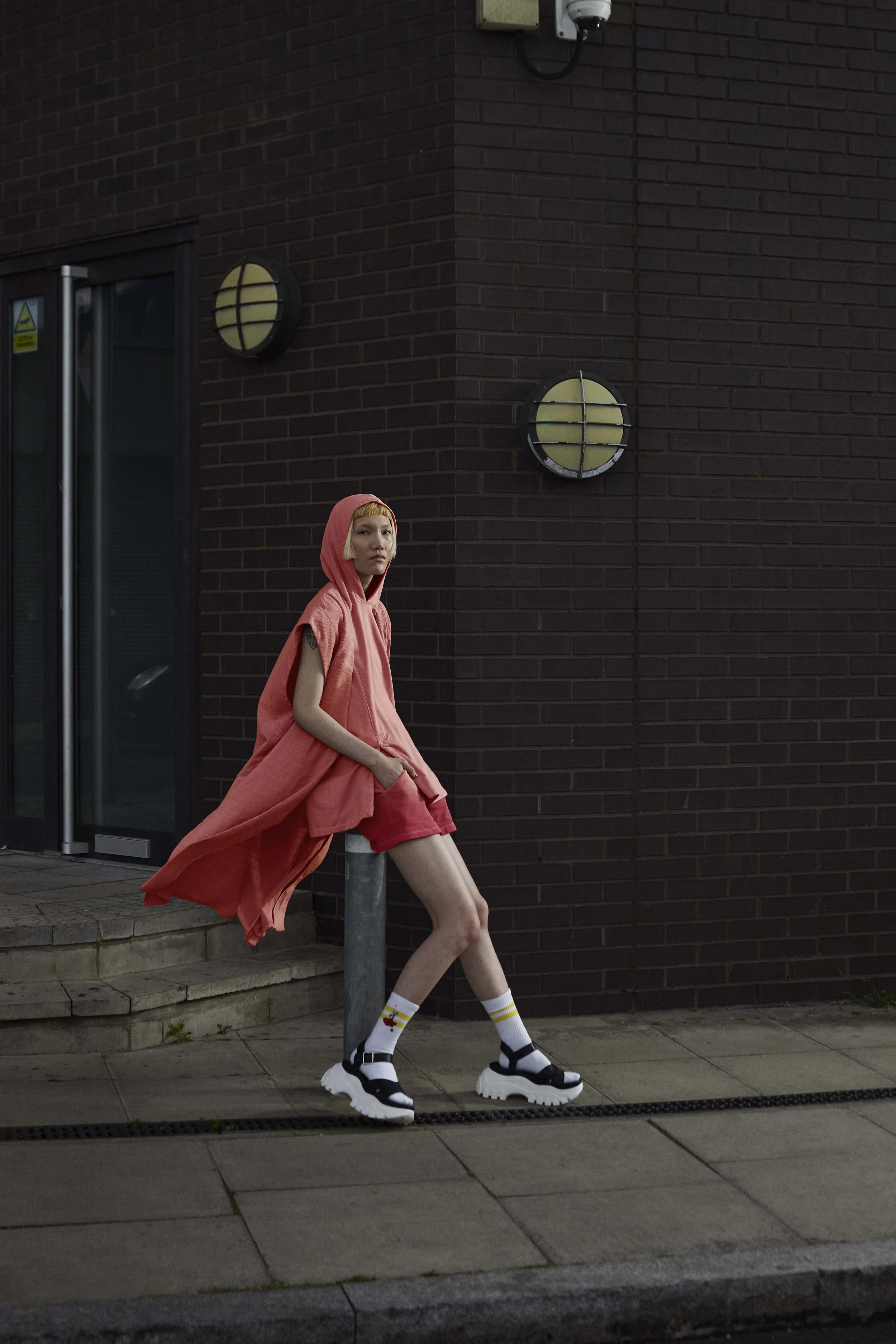
This year, especially. I've never seen so many designers doing sustainable collections.
DO - Yes! Even just in 2020. Designers who used to do mass production - small brands that we know as well, they started talking about sustainability. It's good to see them change.
BO - A couple of years ago, sustainability was the label of 'luxury branding'. However, now it's becoming more mass as well.
DO - More popular.
BO - I mean, it shouldn't be ‘popular’. It should be something timeless to stay in this industry. As you can see, with COVID especially, a lot of brands had to declare bankruptcy because the way they were doing it was too fast; huge mass production factories. They were so big and couldn't do it sustainably and ethically, so they just crumbled. To stay in this industry and to be honest to your own clients, I think you have to be sustainable. As you said, we see people using these words, just as marketing material. We would love to have you in our studio, you will see we have our own tables, we have our girls doing our stuff, and it's just really like a family - because our name is HAREM, which means family.
Can the future of fashion be truly sustainable?
DO - If we raise our children, the next generations, and the generations after that, and they are taught in a certain way - this has a bigger chance for fashion to be more sustainable. If we can defeat the consuming ideology, then maybe.
BO - I think there are two aspects to it - business-wise, during this capital economical system, it's impossible because of the supply and demand, and the demand is huge. The current system must change or adapt to become more sustainable. I did my Master's in consumer behaviour, and the consumer’s habits always change. For example, when you buy a new iPhone, at first, it's so difficult, isn't it? But then within two weeks, you get used to it. So, what I'm trying to say is that consumers, if they actually push themselves, and if they want to change, if sustainability becomes a habit to them, then it is possible. In the fashion industry now, all these brands, they are not sustainable. And they cannot be because they have a business plan, and their structure is completely based on the capital of them. To change that, it's really, really difficult. However, if the consumers demand this strongly, which, in my opinion, can happen in the next 20 years, then I think it is possible.
DO - I think that means education and being aware. We need to teach the new generations how this is affecting the climate and the people. Labour and production in countries like China are not humane. I think once people are aware, and if they teach their children, then in the future it might change, but it’s difficult to say. I really wish it would.
BO - It is difficult, financially as well. Some people cannot afford to buy sustainably - for a family with three children, it’s impossible! But for sustainable brands like us, we cannot be sustainable, ethical, and organic, and be cheap. The production costs are not like those mass-produced brands. So, I think it’s important for people to understand why these items may be a bit more expensive. Obviously, there are brands that are completely taking the piss, don’t get me wrong…
It’s about a system that has been going for decades, which simply isn’t working anymore. It is possible to change it, especially nowadays the small up-and-coming brands that are sustainable, when they become the ‘big’ brands they will try to keep sustainable practices. The new generation, our generation, is asking the right questions; about diversity, about inclusivity, environmental issues, climate change. These are the right questions and it shows a bright future ahead of us.
Check out Harem London’s new collection and interactive lookbook here.
The 'One-Man-Show' of Johan Ku
A renowned knitwear designer, a graphic designer, an artist, and now a director of his latest SS21 collection – Johan Ku is truly a ‘one-man show’. Spanning a successful career in the fashion industries for nearly a decade now, Johan reflects on his “humble” upbringing, which is the secret to his unorthodox and innovative collections.
The Taiwanese avant-garde designer’s SS21 collection, entitled ‘Painters’, is a collaboration between his abstract graphic-designs expertise and his long-time friend’s artistic paintings. The heavy blend of bold colours and dramatic prints are enriched through splashes of fluorescent acrylic paint, brushes, and imprinted paint-tubes as the visual basis for the new contemporary line.
Johan reflects on his structural, yet dynamic, luxury collections over the last ten years, pondering his humble upbringing as inspiration and motivation for the fashion world. Below, we explore his vision of the digital in future of fashion as well as celebrating his 20th collection this London Fashion Week.

Obviously, 2020 has been a difficult time for everyone. How has the pandemic affected you personally and creatively?
Personally, it becomes 'work from home' most of the time, although I still had to go out to find some new materials, nowadays people use the internet to communicate with each other. Even when ordering fabric - I would just call them to send samples. So, it's actually changed quite a lot, but I think it's a good change. People find a way to simplify things, as may be the older ways need a difference too. Even though our business got a little bit affected, but not that much, we have launched a new mask line. You lose something, and you win something, I guess.
How do you feel about Fashion Week being digital this year? Do you think it will be an aspect that will continue past the pandemic?
I think if the pandemic is still going, then the digital fashion week will be the next new normal, I have to say. We all must follow the COVID regulations and social distancing. Still, with the current UK law, it is impossible to hold a fashion show indoors with 30 people - especially in the backstage with models, assistants, hairstylists, not to mention the audience! I think the fashion industry is still trying to manage this. How can we show our collection digitally, but also perfectly?
How was it designing an entirely new collection in lockdown and under these unique circumstances?
In the past, I used to communicate with pattern-makers and factories by emails or phone calls. So in that way, it's not that different. But during the pandemic, I collaborated with painters I know because the artists couldn't have a physical exhibition to show their work. I bought some of the paintings from the artists that I worked with for this season's collection.


Do you think the pandemic will change the way we consume and produce fashion?
Yes, I think so. For me, I use an app to older almost everything from clothing to food - literally everything. When I came back from the UK to Taiwan, and I had to quarantine for a few days, and I got used to buying things online, it’s so easy now. I'm not sure it's good or bad, to be honest. If we can't resist it, we have to embrace it. Otherwise, you will just make your life so miserable.
You have a background in graphic design, which certainly comes through in your designs. What inspired you mostly for your SS21 collection?
When I came to think of the new collection, I thought maybe I should do something different. I usually get inspiration from movies or something like that. Still, it's the first time I got inspiration from a real artist, a real painter. Because he's one of my friends, and I have a graphic design background, I start talking with him that maybe I can use not only your artwork but also the things that you create art with - like your acrylic paints or anything you use to create your art. I take pride in the graphic design and prints, as it's relatively new to the print field (applying watercolour or acrylic to the material) - which was a new challenge for me too.
From your video, I got a hint of 'romanticism' in your collection. Is that what you are going for?
Actually, I told the models and two (famous), Taiwanese actors, that the videos are about a struggling artist. Not only struggling with their life but struggling with the new idea of creating new things. So, I wouldn't say it's too romantic, but more of the artist's internal struggle.
I'll tell you a secret. I'm not only directing the video, but I also edited it myself. I did the casting and invite the actors too, as actually, they're all my friends.


Wow, a one-man show!
We did work with a production team, but in the end, they couldn't really do what I wanted. So, I had to go to the studio and sit down in front of the computer through editing with the editing assistant to finish the films. All the scenes you see were done by me.
Your first collection and your debut were in Tokyo in 2011. Since then, you've been featured in many prestigious magazines, like Vogue and WWD. What was this whole experience up to now? What has been that been like for you?
Wow, it has been ten years already! Oh, my God. It's my 20th collection!
I think I still got a lot to learn, especially after the pandemic, as the fashion industry will change forever now. It will change everything from new rules, new tools like the use of online to sell your collections, to communicate with people, buyers, or journalists. But, I have to say, compared to my debut collection I know a lot more now. I think I accumulated my knowledge not only for design but also for the international fashion industry. I won't say I'm an expert, but I think I know much, much more than Johan Ku did ten years ago. My debut collection, I showed more faith around my knitwear. Still, now I show that I can do other things like prints and the cuttings of clothing, to show people that the clothes are not only trendy but also very wearable.
All your collections seem to have that artistic and sculptural element, even with the previous ones. Why is this concept so significant to you?
That's a good question. I think I must be a little bit proud here. In the last 20 collections I've done, I can tell the people exactly what the inspiration was and how I applied that inspiration onto my collections. I think that's quite an essential part as a designer; to ask myself not only to do some clothing that people want to wear but also to really tell the people how you use and apply your inspiration on to the collection. That's what makes you different because you have a different inspiration every season so that you will do a new collection every time. I just can't believe I just did my 20th collection!
Your collections are amazing, and you should be proud of them! What would you say are the main problems within fashion today?
I think I am luckier because I don't run a physical shop, I just have an online shop from my own website and also a wholesale business. I know many other designers, who have physical shops, have been really affected by the pandemic - everything just stopped as there's no customers coming in. The payment [for rent] is still going, but the sales become zero. I think it's really challenging for the people who are running the physical shops in the fashion industry at the moment. I think it's also a new challenge, as people started to think that fashion can be just online, it doesn't need to be a physical store, which still makes the business happen. I think it's just like the old saying, 'every cloud has a silver lining' - as the Brits say.

And how had certain moments in your life shaped the way you create?
You see, my background is slightly different than many of the other designers. I come from a humble background; my parents are not as rich as the other designers' parents. Sometimes I need to use my creativity to achieve my goal. For example, I got the opportunity to study in the UK through a scholarship, which was offered by the British Council in Taiwan. I am the only designer whoever received the scholarship. They normally pick from more academic fields, like economics or politics. Never was it given to anyone in the art and design field. I think I became more flexible, for example, for the latest collection, I collaborated with a painter - not only because he is my friend, but also because it was a new challenge. I think that shaped my designs, as well as my personality. I always say "you can use the money to buy many things, but you can't use the money to buy your creativity". Be creative in the fashion industry because it is tough. If you can't be creative and you're always relying on money, then I don't think you will go for a long time.
Golden words. Has reflecting on your creative process revealed some unknown truths about yourself?
When I started in my brand, many journalists in Taiwan knew I was from a humble background, and they were amazed by how I can manage to do that. I think, because I saw my mother need to deal with so many things in a short time and she always told me " if you have a difficulty, you conquer it". You try to overcome that and not be overcome by the difficulties. So, that became something that's in my DNA, especially when I saw my mum do it for such a long time. Designing is interesting, but the business is tough - so when you face tough things, you must conquer them. Don't find any excuse, just do it and overcome it. When you can overcome it, you can survive and continue designing. Don't give up!
And lastly, what's your most significant milestone?
I think that winning the Gen Art's Avant-Garde Prize is a significant milestone in my career. That prize made many people know not only me but also my signature design, the 'Emotional Sculpture' collection. And, I think the collection I displayed in Tokyo, which went on the WWD US cover - and it wasn't digital, it was physical [magazine]!
Thank you to Johan Ku for the interview and Black PR for providing images for his new collection.
Going Beyond the Visuals with HanaCha Studio
Simplicity, theory, and artistic philosophy – HanaCha Studio has returned to London Fashion Week with her latest AW20 collection highlighting the minimalist label of abstract designs and patterns.
Hana Cha is an internationally recognised womenswear label, who gained attention after receiving the “Collection of the Year 2012” award from the V&A Museum. Currently residing in Seoul, South Korea, her pieces centralise around the concepts of “Art inspired fashion. Fashion becomes art”. The fused approach of art with fashion is her signature, but what sets her apart from other contemporary designers is Hana’s theoretical background “highlighting the quintessential identity” within her designs and sculptures.
The ‘simplification’ and minimalization of intricate patterns and silhouettes, inspired by the works of Picasso and Bauhaus breathes through the entire AW20 collection. The collection may be considered as ‘artistic fashion’ – but they are the piece of art themselves.
With her exceptionally intellectual – yet innovative mind, we discover how the artist expands her academic approach, through simplification and manifestation of fabrics, into an abstract and sustainable fashion collection.

London Fashion Week, went digital this year for all the AW20 and SS21 collections. How do you feel about that? Do you want to continue or do you think it will pass the pandemic?
Oh, yes. I would like it to continue. It's weird, but somehow, I feel quite comfy. I don't need to pack all my luggage, no need to have my flight for 11 hours from Korea. So, it's come in handy in a way, I'm quite satisfied with how it turned out. But I do miss the atmosphere of Fashion Week. I can't get any feedback [of the show] right away. I don't know how it's going to be like, but it would be good to have it both ways; digital and the real Fashion Week - to harmonise them. I'm quite happy but I do miss my second city, London, a lot. I miss the autumn weather!
2020 has been quite tough on everyone. How did you deal with the pandemic, personally and creatively?
Yes, I must say that there were lots of differences before the pandemic. It's quite hard this season at the moment; personally, business-wise, in more creative ways. It's hard to broaden my perspective to it as it's different from previous situations. I wish it [the pandemic] could blow over, but I'm not sure it will be exactly the same as before. I think that we should keep these online platforms and digital things. I think it's kind of like our destiny.


Your brand is based in both cities, London and Seoul. Where are you the most time of the year?
I'm based in Seoul at the moment. But, I prefer to present my collections in London, but Seoul as well, because it's my home city. I'm going to have my digital Seoul Fashion Week next month. It's the very first time I’m presenting my collections in Seoul - which is exciting! I like to balance between London and Seoul, because I used to study in Seoul, and I got many experiences in London as well. So, I do like to have some good connections in both ways. That's what I've done so far.
You define yourself as an "interdisciplinary designer and researcher", which certainly comes out in your collections and your artwork. What inspired you for your latest collection?
The title for AW20 was "Assemblage", which is the three-dimensional collage from Picasso's sculptures. The style is Cubist which has simplified shapes, base and figures. I was inspired by that and wanted to reflect these elements in my collections. At this stage, it was art that inspired fashion. For the next stage, I was influenced by my collections for my artworks. It was simplifying the process which was inspired by Picasso's works and has links to Bauhaus' simplicity as well. So, for my collections, I extracted simplified figurations, like steamed lines, scales, and circles, and I just made them into a three-dimensional collage or a sculpture, so it's kind of both; fashion and art - that was the concept for the previous season [AW20].
I noticed that you have begun doing some handcrafted pieces recently.
I discovered these kinds of fabrications in 2012 when I was at the London College of Fashion. They are similar, in a way, in terms of simplified cuts. I made some paintings, which had two-dimensional brush strokes. I extracted this concept and it became those tiny, fluffy, three-dimensional, fringe brush strokes. This is kind of like my symbol, I'd like to say that. I've been sticking my signature as my identity for these collections.
Amazing. And what usually fuels you creatively?
Obviously, because I've been doing quite similar things, I know what I'd like to do as a clue for my designs, aesthetically speaking. I'm always into art pieces or paintings. It's quite a specific period, from Cubism until Bauhaus, which is right before modernism. Whenever I'm going to galleries or the department store - if I see something elective, I just capture it and try to remember where it was, so that I can use it for my collections or artwork. This is what I've always done. I also like reading books - well, I like the shape of books! I like spending time at the library. Last season, when I was in Paris, and I found some very, very fancy bookstores, like antique books. I was so inspired! I wanted to fill my whole studio with all kinds of books, so that's why I have so many of them behind me!
Do you have a favourite piece from your collection?
I believe the strength of my collection, is the long-fringed coat. The shape is quite strong, but it's also very simple and minimal-line, so it can be masculine, but I do like to add some femininity as well - creating a balance.
You've also mentioned the aspect of "seasonless" in your LFW promo-video. Do you believe that the traditional fashion shows are at an end and that "timeless" collections are the future of fashion?
I think it'll be changing the fashion industry, as fashion is always keen on trends. Fashion goes so fast - we must find a trend that is more sustainable. This is a global issue, regardless of fashion; its science, economy, societies. It’s a very crucial keyword for the future. We haven't got the right answer at the moment but I think we have to chase the answer for the future, and I think fashion can be a clue to this.
One of your main values is 'slow fashion' and 'sustainability'. What does sustainability mean to you and how important is it to the future of the industry?
Sustainability, and craftsmanship, in particular, is very important to me - it the basis for all my projects and collections.
When sourcing your materials for new collections and artwork, what factors are most important to you?
I mostly look out for shapes and composition of the material - and always black & white.
South Korea is the home of fast-fashion production. Do you believe that this could soon change/do you see any change now?
South Korea is very accustomed to IT and technology - everyone is swiping and scrolling non-stop on their phones or other devices. Everyone is also very fashionable and social media influencers are very popular. But because of this, the turnover of garments is so fast - trends do not stay for a very long time. Possibly, if the change was related to technology in some way, the people would follow the 'new trend' of sustainability.
What do you think is the most effective way to promote fashion sustainability?
Big brands and social media influencers hold the most power with the promotion of any product or ideology. They are the ones who hold the biggest following and influence over what happens in fashion; the trends, the politics, and it’s future. But we also need the education; from universities and businesses, from every corner of the fashion society. Their issues of sustainability are getting crucial, but it is a process. Hopefully, we can have something for the future. I’m going to keep doing it.
Thank you to HanaCha Studio for speaking with us and for providing the visuals.
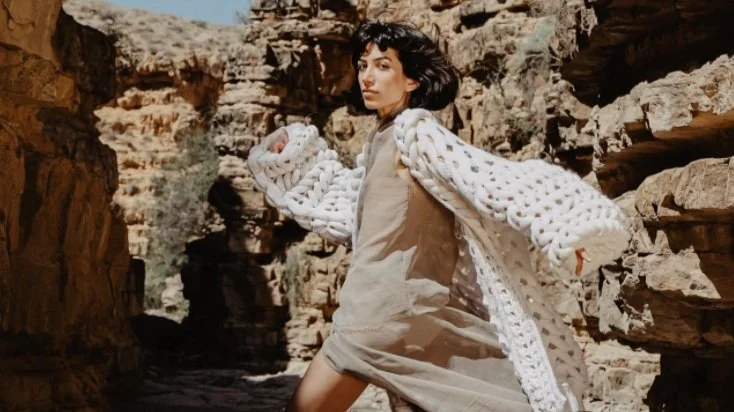
FDC Armenia Leads A Young Generation of Talent to Sustainable Fashion
Despite the potential grim outlook on this year’s London Fashion Week SS21 digital-only shows, a few young designers took it upon themselves to advocate for a change in the fashion industry with their sustainable collections presented in a series of films and photo stills that went live on Fashion Scout’s website on the 18th September.
Sprouting from a single event in 2017, FDC Armenia grew into a collective of over 200 talented designers, companies, and artisans, who have displayed their work in Mercedes Benz Kiev Fashion Days, and now, thirteen of them at London Fashion Week.
Each designer has their own unique style, from Armenian heritage weaving and biodegradable materials, to original printed photos on denim jackets. For some, it is their first time displaying their collections to the public. But unfortunately, due to current pandemic restrictions, the designers were unable to join the celebrations in London, but instead their own homes in Armenia.
Speaking in-between the digital shows about some of their designers with Fashion & Design Chamber (FDC) of Armenia president, Vahan Khachatryan, and Elen Manukyan, co-founder of Loom Weaving, we explore the future of fashion in the next generation of Armenian designers through ways of sustainability and ethical manufacturing, and how they feel about the digital Fashion Week.
2020 has obviously been a difficult year for many around the world. How have the designers coped with the pandemic?
VK - I guess everyone in the world is going through the same problems now. For us - as an organisation, we had a lot of physical events that were either cancelled or postponed to next year. We were supposed to be in London right now, but we’re sitting in our office in Armenia. We're glad that at least in digital format, we're still able to participate in this amazing event.
As for the designers, it's been really tough. It's a very big blow for the industry here [in Armenia], because it is still very young. It's just starting to grow and, in this stage, to get a blow like this, it's almost like going back to square one. Even those who have been in the industry for a long time and had some financial means to support themselves, are facing big problems - a lot of shops closed, which is a very big loss, because I think that it's important to have the physical service. That's why we're really hoping that even though we have the digital platform [of LFW], this will help them open some new markets, attract new buyers, anything that can help them in this situation. We launched an online e-commerce shop today. The first 13 designers participating in Fashion Week are already represented on the e-commerce platform. So, people who watch the videos, they can directly go to the ecommerce website and buy the collections now.
We hope this is going to help. This is also a part of our support programme, where we help them with their sales. Hopefully, in February for the next season, things will go back to normality and we will come to London.
You've mentioned the digital aspect of Fashion Week. So how do you feel about Fashion Week being digital and do you think/want it to continue after the pandemic?
VK - The good side of the coin is that we're learning how to present our goods in a different manner, something we haven't done before. Of course, we've always been doing photo shoots, and videos, but this is completely different. We’re used to touching the clothes and looking inside, how things are made, what's the quality. It's really difficult to show these things in a photo or on a video. So, this makes us come up with new solutions. Obviously, it's pricey. I've seen some really exciting ideas which we couldn't afford, because virtual reality is getting really big. So, the VR shows that people are doing, it's a lot of investment that we don't have at this moment. But I think that in the future, it will be a mix. Obviously, not everyone will want to stay in the digital format, but I'm sure that this is going to become a part of fashion reality in the future. I'm seeing so many brands who started doing digital clothing - you don't even buy the clothes anymore, you just buy the digital version of the clothing and you get it photoshopped on your avatar or in your photo.

I don't know if it's too early for this because I think we're still living in a quite normal world, especially in Armenia. We're really not that technological. I see some Russian designers, like Alena Akhmadullina, already selling digital clothing on her website, as well as the founder of Mercedes Benz Kiev Fashion Days, Daria Shapovalova (Paskal). They work with different designers around the world and have an online shop where they also sell digital. I think that's the future, but it's a bit further from where we're standing right now. I think it's good because you learn, you're seeing all these possibilities, and especially with our sustainability programme and trying to introduce sustainable fashion in Armenia. Obviously, digital fashion is much more sustainable, and it's less waste. But it's going to be a long way before we get there.
One of the main concepts for FTC Armenia collective was 'sustainability'. So, what does sustainability in fashion mean to you? And how important is it for the future of fashion?
VK - Again, for me, personally, everything started I think, three years ago. I have been in the industry for so long, and I do consider myself a more traditional designer. I like a lot handcraft and artisans, upcycling and recycling, I use old materials or curtains, tablecloths, whatever, can be channelled into a dress. I’ve never given labels to the sustainability process until a few years ago. I found out about the Green Carpet Fashion Awards (GCFA) competition organised by Eco Age UK, where I was in the semi-finals and invited to go to Milan. I met a lot of designers, other semi-finalists, who were working in sustainable fashion. It was a completely new world for me! I learned things I had never heard of before like pineapple leather, or recycled fishing nets. I was blown away by everything that has been done in sustainability – the part of fashion I didn’t know much about. So again, when we got the grant from the UK embassy, we thought that we should really focus on sustainability. The UK has such a big experience in recycling and climate change. We teamed up with Eco-Age UK and tried to focus on the biggest problem that we have now in the textile industry, which is the waste management. So, we’re trying to organise the recycling, fabric waste. Hopefully in the future, we will also start dealing with the other aspects of sustainability.
And do you think that pandemic will change the way we produce and consume fashion?
VK - I hope, but we can never tell until the time will show. Hopefully, people will be more aware of what they're buying, and how they're spending their money. But people have the tendency to go back to the easy ways. There has been so much talk about sustainability, especially among the fashion society now [during the pandemic]. To educate the customer, we should firstly educate ourselves. It is important that the designers hear about these things to start realising the importance of sustainability in the industry, and then they can educate their customers. So hopefully, at least, they've used these months sitting at home with some use and participated in online talks. I hope that they've really been engaged and that things will start changing, at least among the designers, and then for the general public.
Loom Weaving has deep connections in their Armenian Heritage. Does she ever feel pressure to design for a more kind of 'Westernised' audience?
EM - I'm not a designer, I have been working in the business sector within the Ministry of Economy for a long time and working with start-ups. My sister – she's the designer, and she was trying to open a business, for like six years. I supported her because she couldn't do anything apart from creating clothes! Maybe this was my purpose when I entered the business sector. From her perspective, when she [Inga] started her business, she was always thinking to do something that has never been done in Armenia before. And for a long time, she was doing her research on how to start it. I think it was the best idea that she could propose because at that time, no one in Armenia was using the old Armenian weaving techniques – which was the key idea that we used to establish the business. We started with handmade workers, who are in their 60s (about our mother's age), who are knitting and who know the techniques, but they don't use it in fashion. There is the added value that we put in making these old clothes fashionable. Her niche technique and product are what she is famous for.
VK - It's always difficult when you have a niche product for the market. When we were in Milan, anticipating one of the trade shows, there was big interest from Germans and Latvian buyers, because I think it was something they would use throughout the year.
Also, in Armenia, things are changing slowly. Before, knitwear was considered something your grandmother would wear or make, so it wasn't considered 'cool'. But times are changing. It's becoming something that is trendy and that young people wear. But it's not just knitwear, I think every niche product is going through the same path.


Damien (aka. Damink) is basically a one-man show. He does photography, art, film designs - he's doing so much! How does he keep up with everything?
VK - That's, again, a big problem for most of the designers and I don't think it's just a problem in Armenia. You have these designers trying to do everything because they cannot afford hiring other people to work for them - which is good, because you learn, you grow. But on the other hand, you cannot do everything. Just one person is not capable. And at some point, some of the aspects start limping. He's a photographer, who started using his photos on T-shirts. And then from t-shirts, he went to jackets, denim, pants and it became something more serious than just memorabilia.
On the other hand, because he's doing photography, cinematography, and short videos for advertising, and he does his own videos for the Fashion Week. But when it comes to administrative stuff, he does nothing, really. So, we try to help him with that fragment. But even if you go on our ecommerce website, you know, all the designers have uploaded their prices, they're ready to sell, and for Damien, you only have the pictures, because we didn't receive any pricing or a description of the items. You really have to sit him down to do it. But he has no time, he’s taking photos and doing a million other things. So, there is this problem of creative people when they have a lot of creativity they want to work with. They need a business person right next to them to help them with that part. And that's something we're trying to teach. In fact, you don't have to do everything yourself because sometimes it's more damaging than doing good. Hopefully they will start listening.
Do you think he will continue with designing or is he more set on photography?
EM - I think he will continue. His work is very exciting. When we bring his items to sell to international buyers, all of them are taking them, trying them on and taking photos.
VK - The core of his collection are the photos. I'm sure that his brand is going to evolve but, more or less, it will be probably looking the same for a few years from now. He doesn't have to sit down and design a full collection of 60 pieces every season. Of course, he doesn't consider himself as a designer – he always says that.

Z.G.EST has raised a lot of attention during this Fashion Week…
EM - Yes, Alla is the owner of this brand. She’s from finance sector, she worked in banking for a long time but she was very interested in fashion and she’s doing a good business. She’s not a designer, but she is a good manager and she’s one of two designers that are working on collection but she sells very good in our media and now she’s doing an international online shop and works with different online platforms.
I think she will succeed because she knows all the management of business and art. Now she has taken the road of sustainability which is the key, she puts a lot of emphasis on these materials. Yes
VK - She’s very clever. Even if you don’t call these ‘designer’ pieces, these are pieces that almost every woman can buy and have in every wardrobe on daily basis in almost all body shapes, so it’s a very good sellable product. .
She’s obviously very rooted in sustainability and ethics in fashion. How does she source her up-cycled materials?
VK - When she started, she would turn shirts into dresses that would be quite versatile, which lead to bigger collections. The idea of having an element of a shirt in almost every piece has always been the philosophy of the brand.
Is she intending to eventually source materials from Armenia to completely minimise her carbon footprint?
VK - It’s not possible to source the materials because we don’t produce materials. That’s a big problem. So, if we’re talking about raw materials, and we always have to buy them from somewhere. If we’re talking about upcycling stuff, it’s obviously possible to buy stock pieces from Armenia. It’s very sad, but we have zero production of any kind of raw materials. The easiest way to make the footprint less is to buy from Turkey, which is our neighbouring country. But we have a bad history with Turkey. Also, Turkish materials are not really considered very high quality, and many of them don’t have the certification of sustainability, because they source their materials from Pakistan, which come with child labour, forced labour and all the other negativity. So that’s why we try to focus on European made fabric. That’s the least that we can do. Maybe in the future, things will change.
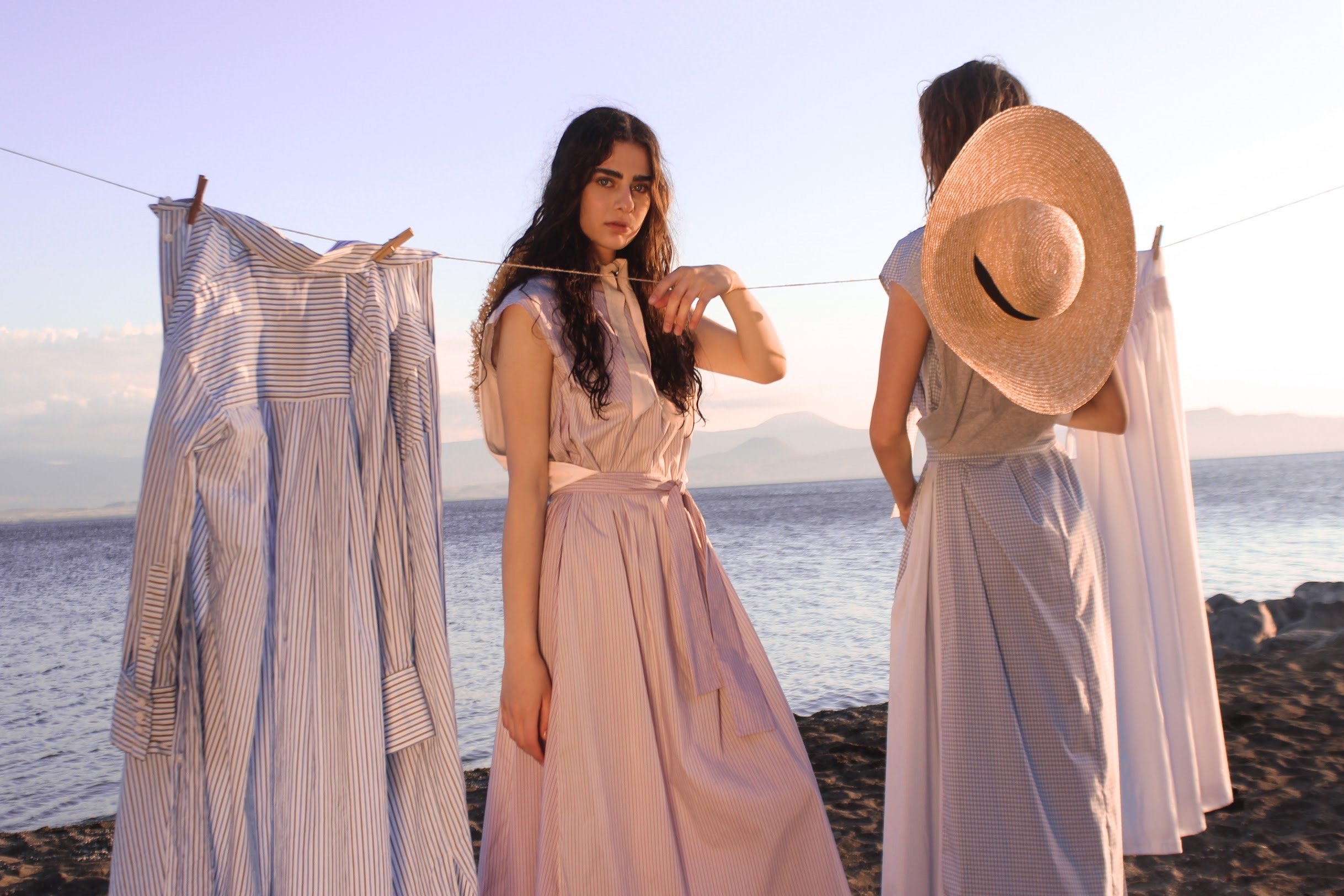
It’s hard at the moment. Even though sustainability has been around for so long, it’s only just starting to be really acknowledged in fashion. Do you know if any of the FDC designers plan to expand to the UK?
VK - That's the ideal, the dream! But it depends how things will work out. For example, I was talking to one of our designers, who's Iranian-Armenian. She sells both here [Armenia] and in Iran. I was talking to her and she said that there has been great interest from the UK media, some of which is paid media, and some are for free. But she said that she's going to advertise in Vogue UK and Tatler UK soon.
There was another designer, who said that she hopes this, together with a showcase at Fashion Scout, will really help her to get into the market. Some people are really taking this seriously, while for some it's the first time, so they don't really know what to do or how to do it. They're in the very beginning of their own career. So, this might be a good showcase, but business wise, it's very different. We hope that at least a few of them will really use this opportunity to grow the business.
EM - Z.G.EST is currently selling with Wolf&Badger in the UK, an online store. I as far as I knows, it's selling very good. Last month she sold about 20 pieces through them. Pretty good, considering she's presented with them for only about three months.
What do you think is the most effective way of promoting sustainable fashion?
EM - In our country, the textile industry is on the rise, because a lot of big companies are now actively working. So, from one point, we are working with these big companies and manufacturers, and have an established network for our designers. And from the other point, the company benefits from receiving a 'sustainability' badge, which is very important for them, and it will raise the level of their company as a more sustainable approach manufacturer. They mostly produce for the Russian market in big quantities, but they're also interested in the European market.

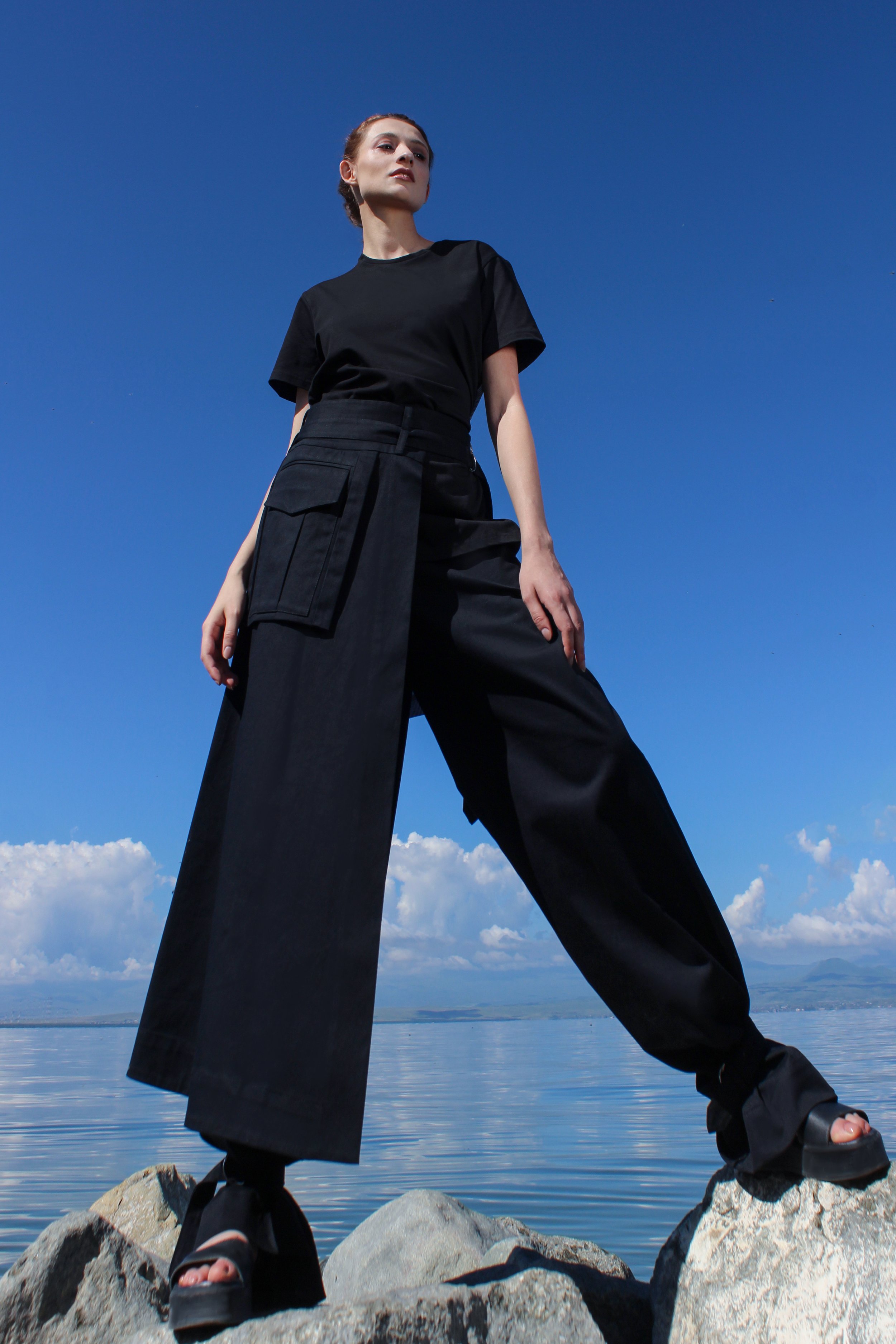
VK - I think that the best way to market sustainability, is to spread the meaning of it - as meaning is very new. People [in Armenia] don't have an idea about what their inner production or designs are about. It's a very good time now, if we're just starting with that, from the rights end. I think that the USP (unique selling point) for Armenian fashion would be that it's, in many cases, artisanal. It's definitely Fairtrade, it's very inclusive, there's no slavery, child labour, and it's fair pay. So, people are paid quite fairly for what their labour, at least for the local market.
EM - The big companies are in the regions, which is another opportunity for regional people to be employed, with good working conditions.
VK - We don't have all the negative aspects that many countries like Bangladesh, or China or other countries have. A unique selling point would still be the fact that it's never mass-produced. So we don't get things that are like 1000, 10,000, or 100,000. Everything is in a very limited quantity, so you get something quite unique. In the end, the pricing is very fair, so you don't pay the price you would pay for an international design effort but you still get the quality.
The problem, which is also something we're trying to understand how we can solve this problem, is the fact that we're not very far from Europe, but the shipment is a big problem for us. So the companies, like DHL or UPS, charge a lot for shipment which is sometimes not reasonable. But for the rest, I hope that people would find something interesting in Armenian fashion.
Do you think the future of fashion can be truly sustainable?
VK - Can the future of fashion be truly sustainable? Completely, 100%, No. But if we're being realistic, even if it's 50% sustainable, that's already a very big achievement, because it's going to be almost impossible to be able to be 100% sustainable in this industry. I mean, even in Armenia, there has so much production, which is underground, let's say in that small workshops, which are not sweatshops, these are still places where people get paid, but just avoid paying taxes, which means they're not registered. This makes it almost impossible to measure how they work, whether they are working in a sustainable way or not. And if you go to countries like China or Bangladesh, it's the same but on a much bigger scale. You may be able to monitor the official part of fashion, but the dark side is always going to stay in the shades.
Check out all of FDC Armenia’s designer products here, and their campaigns on Fashion Scout’s website here.
All photo credits are courtesy of the designers.
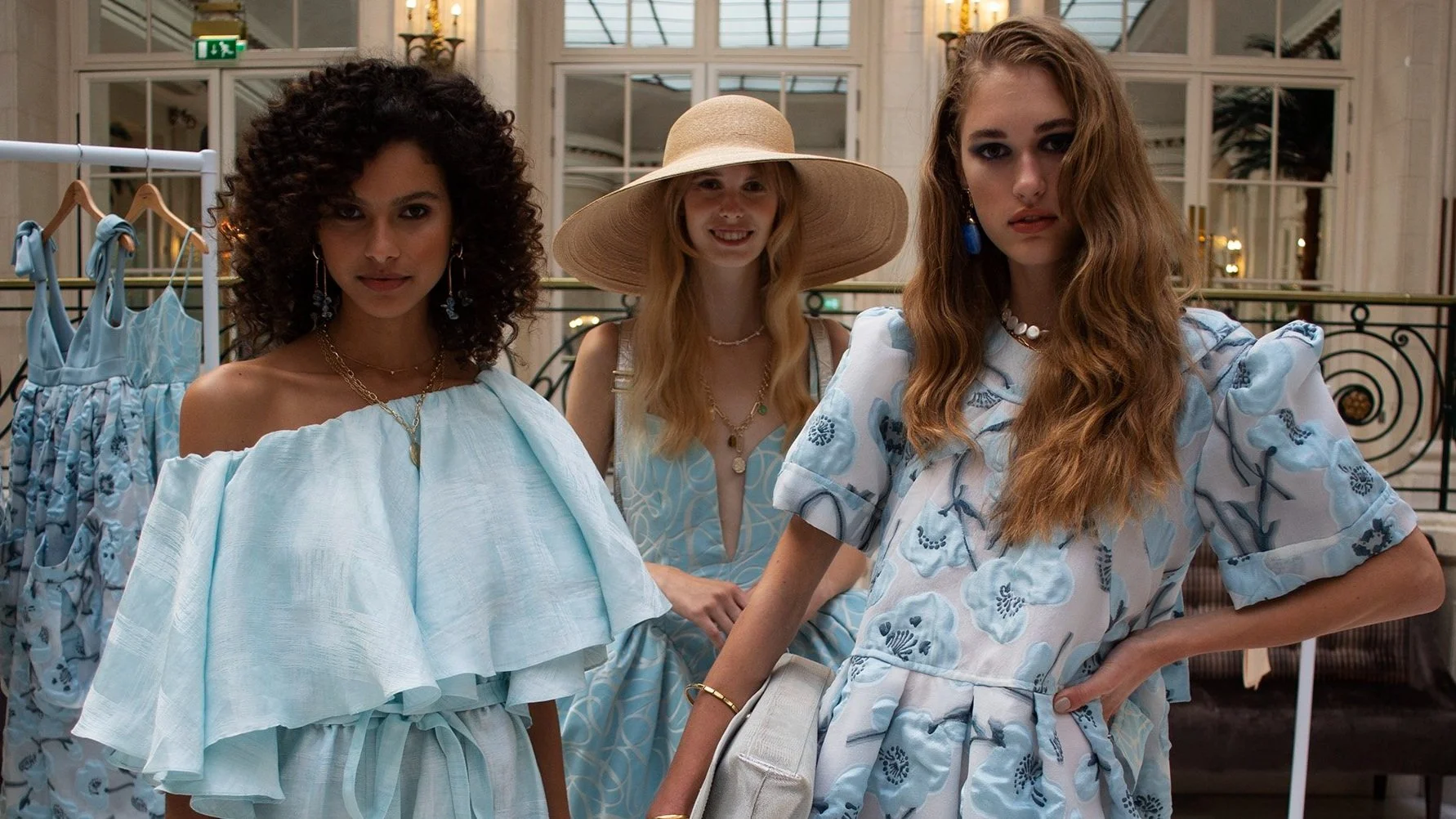
Reflecting with Paul Costelloe
With the disruption of the global pandemic, London Fashion Week designers have primarily turned to digital presentations and virtual catwalks with #LFWRESET, the industry has been rocked to its very core. Yet for Paul Costelloe this was an occasion to return to more intimate and placid settings.
Rooted in the fashion culture for the last 50 years, the Irish-American designer embraced the enforcement of limited crowds, space and serenity that does not usually accompany LFW’s chaos. As being one of the few (and most iconic) British designers, who decided to physically display their latest SS21 collection, Costelloe appreciated every single individual who walked through the golden doors of the Waldorf Hilton Hotel.
Getting close and personal (while still maintaining social distancing), Paul sat in the middle of the bright hall drawing sketches of his latest collection for attendees to take home with them as memorabilia. Surrounded by pattern cuttings, sewing machines and fabric samples; the interior of the Waldorf hall transformed into Paul’s personal studio space.
Costelloe’s latest SS21 collection, entitled ‘Golden Reflections’, is a true ray of hope for the post-pandemic world with “spirit of optimism and new beginnings”. His iconic linen tailored jackets embodied the presence of summer blooms in delicate daffodil prints, soft creams, and Mediterranean blues, particularly when paired with a slouch trouser and an oversized metallic bag.
“This is the perfect collection to fly a kite and dream” said Paul Costelloe
The warmth and kindness of the designer is materialised in the glow of the line’s earthly palette; with burnt umbers, indigo ferns, and taupe stripes – the collection creates an “ideal summer adventure”.


The ‘Golden Reflections’ seven-minute film is now available to view on the designer’s website at: www.paulcostelloe.com/
Models: Agnieszka Lauterbach (@agsjon) with Body Management
Selena Carvalho (@selennita_c) with Milk Model Management
Meja Jurgelaityte (@mejajurgelaityte) with Milk Model Management
Hats: Philip Treacy for Paul Costelloe @philiptreacy // www.philiptreacy.co.uk
Dating in Quarantine
The effects couples, singletons and ‘in-betweeners’ have faced with the new age of dating … or lack of it.
Since the beginning of lockdown, isolating together has been a major talking point across all digital media platforms. Couples are faced with the dilemma of whether to isolate together or apart, at mine or yours. The realisation that by the end of lockdown they may drive each other insane. But what about those who have just begun to flourish their relationships?

Photo by taylor hernandez on Unsplash
Rosie, a 23-year-old NHS worker, has been isolating at home with her parents since the beginning of April. Luckily, due to the nature of her work, she had the opportunity to work safely from home.
She and Mark only began to date a month before the lockdown. Despite the fact they text every day, Rosie feels “the relationship has come to a stand-still” - neither advancing nor backing down. They haven’t seen each other for over 2 months - doubling the time they have been dating before the quarantine.
Before the lockdown, they would speak on the phone every few days, but now they’ve reduced their conversations to roughly every two weeks. Rosie considers herself a reserved person, so for her to let someone in takes time and a clear head. Their history begins a year ago when they first met through a dating app. Through twists and turns of their encounters, when they finally decided to take their relationship to the next level - the lockdown dropped on them like a pile of unforeseen bricks.
“We were finally starting to get somewhere before the lockdown!”, Rosie expressed her frustration.
Despite the ‘stand-still’ status of their relationship and the unfortunate timing, Rosie is still pleased with the maintained mutual effort for communication.
Yet for some, may have ended before it even began.
Aria and Jake had been dating for approximately 2 months before the lockdown. Everything was like in those sickening, unrealistic rom-coms, where the couple seems to be head-over-heels for each other. Little did she know that in the next couple of weeks she will be left heartbroken.
Jake was really struggling with adjusting to the ‘new normal’. He had slowly started to pull away, as it was all getting too much for him. According to Aria, she had tried everything to help him get through this tough situation - texting less to give him more space, trying to include him in her weekly workouts, watching Netflix Party together. “I could see he was miserable… I just didn’t know how to help him”.
Despite their short beginning, Aria believed they “had a real connection”. The weekend before the official lockdown took place, Aria visited Jake at his home, meeting all his friends (considering this as a real big step to millennials). “It was all proving to head in the right direction to something truly great”, she said. Yet no matter what she tried, he just seemed to be pulling further into the abyss. Having that sixth-sense girls have, she knew something wasn’t quite right.
A month into the lockdown, he messaged her saying, “I don’t think I am mentally ready to be dating right now”. She was shocked, confused and broken. It all just came so out of the blue. “I felt like I was a burden, weighing him down”. But, after a few weeks of self-improvement Aria confessed, “I weirdly understand why he did it”. She adds, “if it’s meant to be, it’ll be”.
Another couple who seems to have taken the lockdown hard are Priya and Arun, who have recently celebrated their 2 year anniversary - over the phone. Due to Priya’s traditions and religious beliefs, she decided to not isolate with her boyfriend, but stay in her family home with her parents.

At the beginning of the lockdown, they got into a big argument, mostly due to the inability to ‘see’ each other’s emotions - resulting in the argument being bigger than it should have been. “I tend to overthink more”, says Priya, “analysing all the little details he says, even if he is talking generally”.
Priya has taken the time of lockdown to develop her skills and knowledge further, though gardening to listening to audiobooks, taking her mind off “from all this laziness and boredom”. Despite the argument, she reflects on her relationship and realises that “nothing has really changed” (apart from the physical presence) - proving that their relationship is staying strong.
In a considerably different position are Maisie and Steve, who were also dating for two months before the lockdown, but they decided to isolate together in London. Maisie struggles to live on her own, the isolation was the last straw for her in a London flat with only a single balcony for outdoor space. “We’ve been speaking about it since the beginning of lockdown”. But only at the beginning of April, they both agreed to move in together (temporarily).
Maisie explains that due to the lockdown, “I was feeling everything at extremes”, and Steve brought calm to her storm of emotions. “It’s so much better to even clean the house, knowing there is someone else physically there with me”.
The lockdown has seemed to have brought these two closer in their relationship. Steve explains, “it’s like a test if we decide to ever live together… I know we won’t drive each other insane”, since, they do everything together - from cooking to doing laundry. It has seemed like they have passed the test and are on good strengths for the future of their relationship.
In these times everyone emphasised the words “It’s not the same”. We, as human beings, are wired and thrive on human contact. We are social creatures, and that’s what sets us apart from other animals. When deprived of that, we tend to overthink, emotions run high and we don’t know how to react to them - as we have never before experienced these extraneous circumstances.
“It’s a new culture, where you don’t see people”, as Priya puts it.
This mentality seems to be a common trend between the majority of relationships - overthinking. As we have too much free time, our minds tend to wander and without concrete grounds, we make negative assumptions.
The best thing we can do it to forgive, understand and take care of ourselves. This is all new to us, and the quicker we acknowledge the difficulties others may be facing, the quicker we will have peace and happiness within ourselves. Which, at the end of the day, is most important.