
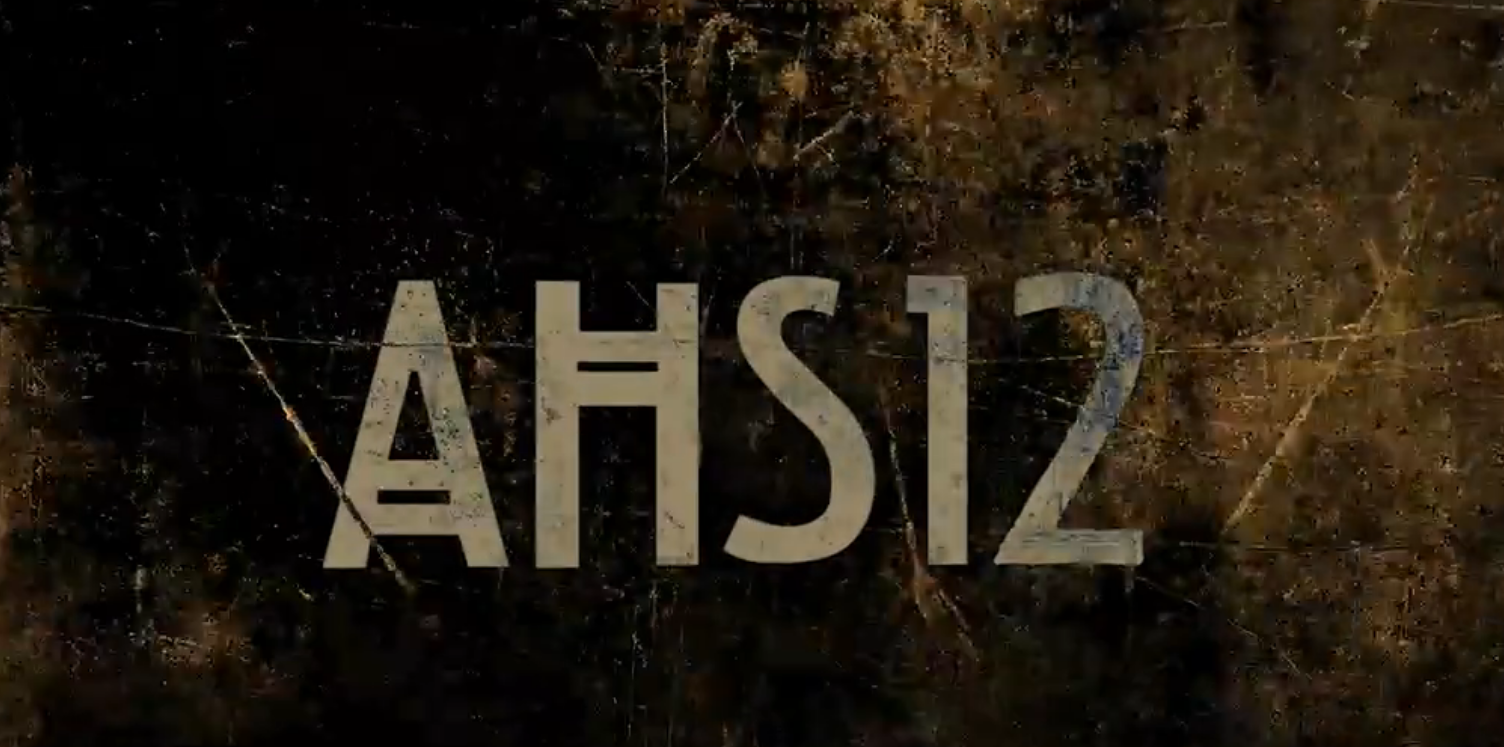
AHS12 with Kim K: A Survival Move?
Kim Kardashian joins the new season of American Horror Story alongside AHS veteran, Emma Roberts
“This summer … Kim and I are DELICATE,” Emma Roberts teased on Monday on her social media platforms, but fans did not take well to news of the reality TV celebrity joining the gruesome franchise.
No stranger to celebrity guest stars, American Horror Story has a long list of previous stars including Lady Gaga, Adam Levine and Naomi Campbell, each of whom have shown incredible talent in the acting department. But will the Kardashian rise to the occasion?
AHS S12 will be the reality star’s first major acting role, but her status on social media and continuous presence in the news makes her the most talked-about celebrity in the western world. Previously making appearances in small roles in Disaster Movie (2008) and Temptation: Confessions of a Marriage Counselor (2013), the socialite has never starred in a tv series or movies, especially of the magnitude of AHS.
However, after the show’s grand success throughout its first years, it significantly dropped in viewership in the last few seasons, with barely any viral mentions on social media. Is AHS’ decision to cast someone like Kim Kardashian a ploy for gaining social media attention and viewership? Or are we about to discover the best AHS season to come?
Season 12 will star the fan-favourite AHS cast member, Emma Roberts, who is a frequent collaborator of the show, however this season was written with Kim Kardashian in mind specifically. It is rumoured to be derived from Danielle Valentine’s novel ‘Delicate Condition’, which follows a story of a woman convinced that someone is intentionally preventing her from getting pregnant. The deeper into the story we get, the more twisted it becomes – very American Horror Story-esque, but will the socialite deliver a worthy performance?
One thing is for sure, despite Kim Kardashian’s acting abilities, the 12th season of American Horror Story will be the most talked about show on social media come summer 2023.
Watch the trailer here!
Dating Apps: The Coding of 'Liquid Love'
Dating Apps: The end of civilization, the glamorization of hook-up culture or the greatest social scam? If you have read anything about dating apps, you will probably agree with all of the above– yet the realization of the masked truth may shock you.
Dating apps have been on the rise in the past decade, and more recently have become the ‘norm’ for millennials to form romantic relationships. The increasing popularity of mobile dating apps has transformed ways in which these intimate relationships are formed, formally known as networked intimacy. A recent study, which was published in Journal of Gender Studies, points out that in the contemporary age, mediated intimacy requires “a medium through which intimate relations can be established between the subject and the other”. In this article, Hobbs coins the term “networked intimacy” as it not only relates to the mobility and mediation of the mobile phones but also the extensive connectivity supported by dating apps.

Times have changed, and since the explosion of dating platforms in 2012 the world has never been the same again. Hook-up culture has taken over the youth and how we view relationships; the labels, different stages of ‘exclusivity’ and whether things are going too fast or not at all, are just some of the confusions we are faced with due to commitment issues and new social standards brought by the dating app giants.
In past generations, when the platforms were yet to be invented, if a man was interested in a woman, he would straightforwardly approach his interest at a bar or a café and start a conversation. You would imagine a similar concept exists in the dating world online, however the reality is, despite common speculations, that the potential pool of matches you have available to you is an illusion. As a matter of fact, due to the algorithms embedded in each dating app, your matches are determined through each swipe to the right or left – building a code which presents you with potential partners that the algorithm ‘thinks’ you will like.
Alike Google image algorithm, the apps use image placement and collaborative filtering on their platforms, taking into the account the number of likes the profile receives and how recent a user was active on the platform, as well as location. Therefore, through the use of keywords attached to each user’s image the algorithm can determine your ‘desired’ match and present you with potential partners who consequently all look the same. This algorithm is used to filter out any profiles that are considered as ‘not compatible’ to each individual. It’s a similar way in which Netflix uses their algorithm to recommend what to watch; which are partly based on your personal preferences and partly based on what is popular with other subscribers. Over time, those algorithms reduce human choice and marginalise certain types of profiles, and even though collaborative filtering may generate recommendations, they definitely leave certain users at a disadvantage.
This coding of dating may be a blessing or a curse, depending on what you are looking for. If you are searching for a specific type of partner, whether it is due to religious or cultural reasons, or possibly a preference to personal taste, then the algorithm has succeeded in its matchmaking. However, if you do not have a preference and are attracted to people regardless of their looks or ethnicity or even gender, then you may struggle to find ‘the one’.
For one interviewed individual, the algorithms disguised itself as an asset to her search of potential matches. When asked about her experiences of looking for a long-term partner on Tinder, Priya stated that her matches lacked diversity, however this played to her advantage of matching with Indian males due to cultural values.
Priya: “When I was on Tinder [5 years ago], I never realised algorithms even existed because it was so long ago and I was much younger. I wasn’t in tune with what’s going on behind the scenes. I personally think it helped me, in a weird way, because I was very niche in my search”
On the contrary to Priya, Connor developed his own algorithm with swiping and matching with partners. He values the state of mind over appearance, and it is hard for him to find a match on a platform dominated with shallow images of an individual.
Connor: “I am indifferent [to the algorithm], as I am more attracted to the mind rather than looks. My matches are diverse yet they still fall under certain categories of ‘stereotypes’. I am running my own social experiment on the matters of swiping patterns, seeing who I match with and then after a few conversations on the app decide to meet if we have the same state of mind”
Taking the perspective of a bisexual African-American woman, living in a predominately white society, Dalina argues that no dating app is diverse enough…
Dalina: “[On Hinge] I noticed a pattern starting to form after the first week. Algorithms in dating apps have their pros and cons. I see the positives in filtering out people I probably wouldn’t like in person based off my preferences, but I also don’t have the best judgement of men or women on dating apps. That’s where the negatives come to play. Sometimes people fall for those that aren’t their norm.”

The majority of internet dating platforms are based on the Gale-Shapley Algorithms; formally known as the “Stable Marriage Problem”. The two Nobel prize-winning mathematicians and economists created a series of mathematical patterns that can be applied to relationships. The theory states that when a set of men propose to their favourite woman, each woman rejects all but her favourite man. However, she doesn’t instantly accept the proposal due to the possibility of someone better coming along in the future, and keeps him on a string. Sound familiar?
This is the basis of every dating app created to day; Hinge, Tinder, Bumble. Projecting the rationality of ‘always someone better out there’, therefore the individuals searching for matches and potential partners are never completely satisfied and keep their matched partners on a string. Nowadays, there is so much variety and ease to form romantic relationships, with a swift swipe to the right you have the potential to form an intimate relationship with someone. However, when you have the same option with an X number of partners, along with the realisation that your match is most likely talking to X number of other matches, you are forced to ‘keep your options open’ in order to avoid heartbreak.
Statistics show that there is an imbalance of women to men ratio on dating apps, with an average of 7:10 on Tinder. However, the harsh reality is that women are more judgemental when it comes to rating men on scale of ‘attractiveness’. Studies have shown that a man is 6.2 times more likely to swipe right for a woman he finds attractive, compared to vice versa, which may be adding to the algorithm of matching partners. Since there are more men available to a single woman, men are forced to compete and women judge more brutally on their appearances, and accept some proposals with the idea of someone better coming along. Consequently, dating apps have become the perfect place to ‘shop around’ without responsibilities, risk or emotional pain.
Based on the answers provided by dating individuals and personal experiences of dating apps on diversity I created a social experiment that will test the algorithms in these platforms and how they present potential partners to me.
Tinder, Bumble and Hinge hold the crowns in the matchmaking business. According to 2020 statistics, Tinder has 50 million monthly users across the world, with 1 billion swipes a day. Therefore, I decided to create a profile on each of those platforms, with identical pictures and tag lines to test whether algorithms build upon my swiping patters and determine if I have been my own saboteur of my dating life.
After three weeks of observations and daily right-swiping I have manipulated the algorithm into showing me matches it recognises as ‘my type’. Subsequently, on Hinge, the algorithm developed within 3 days, showing me continuous profiles of males that the algorithm classified as to my desired preference. Throughout time I was beginning to see more consecutive suggestions of matches, as well as repetition of profiles. The other platforms, Bumble and Tinder, took more time to develop an algorithm, yet it still succeeded in results. Despite the main feature in Tinder being location-based, the pattern of my right-swiping and keywords embedded in profile photos allowed me to manipulate the algorithm into showing me males similar in their appearances.
Towards the end of the social experiment amongst the 10 profiles I would right-swipe, on average 8 profiles were consecutive on Bumble, and 6-7 on Tinder, with a staggering 10/10 on Hinge. This shows that in just under a month I have built 80% of the comprehensive algorithm and diminished my chances of matching with males who may qualify as ‘outside my norm’.

This experiment proves that algorithms play an important role in presenting profiles and therefore influencing your decisions in dating. Whether done attentively or subconsciously, the algorithms in dating apps will learn the patterns of your swiping habits and present you with matches that it recognises as your desired preference. Therefore, keeping you in a bubble of matches similar in appearances. For someone like Priya, the algorithms allow her to filter out the matches who are not to her inclination, presenting her with a niche assortment from which she has the ability to form intimate relations. However, for someone like Dalina and Connor who do not have a niche preference in partners, the matching becomes too precise and limited – filtering out other possibilities that they are open to yet have no access.
While these apps are designed to improve personal lives and form romantic relationships with ease, they also produce an over-abundance of connections at the point of establishing relationships brought forth by dominance of profiles and categorisation. I acknowledge that what I have found cannot represent dating app users at large, as users of different gender identities, sexual orientations and cultural origins may be presented with different results.
Therefore, if you’re thinking of creating a dating profile on any platform, pay close attention to the algorithm you create and whether it reflects your preferences to the online or offline world.
May the swipes be ever in your favour.
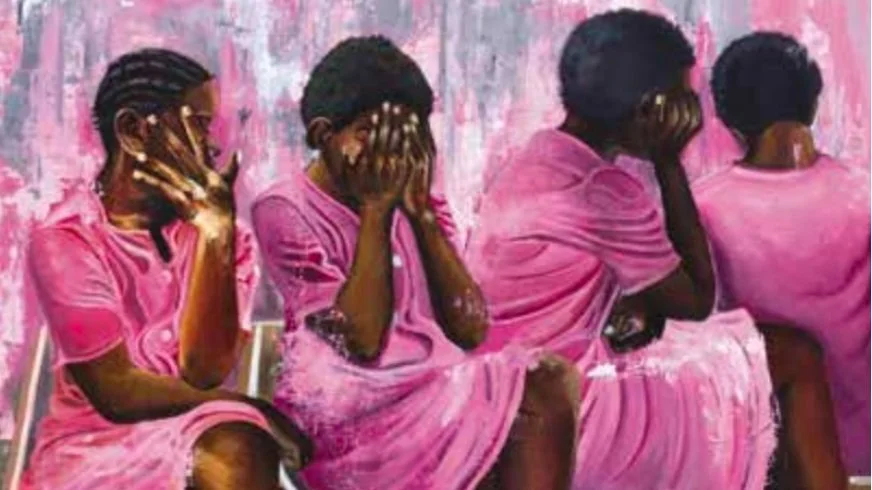
Taking Art to the Streets
Tate Collective presents a new public art commission, Beyond Boundaries, in collaboration with Better Bankside, featuring five up-and-coming artists.
The prominent Tate Modern gallery; a host of exhibitions to some of the greatest and most celebrated artisans in the world – ranging from Louise Bourgeois and Rothko, to Ai Weiwei and Yayoi Kusama, since its opening in 2000. Tate Modern has a world-wide reputation of showcasing a multitude of art-forms from world-renowned artists to nurturing new and emerging talent.
Reopening its doors from the 17th May, after being forced to shut once again since December 2020, Tate Modern has announced many extensions to their current showings, as well as launching a new Young People’s Programme, Beyond Boundaries, in collaboration with Better Bankside to create a public art commission featuring five emerging young artists.
Launching on 26th May, each artist was specifically selected by the Collective Producers based on their personal style and mediums, which was later executed by Absolute Studios in the outdoor spaces. “As a team, we compiled a long list of artists who had been introduced to us either by partners or other artists we had worked with through the programme, and combined this with artists that were suggested by a group of Tate Collective Producers,” explains Péjú Oshin, Young People’s Programme Curator, who was responsible for the making of this entire project.
Working with the Southwark’s community in mind, each artist received a brief exploring various themes, including the past year spent in lockdown, which they expressed in their own unique style. The project also considers the role of museums and reopening of art galleries post-lockdown across the country.
“Beyond Boundaries takes our collective experiences of 2020 as a starting point,” explains Rachel Noel, Young People’s Programme Convenor, “but it also invites the artists to look beyond this in thinking about how we might use public space in different ways as we remerge into society.”
With restrictions still in place after easing of lockdown regulations from May, the gallery had to think of more inclusive and innovative opportunities, “to move beyond the boundaries of the physical spaces of our buildings,” explains Péjú. After a year of restricted movement, many are excited to experience the physicality of the art scene within the gallery’s walls, yet Tate’s curators acknowledge that for many, leaving their homes will be a big step – “these sites are intermediate spaces that offer the opportunity for people to (re)connect with the world, art, and our galleries through these chance encounters with art in the Bankside area,” says Péjú, “Beyond Boundaries is a reminder that art is taking place all around us.”
At 23, we had the opportunity to meet all the emerging five artists commissioned for the Beyond Boundaries project, and speak to them about their commissioned work, their practice, and where to view their public art pieces.
KOBY MARTIN

‘Spotlight Dreams’ and ‘Broken Renovations’ – Southwark Street Arches
A proud Ghanaian expat, who has nurtured his talents in England – Martin merges both worlds to create paintings based on the influence of his African descent. His work is an exploration of his life, portraying the human narratives of family, migration, nostalgia, and emotions; an autobiography that can resonate with many.
As part of the Beyond Boundaries project, Martin researched the history of Southwark to best express the community of the borough, while also weaving in motifs that resonate with his Ghanaian heritage and influence – known as Adinkra. These symbols are integrated in each one of his art works; the artist’s signature mark, and have a distinctive meaning of family, unity, or even death. “It’s important to know where you’ve come from; to know where you’re going,” says Martin.
“It’s so humbling to have this opportunity,” says Koby, who arrived to the project just two weeks before the deadline. Martin was previously approached by Tate Collective, as part of a commissioned collaboration with My Runway Group, and to talk about his inspiration of work; Lynette Yiadom-Boakye (currently exhibiting at Tate Modern) as part of a panel– making this his third project for the Collective.
What peaked Martin’s interest was the borough’s history of a bombed church; All Hallows Church. It was tragically destroyed during WWII, and converted into a recording studio, Blackwings Studios, in 1980s who recorded albums for the likes of Depeche Mode and Yazoo. Fascinated by its history, Martin tried to pay a tribute to the church’s unorthodox history, “a memorial of what it was before,” explains Koby, and with that, to religion itself, which always prevails in moments of trauma. “God gifted me with this ability,” he says, “I am his vessel.”

An additional segment of his piece, was influenced by the ban of women acting on stage until the mid-17th Century, which urged him to paint men dressed as women on stage. “I like the sense of humour in it,” explains Martin. The depiction of comedy ties the piece together and portrays a sense of light-hearted hopefulness of the post-pandemic world within the Southwark borough. The entire mural consists of a large wall piece on the Street Arches, as well as three floor pieces that connect the whole artwork.
“I hope this [art project] will make people more comfortable coming out of this pandemic,” says Martin, “to reconnect people through art.” The mural paintings are intended as a symbol of hope and refuge, regardless of religion or beliefs, reconnecting people after a year of isolation.
MEGAN VISSER
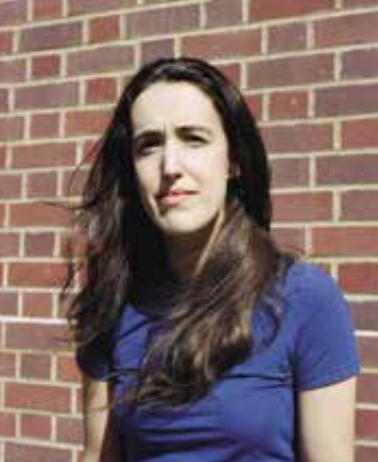
‘Gastro Gusto’ – M&S Square (Southwark St.)
A quiet soul with a fierce creative mind, Megan is a multidisciplinary artist specialising in video and sculpture - combining these artistic elements to create humorous and absurd short films. Their colourful palette and surreal aesthetic reveal references of advertising, pop culture, and feminist art history to reveal the underlying complexity of the images and sense of self in post-digital culture.
With her first artistic commission, Visser didn’t expect to have been approached by Tate Collective for a project of such large magnitude. “I really didn’t know what I wanted to do,” Megan states, with a sense of overwhelming. “But once I saw the site and the surrounding areas,” she continues, “I could visualise the piece.”
Fascinated and heavily-influenced by human anatomy and medical illustrations, Visser’s work explores exaggerated and surreal body fragments. Her previous work involves videos of abnormal feet and leg sculptures, and focus on the form of ‘reflexology’.
Inspired by the local community of people dining, gathering, and working, Visser instantly connected her allocated site to “elements of digestion,” as she explained, “there’s a movement through the space.”
Considering the restrictions we have endured throughout the last year, and our changed priorities, Megan wanted to emphasise the importance of eating and socialising, as well as free-movement. “Self-care, health, and eating are at the forefront of people’s minds,” explains Megan, “it is the only thing we can currently do to socialise.”
Despite predominantly working with videos, she decided to connect with her sculptural and illustrative side, creating an interactive floor painting where the audience can move through the bold and colourful ‘digestive system’, exploring various elements of the piece. “There’s a lot of high-rise offices in the area,” says Megan, “they’re going to get the best view [of the piece].”
“I wanted to do something else,” explains Megan, “something that was a little but more 3D.” The aspect of interaction was the most important component of the piece to Visser – she wants people to walk through it and see a different element each time; she wants kids to be jumping from tooth to tooth and question what the piece represents; she wants to bring the fun and curiosity of the urban outdoor back into our lives.


BLK MOODY BOI
‘Safely Trans Outside’ – Gambia St.
As a non-binary trans Afro-Indigenous Latinx self-taught illustrator, Blk Moody Boi aims to highlight love and tenderness as a form of radical resilience against white cis-het patriarchal capitalism and bring joy to other BIPOC trans kin through celebration, and archiving their stories.
Community narratives hold a particular significance in Blk Moody Boi’s artistic practice, “everyone has to plan everything that they do for their safety now,” they explain, “but for trans and queers, life is like that everyday – regardless of the pandemic.” Through highlighting the difficulties of the past year, Blk Moody Boi aims to shed a light of awareness for what trans and queer individuals face on daily basis to protect themselves from violence and harassment.
“I’m very concerned about the heightened public violence,” says Blk Moody Boi, “as I, like so many other queers and trans people, have experienced.” Self-defined as a socio-political art activist, Blk Moody Boi is an advocate for a Latin American organisation against domestic violence and a previous worker for a trade union organisation –sharing the narratives of trans people, which strikingly come through in their pieces.
Their self-taught illustrations portray non-binary characters, which were nurtured by receiving an old iPad from their fellow trans friend and watching anime, cartoons, and comic books. “I don’t see myself as an artist necessarily,” they said, “it’s such a recent phenomenon.”

“I try to draw things that I don’t see other people do,” they say humbly. Centring representation of marginalised communities in their work, Blk Moody Boi is guided by stories of racism, ableism, colourism, and transphobia. “When I draw,” they say, “I think about the beautiful that has been denied.”
Their expressive use of bold colours can be linked to their upbringing in the Caribbean, surrounded by many plants, lively hues, and patterns; the artist’s signature style. The simple, yet powerful, illustrations convey the message of “what you see, is what it is,” says Blk Moody Boi.
Their mural for Beyond Boundaries explores the safety and security of trans individuals, “specifically what will bring my kin joy,” they explain. “There’s something about a public space,” they say, “that makes people reconnect with art.”

HANNAH HILL
‘He(art) is Everywhere’ – Terry’s Caffe (Great Suffolk St.)
A London-based illustrator, of Guyanese and Indian descent, Hill uses the unconventional medium of embroidery to spread awareness of body positivity, feminism, sex, and politics, concentrating on human narratives and starting conversations.
The previous Tate Collective curator is inspired and motivated by our 40,000-year-old connection to needle and thread. Hannah creates small motifs and illustrations to reconnect with her female ancestors, “in the Western society, embroidery has been adapted as a domestic hobby – not an artistic skill,” she explains, “it still isn’t widely respected.” However, Hill is breaking the stereotypes by using juxtaposition and irony of using embroidery to speak of feminism and politics.
Her mini motifs; bold in colour and distinctive style, resonate emojis – each being punchy and interpreted subjectively to various viewers. Concentrating on the aspects of work/life balance during the pandemic, Hannah highlights our reassessments, changed perspectives and priorities during isolation, focusing on ‘life’ past the pandemic.
“I hope it makes people smile,” says Hill, “I hope they see something different every time they walk past it.” The art piece will be spread across two walls of a building across Terry’s Caffe; brightening a previously dismissed and disregarded location.
The art activist felt limited in the commission due to restriction to speak her political mind (to full extent), which has intensified during the pandemic. However, she did incorporate subtle hints of socio-political history of the borough and current conflicts within the canvas – “the red umbrella is a universal symbol for sex workers,” says Hill, for which she felt important to tribute in the mural. “Sex workers are still not seen as labourers,” she continues, “they are and always have been exploited.”
Through her arrangement of the motifs, Hill positioned burning candles and crossbones next to the red umbrella to symbolise a memorial of the mistreated and forgotten sex workers of the borough, where their remains were disposed. “By the way the images are placed together,” she explains, “they tell a story.”
“Some of them, aren’t necessarily relevant to one another,” she says, “it’s for you to make those connections.” However, the overall piece guides you through a story of the borough through small connections that represent the community of the past and the present.
Hannah will be releasing an embroidery colouring book in Summer ’21, Hanecdote’s School of He(art), aiming to share her skill and magic of embroidery for people to freely express themselves – more info @hanecdote.


ZEINAB SALEH
‘Tunes For Your Head Top’ – Canvey St.
Born in Kenya, the London-based multi-disciplinary artist uses a unique combination of painting, drawing, video, and music to explore her intimate histories; linking the personal to the collective. Working with her family’s VHS tapes of home videos, featuring famous songs by artists like Mariah Carey, Saleh examines her family’s relationships, culture, and self.
“Music has gotten me through a lot of things [over lockdown],” says Zeinab, “it lifted my spirits.” Influenced by Jeremy Deller’s ‘The Histroy of the World’, the Venn-diagram piece is an accumulation of songs that correspond and overlap with different feelings the artist sensed; isolation, loneliness, safety and danger, love, and social distancing. “It’s about forming different relationships where you wouldn’t think there would be,” she explains.
Working across different disciplines, Saleh includes layers of meaning to her work – “I want there to be a variation, that marries well and is not revealed to you all at once,” she says, “you have to sit there and take it in.” She continues, “like with bass notes,” – there’s layers to it.
“A lot of the times, when reading books or watching TV, we’re told what to think,” she says, “but with paintings and music it’s pretty open to your own interpretation – which is what I love.” Designed as a floor piece, Saleh intended for the artwork to be interactive; a local to be stopped in their tracks when they recognise a song and “send a photo to their friends or their bae,” she said, or a child hopping in-between the theme’s circles like hopscotch.
“I want to bring that conversation, that art is inclusive of music,” she says, “music is so universal, that a lot of people can enjoy.” The borough is famous for the birthplace of the acid house music genre; where in the 1980s it was the biggest youth revolution and underground scene in the UK for decades. To this day, various artists reside in Southwark for the music scene and its history.

“A lot of the work at galleries can be quite alienating,” she says, “I wanted this to be something that can resonate with the community.” Zeinab is a co-founder of Muslim Sisterhood, an inclusive art collective that centres around the Muslim community. Beginning as a photography project on Instagram, the collective has expanded to a global community of Muslim women and non-binary people.
“I didn’t grow up with positive images of Muslim women,” she explains, “so to be able to create that for girls, and a younger version of myself, is something I find really fulfilling.” The Muslim Sisterhood produced a debut zine featuring stories of female and non-binary Muslim identities in contemporary British society.
The Muslim Sisterhood Zine is available to buy at the ICA Bookshop and online on muslimsisterhood.bigcartel.com. Check their website for their launch of hoodies and crewnecks soon!
Beyond Boundaries: Tate Collective x Better Bankside public art commission will launch on 26th May 2021, and will be available to the public for at least six months.
Lynette Yiadom-Boakye’s ‘Fly in League with the Night’ exhibition has been extended until 31st May 2021, bringing together 80 works from 2003 to present day; the artist’s most extensive survey to date.
Tate Modern will be opening its doors from Monday 17th May and extending their dates for previous exhibitions – check online for extended dates. All visitors and members must book timed tickets before visiting the gallery and/or exhibition.
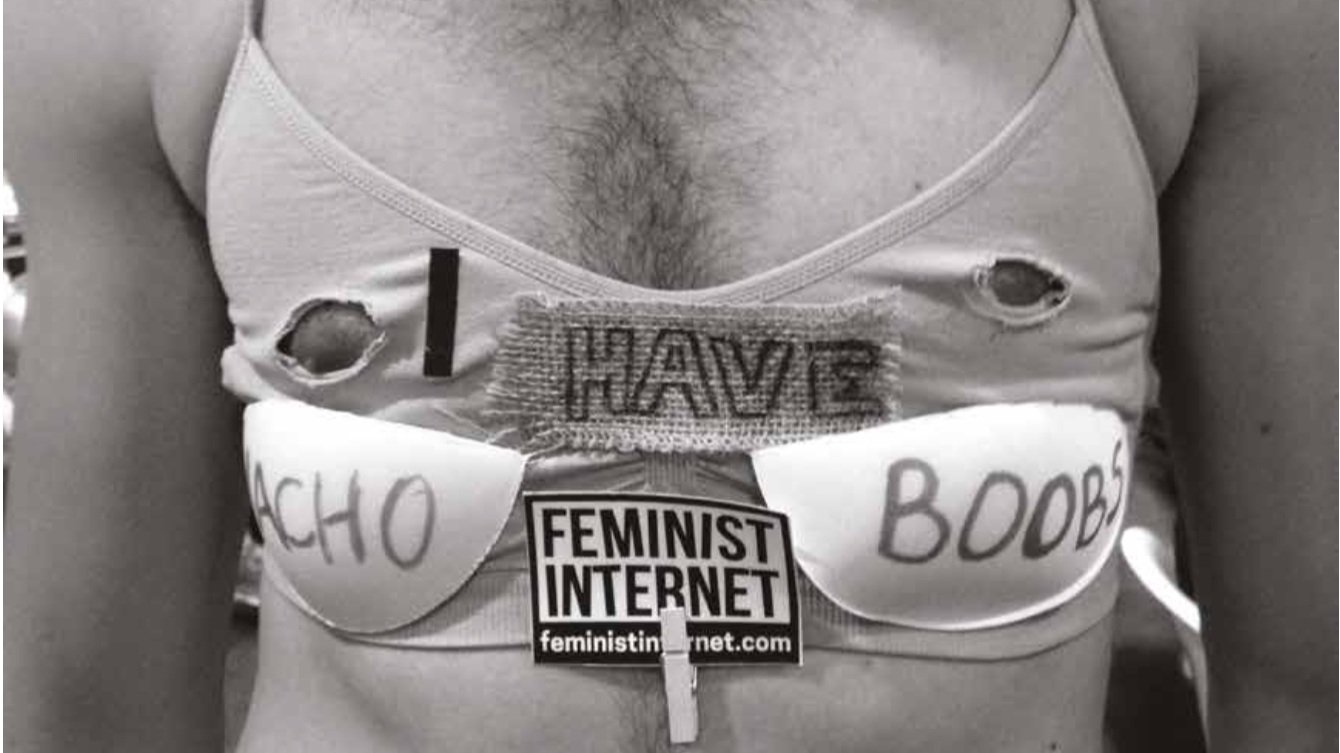
Towards a Feminist Internet: Combatting Algorithmic Gender Biases
Words: Ellisha Walkden-Williams and Viktoria Bielawa
The Internet has often acted as a stage by which gender biases have been acted out. Just looking at the gender parity in the tech industry, algorithms automating sexist datasets, or the blatant gender stereotyping in subservient female chatbots and home artificial intelligence assistants, gender bias is prevalent in different aspects of the Internet. Humans tend to see sexism as a social problem that needs to be addressed, but AI is not programmed in the same way.
Algorithmic bias is the result of structural limitations in its design. The imagined objectivity is often conflated with pure, mathematical logic. These AI programs utilise algorithms to function. Algorithms are a procedure for solving a problem by using machine learning and artificial intelligence, typically for the purpose of search engine optimisation. AI is designed to measure, analyse, represent and predict human behaviour. The people who code these AI systems insert their own societal norms and values. Only 22% of these creators are women, which is why popular forms of misogyny may at times be automated within these systems and reflected back to users as unequivocal fact. The problem is language. Cultural biases are constituted through language, then recorded, and finally transferred into ideological meaning. This is coded into the very interfaces of algorithmically designed technologies — exposing and consummating existing social prejudices and identities.
The tech world is starting to realise these problems, and The Feminist Internet launched in 2017 by Charlotte Webb to challenge systematic gender bias that was circulating on the Internet. It has programs like Hollabot, a prototype app that tackles online abuse, or F’xa, a chatbox that educates users about AI bias, to help eliminate gender bias online. The team has introduced ‘Designing a Feminist Alexa’ workshops, allowing students to prototype and code alternatives to Alexa using feminist standards. Then there’s the configuration of a Feminist Alexa, which fights for a more equitable Internet for all users.
As part of Our Algorithmic Lives, Feminist Internet will be presenting ‘In Your Shoes’ Chatbot in collaboration with UAL MA students. The chatbot has been designed as a futuristic job-hunting tool that purposefully discriminates against marginalised subgroups. Imbued with humanistic qualities, users are able to interact with the bot within the exhibition space — making you think about your own attitudes and the need for algorithmic accountability for the sake of future generations. We spoke to The Feminist Internet’s founder to discuss how the movement is changing the conversation around AI and bias.

What urged you to create Feminist Internet?
I had just finished my practice-based PhD looking at how the Internet changes the way we understand creative authorship, and was increasingly frustrated with inequalities I saw both in the digital creative industries and academia. I was invited to propose a research project for UAL looking at tech and gender, and it evolved into a 10-day course for UAL students, where we co-created the Feminist Internet Manifesto and prototyped creative responses to gender inequality relating to the Internet. Many of the participants wanted to keep our work going, and so Feminist Internet has evolved organically ever since then.
What are Feminist Internet’s key principals?
Our mission is to make the internet more equal through critical, creative practice. We address issues such as AI bias, online abuse and the environmental impact of technologies. Our approach is always to engage audiences with the complexities of these topics in a clear, accessible and playful way. As well as the points our manifesto, we focus on bringing feminist approaches to technology development, encouraging the next generation of talent to foreground equality and inclusion in their practices so they can be a force for good in the digital (and wider) world.
What do you hope to achieve through this movement?
We hope to raise awareness amongst young people, particularly those interested in becoming designers, developers, social entrepreneurs, and equip them with the practical, technical and conceptual tools to promote equality in techno-social systems. We also hope to contribute to the growing field of activists, academics, and developers who together are calling for tech companies to be more accountable for the negative social impacts their platforms and services can cause.
Is it the technology or the programmed algorithms of the platform that are non-inclusive, or is it the users shaping them?
There is a feedback loop between existing social biases, data sets, machine learning models, and people’s behaviours. We can’t separate these from each other since they all co-exist and tend to reflect each other. For example, take a healthcare algorithm that prioritises white patients over sicker black patients. The algorithm is designed to direct medical care to those most in need, but it makes its predictions based on data about people’s past health costs. Black patients historically receive less health care than white patients, so the system flags white patients more often because they have spent more on health care in the past. In this case, there is a problem with the design of the system - using cost as a proxy for health status, but there is also a problem with society! The reason black people spend less on healthcare is due to systemic social and economic inequalities.
Due to patriarchal and capitalist values still being so rooted in our society, do you think the world needs to change before the internet does?
The world and the internet can’t be separated - they are part of one ecosystem. As long as racism, sexism, white supremacy, capitalism and other oppressive systems exist, the internet will reproduce them. That’s not to say there isn’t great potential for the internet to be a liberating force, but that it reflects society, as society reflects it.
Dating in Quarantine
The effects couples, singletons and ‘in-betweeners’ have faced with the new age of dating … or lack of it.
Since the beginning of lockdown, isolating together has been a major talking point across all digital media platforms. Couples are faced with the dilemma of whether to isolate together or apart, at mine or yours. The realisation that by the end of lockdown they may drive each other insane. But what about those who have just begun to flourish their relationships?

Photo by taylor hernandez on Unsplash
Rosie, a 23-year-old NHS worker, has been isolating at home with her parents since the beginning of April. Luckily, due to the nature of her work, she had the opportunity to work safely from home.
She and Mark only began to date a month before the lockdown. Despite the fact they text every day, Rosie feels “the relationship has come to a stand-still” - neither advancing nor backing down. They haven’t seen each other for over 2 months - doubling the time they have been dating before the quarantine.
Before the lockdown, they would speak on the phone every few days, but now they’ve reduced their conversations to roughly every two weeks. Rosie considers herself a reserved person, so for her to let someone in takes time and a clear head. Their history begins a year ago when they first met through a dating app. Through twists and turns of their encounters, when they finally decided to take their relationship to the next level - the lockdown dropped on them like a pile of unforeseen bricks.
“We were finally starting to get somewhere before the lockdown!”, Rosie expressed her frustration.
Despite the ‘stand-still’ status of their relationship and the unfortunate timing, Rosie is still pleased with the maintained mutual effort for communication.
Yet for some, may have ended before it even began.
Aria and Jake had been dating for approximately 2 months before the lockdown. Everything was like in those sickening, unrealistic rom-coms, where the couple seems to be head-over-heels for each other. Little did she know that in the next couple of weeks she will be left heartbroken.
Jake was really struggling with adjusting to the ‘new normal’. He had slowly started to pull away, as it was all getting too much for him. According to Aria, she had tried everything to help him get through this tough situation - texting less to give him more space, trying to include him in her weekly workouts, watching Netflix Party together. “I could see he was miserable… I just didn’t know how to help him”.
Despite their short beginning, Aria believed they “had a real connection”. The weekend before the official lockdown took place, Aria visited Jake at his home, meeting all his friends (considering this as a real big step to millennials). “It was all proving to head in the right direction to something truly great”, she said. Yet no matter what she tried, he just seemed to be pulling further into the abyss. Having that sixth-sense girls have, she knew something wasn’t quite right.
A month into the lockdown, he messaged her saying, “I don’t think I am mentally ready to be dating right now”. She was shocked, confused and broken. It all just came so out of the blue. “I felt like I was a burden, weighing him down”. But, after a few weeks of self-improvement Aria confessed, “I weirdly understand why he did it”. She adds, “if it’s meant to be, it’ll be”.
Another couple who seems to have taken the lockdown hard are Priya and Arun, who have recently celebrated their 2 year anniversary - over the phone. Due to Priya’s traditions and religious beliefs, she decided to not isolate with her boyfriend, but stay in her family home with her parents.

At the beginning of the lockdown, they got into a big argument, mostly due to the inability to ‘see’ each other’s emotions - resulting in the argument being bigger than it should have been. “I tend to overthink more”, says Priya, “analysing all the little details he says, even if he is talking generally”.
Priya has taken the time of lockdown to develop her skills and knowledge further, though gardening to listening to audiobooks, taking her mind off “from all this laziness and boredom”. Despite the argument, she reflects on her relationship and realises that “nothing has really changed” (apart from the physical presence) - proving that their relationship is staying strong.
In a considerably different position are Maisie and Steve, who were also dating for two months before the lockdown, but they decided to isolate together in London. Maisie struggles to live on her own, the isolation was the last straw for her in a London flat with only a single balcony for outdoor space. “We’ve been speaking about it since the beginning of lockdown”. But only at the beginning of April, they both agreed to move in together (temporarily).
Maisie explains that due to the lockdown, “I was feeling everything at extremes”, and Steve brought calm to her storm of emotions. “It’s so much better to even clean the house, knowing there is someone else physically there with me”.
The lockdown has seemed to have brought these two closer in their relationship. Steve explains, “it’s like a test if we decide to ever live together… I know we won’t drive each other insane”, since, they do everything together - from cooking to doing laundry. It has seemed like they have passed the test and are on good strengths for the future of their relationship.
In these times everyone emphasised the words “It’s not the same”. We, as human beings, are wired and thrive on human contact. We are social creatures, and that’s what sets us apart from other animals. When deprived of that, we tend to overthink, emotions run high and we don’t know how to react to them - as we have never before experienced these extraneous circumstances.
“It’s a new culture, where you don’t see people”, as Priya puts it.
This mentality seems to be a common trend between the majority of relationships - overthinking. As we have too much free time, our minds tend to wander and without concrete grounds, we make negative assumptions.
The best thing we can do it to forgive, understand and take care of ourselves. This is all new to us, and the quicker we acknowledge the difficulties others may be facing, the quicker we will have peace and happiness within ourselves. Which, at the end of the day, is most important.