
Dating Apps: The Coding of 'Liquid Love'
Dating Apps: The end of civilization, the glamorization of hook-up culture or the greatest social scam? If you have read anything about dating apps, you will probably agree with all of the above– yet the realization of the masked truth may shock you.
Dating apps have been on the rise in the past decade, and more recently have become the ‘norm’ for millennials to form romantic relationships. The increasing popularity of mobile dating apps has transformed ways in which these intimate relationships are formed, formally known as networked intimacy. A recent study, which was published in Journal of Gender Studies, points out that in the contemporary age, mediated intimacy requires “a medium through which intimate relations can be established between the subject and the other”. In this article, Hobbs coins the term “networked intimacy” as it not only relates to the mobility and mediation of the mobile phones but also the extensive connectivity supported by dating apps.

Times have changed, and since the explosion of dating platforms in 2012 the world has never been the same again. Hook-up culture has taken over the youth and how we view relationships; the labels, different stages of ‘exclusivity’ and whether things are going too fast or not at all, are just some of the confusions we are faced with due to commitment issues and new social standards brought by the dating app giants.
In past generations, when the platforms were yet to be invented, if a man was interested in a woman, he would straightforwardly approach his interest at a bar or a café and start a conversation. You would imagine a similar concept exists in the dating world online, however the reality is, despite common speculations, that the potential pool of matches you have available to you is an illusion. As a matter of fact, due to the algorithms embedded in each dating app, your matches are determined through each swipe to the right or left – building a code which presents you with potential partners that the algorithm ‘thinks’ you will like.
Alike Google image algorithm, the apps use image placement and collaborative filtering on their platforms, taking into the account the number of likes the profile receives and how recent a user was active on the platform, as well as location. Therefore, through the use of keywords attached to each user’s image the algorithm can determine your ‘desired’ match and present you with potential partners who consequently all look the same. This algorithm is used to filter out any profiles that are considered as ‘not compatible’ to each individual. It’s a similar way in which Netflix uses their algorithm to recommend what to watch; which are partly based on your personal preferences and partly based on what is popular with other subscribers. Over time, those algorithms reduce human choice and marginalise certain types of profiles, and even though collaborative filtering may generate recommendations, they definitely leave certain users at a disadvantage.
This coding of dating may be a blessing or a curse, depending on what you are looking for. If you are searching for a specific type of partner, whether it is due to religious or cultural reasons, or possibly a preference to personal taste, then the algorithm has succeeded in its matchmaking. However, if you do not have a preference and are attracted to people regardless of their looks or ethnicity or even gender, then you may struggle to find ‘the one’.
For one interviewed individual, the algorithms disguised itself as an asset to her search of potential matches. When asked about her experiences of looking for a long-term partner on Tinder, Priya stated that her matches lacked diversity, however this played to her advantage of matching with Indian males due to cultural values.
Priya: “When I was on Tinder [5 years ago], I never realised algorithms even existed because it was so long ago and I was much younger. I wasn’t in tune with what’s going on behind the scenes. I personally think it helped me, in a weird way, because I was very niche in my search”
On the contrary to Priya, Connor developed his own algorithm with swiping and matching with partners. He values the state of mind over appearance, and it is hard for him to find a match on a platform dominated with shallow images of an individual.
Connor: “I am indifferent [to the algorithm], as I am more attracted to the mind rather than looks. My matches are diverse yet they still fall under certain categories of ‘stereotypes’. I am running my own social experiment on the matters of swiping patterns, seeing who I match with and then after a few conversations on the app decide to meet if we have the same state of mind”
Taking the perspective of a bisexual African-American woman, living in a predominately white society, Dalina argues that no dating app is diverse enough…
Dalina: “[On Hinge] I noticed a pattern starting to form after the first week. Algorithms in dating apps have their pros and cons. I see the positives in filtering out people I probably wouldn’t like in person based off my preferences, but I also don’t have the best judgement of men or women on dating apps. That’s where the negatives come to play. Sometimes people fall for those that aren’t their norm.”

The majority of internet dating platforms are based on the Gale-Shapley Algorithms; formally known as the “Stable Marriage Problem”. The two Nobel prize-winning mathematicians and economists created a series of mathematical patterns that can be applied to relationships. The theory states that when a set of men propose to their favourite woman, each woman rejects all but her favourite man. However, she doesn’t instantly accept the proposal due to the possibility of someone better coming along in the future, and keeps him on a string. Sound familiar?
This is the basis of every dating app created to day; Hinge, Tinder, Bumble. Projecting the rationality of ‘always someone better out there’, therefore the individuals searching for matches and potential partners are never completely satisfied and keep their matched partners on a string. Nowadays, there is so much variety and ease to form romantic relationships, with a swift swipe to the right you have the potential to form an intimate relationship with someone. However, when you have the same option with an X number of partners, along with the realisation that your match is most likely talking to X number of other matches, you are forced to ‘keep your options open’ in order to avoid heartbreak.
Statistics show that there is an imbalance of women to men ratio on dating apps, with an average of 7:10 on Tinder. However, the harsh reality is that women are more judgemental when it comes to rating men on scale of ‘attractiveness’. Studies have shown that a man is 6.2 times more likely to swipe right for a woman he finds attractive, compared to vice versa, which may be adding to the algorithm of matching partners. Since there are more men available to a single woman, men are forced to compete and women judge more brutally on their appearances, and accept some proposals with the idea of someone better coming along. Consequently, dating apps have become the perfect place to ‘shop around’ without responsibilities, risk or emotional pain.
Based on the answers provided by dating individuals and personal experiences of dating apps on diversity I created a social experiment that will test the algorithms in these platforms and how they present potential partners to me.
Tinder, Bumble and Hinge hold the crowns in the matchmaking business. According to 2020 statistics, Tinder has 50 million monthly users across the world, with 1 billion swipes a day. Therefore, I decided to create a profile on each of those platforms, with identical pictures and tag lines to test whether algorithms build upon my swiping patters and determine if I have been my own saboteur of my dating life.
After three weeks of observations and daily right-swiping I have manipulated the algorithm into showing me matches it recognises as ‘my type’. Subsequently, on Hinge, the algorithm developed within 3 days, showing me continuous profiles of males that the algorithm classified as to my desired preference. Throughout time I was beginning to see more consecutive suggestions of matches, as well as repetition of profiles. The other platforms, Bumble and Tinder, took more time to develop an algorithm, yet it still succeeded in results. Despite the main feature in Tinder being location-based, the pattern of my right-swiping and keywords embedded in profile photos allowed me to manipulate the algorithm into showing me males similar in their appearances.
Towards the end of the social experiment amongst the 10 profiles I would right-swipe, on average 8 profiles were consecutive on Bumble, and 6-7 on Tinder, with a staggering 10/10 on Hinge. This shows that in just under a month I have built 80% of the comprehensive algorithm and diminished my chances of matching with males who may qualify as ‘outside my norm’.

This experiment proves that algorithms play an important role in presenting profiles and therefore influencing your decisions in dating. Whether done attentively or subconsciously, the algorithms in dating apps will learn the patterns of your swiping habits and present you with matches that it recognises as your desired preference. Therefore, keeping you in a bubble of matches similar in appearances. For someone like Priya, the algorithms allow her to filter out the matches who are not to her inclination, presenting her with a niche assortment from which she has the ability to form intimate relations. However, for someone like Dalina and Connor who do not have a niche preference in partners, the matching becomes too precise and limited – filtering out other possibilities that they are open to yet have no access.
While these apps are designed to improve personal lives and form romantic relationships with ease, they also produce an over-abundance of connections at the point of establishing relationships brought forth by dominance of profiles and categorisation. I acknowledge that what I have found cannot represent dating app users at large, as users of different gender identities, sexual orientations and cultural origins may be presented with different results.
Therefore, if you’re thinking of creating a dating profile on any platform, pay close attention to the algorithm you create and whether it reflects your preferences to the online or offline world.
May the swipes be ever in your favour.
Dating in Quarantine
The effects couples, singletons and ‘in-betweeners’ have faced with the new age of dating … or lack of it.
Since the beginning of lockdown, isolating together has been a major talking point across all digital media platforms. Couples are faced with the dilemma of whether to isolate together or apart, at mine or yours. The realisation that by the end of lockdown they may drive each other insane. But what about those who have just begun to flourish their relationships?

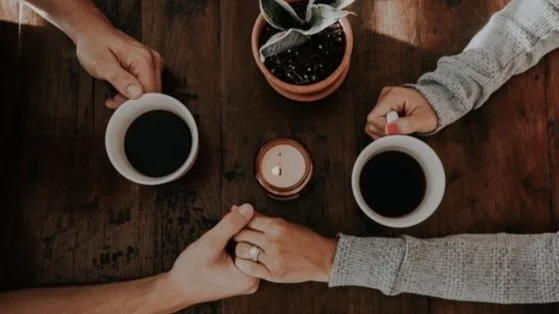
Photo by taylor hernandez on Unsplash
Rosie, a 23-year-old NHS worker, has been isolating at home with her parents since the beginning of April. Luckily, due to the nature of her work, she had the opportunity to work safely from home.
She and Mark only began to date a month before the lockdown. Despite the fact they text every day, Rosie feels “the relationship has come to a stand-still” - neither advancing nor backing down. They haven’t seen each other for over 2 months - doubling the time they have been dating before the quarantine.
Before the lockdown, they would speak on the phone every few days, but now they’ve reduced their conversations to roughly every two weeks. Rosie considers herself a reserved person, so for her to let someone in takes time and a clear head. Their history begins a year ago when they first met through a dating app. Through twists and turns of their encounters, when they finally decided to take their relationship to the next level - the lockdown dropped on them like a pile of unforeseen bricks.
“We were finally starting to get somewhere before the lockdown!”, Rosie expressed her frustration.
Despite the ‘stand-still’ status of their relationship and the unfortunate timing, Rosie is still pleased with the maintained mutual effort for communication.
Yet for some, may have ended before it even began.
Aria and Jake had been dating for approximately 2 months before the lockdown. Everything was like in those sickening, unrealistic rom-coms, where the couple seems to be head-over-heels for each other. Little did she know that in the next couple of weeks she will be left heartbroken.
Jake was really struggling with adjusting to the ‘new normal’. He had slowly started to pull away, as it was all getting too much for him. According to Aria, she had tried everything to help him get through this tough situation - texting less to give him more space, trying to include him in her weekly workouts, watching Netflix Party together. “I could see he was miserable… I just didn’t know how to help him”.
Despite their short beginning, Aria believed they “had a real connection”. The weekend before the official lockdown took place, Aria visited Jake at his home, meeting all his friends (considering this as a real big step to millennials). “It was all proving to head in the right direction to something truly great”, she said. Yet no matter what she tried, he just seemed to be pulling further into the abyss. Having that sixth-sense girls have, she knew something wasn’t quite right.
A month into the lockdown, he messaged her saying, “I don’t think I am mentally ready to be dating right now”. She was shocked, confused and broken. It all just came so out of the blue. “I felt like I was a burden, weighing him down”. But, after a few weeks of self-improvement Aria confessed, “I weirdly understand why he did it”. She adds, “if it’s meant to be, it’ll be”.
Another couple who seems to have taken the lockdown hard are Priya and Arun, who have recently celebrated their 2 year anniversary - over the phone. Due to Priya’s traditions and religious beliefs, she decided to not isolate with her boyfriend, but stay in her family home with her parents.

At the beginning of the lockdown, they got into a big argument, mostly due to the inability to ‘see’ each other’s emotions - resulting in the argument being bigger than it should have been. “I tend to overthink more”, says Priya, “analysing all the little details he says, even if he is talking generally”.
Priya has taken the time of lockdown to develop her skills and knowledge further, though gardening to listening to audiobooks, taking her mind off “from all this laziness and boredom”. Despite the argument, she reflects on her relationship and realises that “nothing has really changed” (apart from the physical presence) - proving that their relationship is staying strong.
In a considerably different position are Maisie and Steve, who were also dating for two months before the lockdown, but they decided to isolate together in London. Maisie struggles to live on her own, the isolation was the last straw for her in a London flat with only a single balcony for outdoor space. “We’ve been speaking about it since the beginning of lockdown”. But only at the beginning of April, they both agreed to move in together (temporarily).
Maisie explains that due to the lockdown, “I was feeling everything at extremes”, and Steve brought calm to her storm of emotions. “It’s so much better to even clean the house, knowing there is someone else physically there with me”.
The lockdown has seemed to have brought these two closer in their relationship. Steve explains, “it’s like a test if we decide to ever live together… I know we won’t drive each other insane”, since, they do everything together - from cooking to doing laundry. It has seemed like they have passed the test and are on good strengths for the future of their relationship.
In these times everyone emphasised the words “It’s not the same”. We, as human beings, are wired and thrive on human contact. We are social creatures, and that’s what sets us apart from other animals. When deprived of that, we tend to overthink, emotions run high and we don’t know how to react to them - as we have never before experienced these extraneous circumstances.
“It’s a new culture, where you don’t see people”, as Priya puts it.
This mentality seems to be a common trend between the majority of relationships - overthinking. As we have too much free time, our minds tend to wander and without concrete grounds, we make negative assumptions.
The best thing we can do it to forgive, understand and take care of ourselves. This is all new to us, and the quicker we acknowledge the difficulties others may be facing, the quicker we will have peace and happiness within ourselves. Which, at the end of the day, is most important.